
Perspectivas actuales en la caracterización no destructiva de edulcorantes
DOI:
https://doi.org/10.17268/agroind.sci.2026.01.17Palabras clave:
Quimiometría, Adulteración, Análisis multicomponente, AutenticaciónResumen
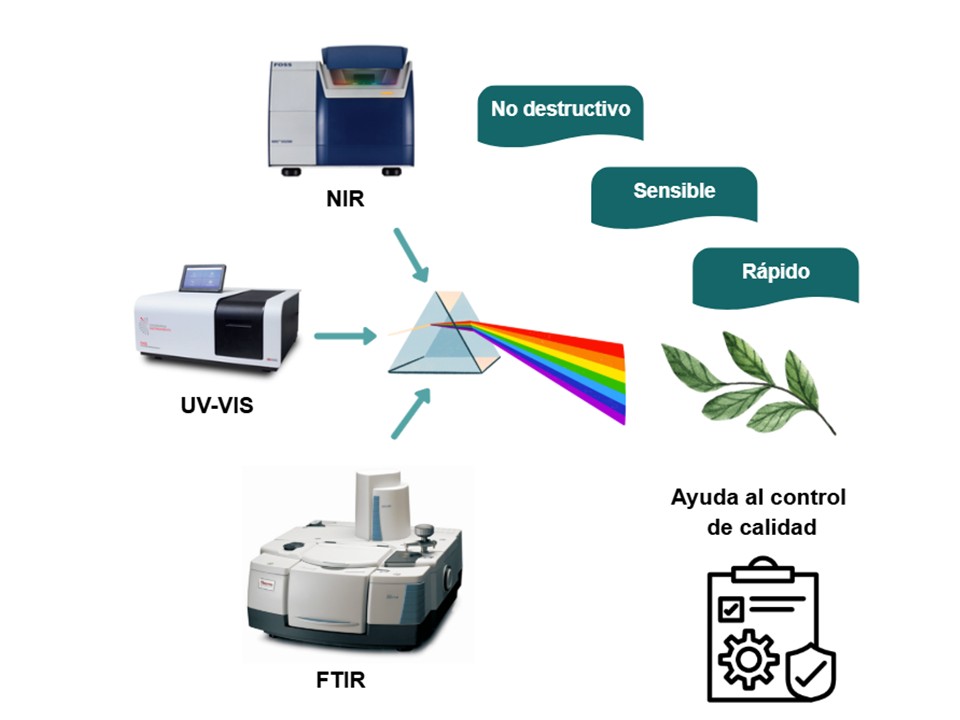
La creciente preocupación por la calidad, autenticidad e inocuidad de los alimentos ha incentivado el desarrollo de métodos analíticos confiables para la detección y cuantificación de edulcorantes, tanto naturales como sintéticos. En este contexto, las técnicas espectroscópicas han cobrado relevancia por su rapidez, sensibilidad y carácter no destructivo, convirtiéndose en herramientas clave para el análisis de productos alimentarios. Esta revisión examina las principales tendencias científicas en el estudio de edulcorantes mediante un enfoque bibliométrico, describe los fundamentos y la evolución de tecnologías como FTIR, NIR, UV-Vis y espectroscopía Raman, y analiza sus aplicaciones específicas en la identificación y cuantificación de estos compuestos. Asimismo, se abordan las implicancias de dichas metodologías en los sistemas de control de calidad y en la seguridad alimentaria, destacando su papel estratégico en la prevención del fraude y en la protección del consumidor, así como en la mejora de la trazabilidad y transparencia de los alimentos industrializados.
Citas
Alleso, M., Velaga, S., Alhalaweh, A., Cornett, C., Rasmussen, M. A., van den Berg, F., de Diego, H. L., & Rantanen, J. (2008). Near-infrared spectroscopy for cocrystal screening. A comparative study with Raman spectroscopy. Analytical Chemistry, 80(20), 7755–7764. https://doi.org/10.1021/ac8011329
Aouadi, B., Zaukuu, J.-L. Z., Vitális, F., Bodor, Z., Fehér, O., Gillay, Z., Bazar, G., & Kovacs, Z. (2020). Historical evolution and food control achievements of near infrared spectroscopy, electronic nose, and electronic tongue—critical overview. Sensors (Switzerland), 20(19), 1–42. https://doi.org/10.3390/s20195479
Buyukgoz, G. G., Bozkurt, A. G., Akgul, N. B., Tamer, U., & Boyaci, I. H. (2014). Spectroscopic detection of aspartame in soft drinks by surface-enhanced Raman spectroscopy. European Food Research And Technology, 240(3), 567-575. https://doi.org/10.1007/s00217-014-2357-y
Calle, J. L. P., Punta-Sánchez, I., González-de-Peredo, A. V., Ruiz-Rodríguez, A., Ferreiro-González, M., & Palma, M. (2023). Rapid and Automated Method for Detecting and Quantifying Adulterations in High-Quality Honey Using Vis-NIRs in Combination with Machine Learning. Foods, 12(13). https://doi.org/10.3390/foods12132491
Chapple, C. I., Russell, C. G., Burnett, A. J., & Woods, J. L. (2023). Sports foods are not all they shake up to be. An audit of formulated supplementary sports food products and packaging in Australian retail environments. Frontiers in Nutrition, 10, 1042049. https://doi.org/10.3389/fnut.2023.1042049
Chen, Q., Hou, H., Zheng, D., Xu, X., Xi, X., & Chen, Y. (2022). HPTLC screening of saccharin in beverages by densitometry quantification and SERS confirmation. RSC Advances, 12(14), 8317-8322. https://doi.org/10.1039/d1ra09416e
Cruz-Casarrubias, C., Tolentino-Mayo, L., Vandevijvere, S., & Barquera, S. (2021). Estimated effects of the implementation of the Mexican warning labels regulation on the use of health and nutrition claims on packaged foods. International Journal of Behavioral Nutrition and Physical Activity, 18(1), 76. https://doi.org/10.1186/s12966-021-01148-1
de Carvalho, T. E. M., Waisenberg, A., Sato, P. M., Mais, L. A., Martins, A. P. B., Jaime, P. C., & Khandpur, N. (2022). Consumer perceptions of non-caloric sweeteners and the content of caloric and non-caloric sweeteners in ultra-processed products in Brazil | Percepções do consumidor sobre adoçantes não calóricos e o conteúdo de adoçantes calóricos e não calóricos em prod. Ciencia e Saude Coletiva, 27(5), 1989–2000. https://doi.org/10.1590/1413-81232022275.08452021
Ding, Y., He, X., Zhang, R., Wu, H., & Bu, Y. (2025). Random forest-assisted Raman spectroscopy and rapid detection of sweeteners. Infrared Physics and Technology, 148. https://doi.org/10.1016/j.infrared.2025.105871
Du, Y., Xue, J., & Hong, Z. (2020). Raman and terahertz spectroscopic characterization of solid-state cocrystal formation within specific active pharmaceutical ingredients. Current Pharmaceutical Design, 26(38), 4829–4846. https://doi.org/10.2174/1381612826666200523173448
Duarte, L. M., Paschoal, D., Izumi, C. M., Dolzan, M. D., Alves, V. R., Micke, G. A., Santos, H. F. D., & De Oliveira, M. A. (2017). Simultaneous determination of aspartame, cyclamate, saccharin and acesulfame-K in powder tabletop sweeteners by FT-Raman spectroscopy associated with the multivariate calibration: PLS, iPLS and siPLS models were compared. Food Research International, 99(Pt 1), 106-114. https://doi.org/10.1016/j.foodres.2017.05.006
Dumancas, G., Ellis, H., Neumann, J., & Smith, K. (2022). Comparison of Various Signal Processing Techniques and Spectral Regions for the Direct Determination of Syrup Adulterants in Honey Using Fourier Transform Infrared Spectroscopy and Chemometrics. Chemosensors, 10(2). https://doi.org/10.3390/chemosensors10020051
Dutta, R., Pyne, A., & Sarkar, N. (2018). Effect of sugars on the dynamics of hydrophilic fluorophores confined inside the water pool of anionic reverse micelle: A spectroscopic approach. Journal of Molecular Liquids, 252, 225–235. https://doi.org/10.1016/j.molliq.2017.12.137
Erinawati, D. A., Setyaningsih, W., & Palma, M. (2025a). Spectroscopy and chemometric-based method for sugar profiling in high-fructose syrup. Applied Food Research, 5(1). https://doi.org/10.1016/j.afres.2025.100872
Erinawati, D. A., Setyaningsih, W., & Palma, M. (2025b). Spectroscopy and chemometric-based method for sugar profiling in high-fructose syrup. Applied Food Research, 5(1). https://doi.org/10.1016/j.afres.2025.100872
Farhat, G., Dewison, F., & Stevenson, L. (2021). Knowledge and perceptions of non-nutritive sweeteners within the uk adult population. Nutrients, 13(2), 1–14. https://doi.org/10.3390/nu13020444
Ferraro, J. R., Nakamoto, K., & Brown, C. W. (2003). Introductory Raman Spectroscopy: Second Edition. In Introductory Raman Spectroscopy: Second Edition. https://doi.org/10.1016/B978-0-12-254105-6.X5000-8
Gao, L., Wang, D., Zhong, L., Yue, J., Nie, L., Li, L., Meng, Z., Cao, G., Lai, Y., & Zang, H. (2023). Rapid determination of rebaudioside A content in the macroporous resin elution process using a portable near-infrared spectrometer. New Journal of Chemistry, 47(45), 20920–20927. https://doi.org/10.1039/d3nj04042a
Garbacz, P., & Wesolowski, M. (2018). DSC, FTIR and raman spectroscopy coupled with multivariate analysis in a study of co-crystals of pharmaceutical interest. Molecules, 23(9). https://doi.org/10.3390/molecules23092136
Han, C., Yao, Y., Wang, W., Qu, L., Bradley, L., Sun, S., & Zhao, Y. (2017). Rapid and sensitive detection of sodium saccharin in soft drinks by silver nanorod array SERS substrates. Sensors and Actuators, B: Chemical, 251, 272–279. https://doi.org/10.1016/j.snb.2017.05.051
Han, L., Guo, J., Tian, X., Jiang, X., & Yin, Y. (2022). Evaluation of PEG and sugars consolidated fragile waterlogged archaeological wood using nanoindentation and ATR-FTIR imaging. International Biodeterioration and Biodegradation, 170. https://doi.org/10.1016/j.ibiod.2022.105390
Hou, Z., Yan, B., Zhao, Y., Zhang, S., Su, B., Li, K., & Zhang, C. (2025). Spectral investigation of aspartame and acesulfame utilizing PXRD, Raman, FTIR, and THz technologies. Chemometrics and Intelligent Laboratory Systems, 262. https://doi.org/10.1016/j.chemolab.2025.105408
Jiang, W., Tang, Q., Zhu, Y., Gu, X., Wu, L., & Qin, Y. (2024). Research progress of microfluidics-based food safety detection. Food Chemistry, 441. https://doi.org/10.1016/j.foodchem.2023.138319
Jahangir Chughtai, M. F., Pasha, I., Sadiq Butt, M., & Asghar, M. (2020). Biochemical and nutritional attributes of Stevia rebaudiana grown in Pakistan. Progress in Nutrition, 21(2-S), 210-222. https://doi.org/10.23751/pn.v21i2-S.6430
Jentzsch, P. V., Torrico-Vallejos, S., Mendieta-Brito, S., Ramos, L. A., & Ciobotă, V. (2016). Detection of counterfeit stevia products using a handheld Raman spectrometer. Vibrational Spectroscopy, 83, 126-131. https://doi.org/10.1016/j.vibspec.2016.01.015
Khalaf, A. A., & Shihab, A. S. (2025). Synthesis, Characterization, Study of Biological Activity, and Molecular Docking of Some Mannich Bases and their Coordination with Cadmium and Cobalt. Macromolecular Symposia, 414(1). https://doi.org/10.1002/masy.202400212
Khristoforova, Y., Bratchenko, L., & Bratchenko, I. (2022). Combination of Raman spectroscopy and chemometrics: A review of recent studies published in the Spectrochimica Acta, Part A: Molecular and Biomolecular Spectroscopy Journal. arXiv (Cornell University). https://doi.org/10.48550/arxiv.2210.10051
Kujundžić, D., Jambrak, A. R., Vukušić, T., Stulić, V., Kljusurić, J. G., Banović, M., & Herceg, Z. (2017). Near-infrared spectroscopic characterization of steviol glycosides extracted from Stevia rebaudiana Bertoni using high-power ultrasound and gas-phase plasma. Journal of Food and Nutrition Research, 56(2), 109–120.
Lech, A., Garbacz, P., Sikorski, A., Gazda, M., & Wesolowski, M. (2022). New Saccharin Salt of Chlordiazepoxide: Structural and Physicochemical Examination. International Journal of Molecular Sciences, 23(19). https://doi.org/10.3390/ijms231912050
Li, H., Nunekpeku, X., Adade, S. Y.-S. S., Sheng, W., Kwadzokpui, B. A., Ahlivia, E. B., & Chen, Q. (2025). Phenolic compounds detection and quantification in whole grains: A comprehensive review of recent advancements in analytical methods. TrAC - Trends in Analytical Chemistry, 187. https://doi.org/10.1016/j.trac.2025.118215
Mabood, F., Hussain, J., Jabeen, F., Abbas, G., Allaham, B., Albroumi, M., Alghawi, S., Alameri, S., Gilani, S. A., Al-Harrasi, A., Haq, Q. M. I., & Farooq, S. (2018). Applications of FT-NIRS combined with PLS multivariate methods for the detection & quantification of saccharin adulteration in commercial fruit juices. Food Additives and Contaminants - Part A Chemistry, Analysis, Control, Exposure and Risk Assessment, 35(6), 1052–1060. https://doi.org/10.1080/19440049.2018.1457802
Mao, W., & Song, Y. (2018). Major problems and hazards in use of sweeteners commonly found in foods. Journal of Food Science and Technology (China), 36(6), 9–14. https://doi.org/10.3969/j.issn.2095-6002.2018.06.002
Martono, Y., Trihandaru, S., & Rondonuwu, F. S. (2018). Determination of Stevioside and Rebaudioside A in Stevia rebaudiana Bertoni Leaves Using near Infrared Spectroscopy and Multivariate Data Analysis. Indonesian Journal Of Chemistry, 18(4), 664. https://doi.org/10.22146/ijc.25580
Martono, Y., & Rohman, A. (2019). Quantitative analysis of stevioside and rebaudioside a in steviarebaudiana leaves using infrared spectroscopy and multivariate calibration. International Journal of Applied Pharmaceutics, 11(1), 38. https://doi.org/10.22159/ijap.2019v11i1.28029
Morlock, G. E., & Heil, J. (2020). HI-HPTLC-UV/Vis/FLD-HESI-HRMS and bioprofiling of steviol glycosides, steviol, and isosteviol in Stevia leaves and foods. Analytical And Bioanalytical Chemistry, 412(24), 6431-6448. https://doi.org/10.1007/s00216-020-02618-4
Mukhovha, W., Sibiya, N., Kisten, T., Mamabolo, M. K., & Dlamini, S. N. (2025). Over half of South African beverages will require warning labels for high sugar and/or artificial sweeteners. South African Journal of Clinical Nutrition, 38(1), 31–36. https://doi.org/10.1080/16070658.2025.2453768
Pezzotti, G., Zhu, W., Aoki, T., Miyamoto, A., Fujita, I., Nakagawa, M., & Kobayashi, T. (2024). Raman Spectroscopic Analysis of Steviol Glycosides: Spectral Database and Quality Control Algorithms. Foods, 13(19). https://doi.org/10.3390/foods13193068
Pham, X. N., Pham, D. T., Ngo, H. S., Nguyen, M. B., & Doan, H. V. (2021). Characterization and application of C–TiO2 doped cellulose acetate nanocomposite film for removal of Reactive Red-195. Chemical Engineering Communications, 208(3), 304–317. https://doi.org/10.1080/00986445.2020.1712375
Se, K. W., Wahab, R. A., Syed Yaacob, S. N., & Ghoshal, S. K. (2019). Detection techniques for adulterants in honey: Challenges and recent trends. Journal of Food Composition and Analysis, 80, 16–32. https://doi.org/10.1016/j.jfca.2019.04.001
Shim, J., Cho, I., Khurana, H., Li, Q., & Jun, S. (2008). Attenuated Total Reflectance–Fourier Transform Infrared Spectroscopy Coupled with Multivariate Analysis for Measurement of Acesulfame‐K in Diet Foods. Journal Of Food Science, 73(5), C426-31. https://doi.org/10.1111/j.1750-3841.2008.00751.x
Souza, L. L. D., Candeias, D. N. C., Moreira, E. D. T., Diniz, P. H. G. D., Springer, V. H., & Fernandes, D. D. D. S. (2025). UV–Vis spectralprint-based discrimination and quantification of sugar syrup adulteration in honey using the Successive Projections Algorithm (SPA) for variable selection. Chemometrics and Intelligent Laboratory Systems, 257. https://doi.org/10.1016/j.chemolab.2024.105314
Sringarm, C., Numthuam, S., Singanusong, R., Jiamyangyuen, S., Kittiwatchana, S., Funsueb, S., & Rungchang, S. (2022). Quantitative determination of quality control parameters using near infrared spectroscopy and chemometrics in process monitoring of tapioca sweetener production. LWT, 167. https://doi.org/10.1016/j.lwt.2022.113876
Teklemariam, T. A., Chou, F., Kumaravel, P., & van Buskrik, J. (2024). ATR-FTIR spectroscopy and machine/deep learning models for detecting adulteration in coconut water with sugars, sugar alcohols, and artificial sweeteners. Spectrochimica Acta - Part A: Molecular and Biomolecular Spectroscopy, 322. https://doi.org/10.1016/j.saa.2024.124771
Tian, H., Chen, S., Li, D., Lou, X., Chen, C., & Yu, H. (2022). Simultaneous detection for adulterations of maltodextrin, sodium carbonate, and whey in raw milk using Raman spectroscopy and chemometrics. Journal of dairy science, 105(9), 7242–7252. https://doi.org/10.3168/jds.2021-21082
Vargas Jentzsch, P., Torrico-Vallejos, S., Mendieta-Brito, S., Ramos, L. A., & Ciobotə, V. (2016). Detection of counterfeit stevia products using a handheld Raman spectrometer. Vibrational Spectroscopy, 83, 126–131. https://doi.org/10.1016/j.vibspec.2016.01.015
Veerichetty, V., Saravanabavan, I., Pradeep, A., & Abiraamasundari, R. (2024). Development of gummy bear supplements and in vitro exploration of antioxidant and antiproliferative potential of Nuciferine. Journal of Ayurveda and Integrative Medicine, 15(1). https://doi.org/10.1016/j.jaim.2023.100868
Wang, Y.-T., Li, B., Xu, X.-J., Ren, H.-B., Yin, J.-Y., Zhu, H., & Zhang, Y.-H. (2020). FTIR spectroscopy coupled with machine learning approaches as a rapid tool for identification and quantification of artificial sweeteners. Food Chemistry, 303. https://doi.org/10.1016/j.foodchem.2019.125404
Wang, Y. H., Avula, B., Tang, W., Wang, M., Elsohly, M. A., & Khan, I. A. (2015). Ultra-HPLC method for quality and adulterant assessment of steviol glycosides sweeteners - Stevia rebaudiana and stevia products. Food additives & contaminants. Part A, Chemistry, analysis, control, exposure & risk assessment, 32(5), 674–685. https://doi.org/10.1080/19440049.2015.1021863
Zhu, X., Li, S., Shan, Y., Zhang, Z., Li, G., Su, D., & Liu, F. (2010). Detection of adulterants such as sweeteners materials in honey using near-infrared spectroscopy and chemometrics. Journal of Food Engineering, 101(1), 92–97. https://doi.org/10.1016/j.jfoodeng.2010.06.014
Publicado
Cómo citar
Número
Sección
Licencia
Derechos de autor 2026 Renzo Laiza-Calderón

Esta obra está bajo una licencia internacional Creative Commons Atribución-NoComercial 4.0.
Los autores conservan sus derechos de autor sin restricciones.