Phytochemical profile of native wild plants of Central Kalimantan with potential use for the development of functional foods and sustainable dietary interventions
DOI:
https://doi.org/10.17268/sci.agropecu.2026.017Palabras clave:
Dayak’s tribe, food security, health benefit, underutilized vegetableResumen
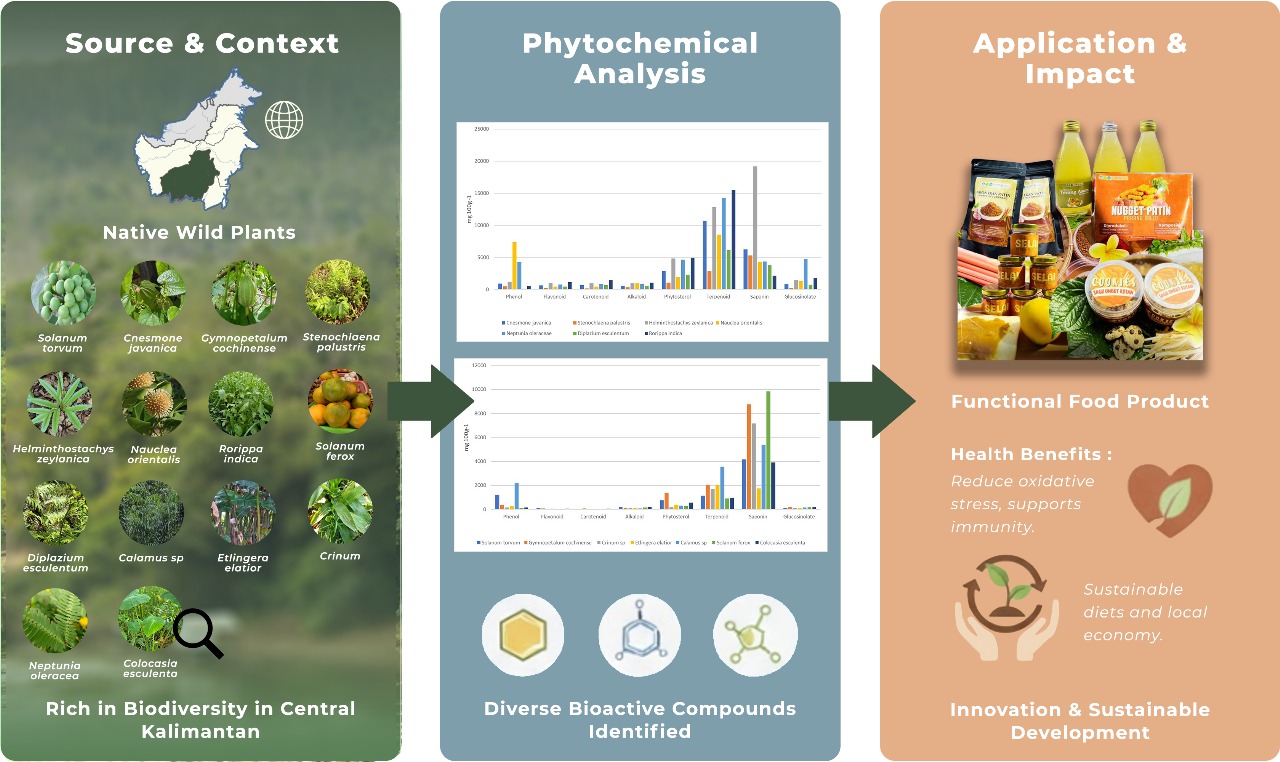
The study investigates the phytochemical profiles of selected wild local vegetables in Central Kalimantan, Indonesia, assessing their potential health benefits in addressing nutritional deficiencies prevalent in the region. A comprehensive analysis was conducted on key metabolites, including phenols, flavonoids, carotenoids, alkaloids, phytosterol, terpenoid, saponin, and glucosinolates. The vegetables examined in this study included Solanum torvum, Cnesmone javanica, Gymnopetalum cochinense, Stenochlaena palustris, Helminthostachys zeylanica, Nauclea orientalis, Neptunia oleraceae, Crinum sp., Etlingera elatior, Calamus sp., Solanum ferox, Colocasia esculenta, Diplazium esculentum, and Rorippa indica. Using the Folin-Ciocalteu method, the total phenolic content in the ethanolic extract ranged from 107.20 to 7393.10 mg GAE 100 g-1. Total flavonoids varied from 27.17-1163.82 mg QE 100 g-1 fresh weight. Carotenoids, alkaloids, phytosterols, terpenoid, saponin ranging from 1.273-1448.80 mg 100 g-1, 78.94-1061.67 mg 100 g-1, 168.33 - 4926.67 mg 100 g-1, 914.44-15503.33 mg 100 g-1, respectively. Additionally, saponins and glucosinolates were found in concentrations ranging from 1742.22 to 19164.44 mg 100 g-1, and 92.4 to 4726.52 mg 100 g-1, respectively. N. orientalis, N. oleracea, and R. indica showed strong potential as functional foods due to their high levels of antioxidants and anti-inflammatory compounds. R. indica and D. esculentum stand out for their rich carotenoid. Additionally, the substantial amounts of phytosterols, saponins, glucosinolates, and terpenoids in N. oleracea, H. zeylanica, R. indica, and D. esculentum. Linking phytochemicals to health supports targeted diets for vulnerable groups, strengthened through diverse local vegetables and culturally adapted functional food products.
Citas
Achika, J. I., Yusuf, A. J., Ayo, R. G., & Liman, D. U. (2023). Flavonoids from Nigerian indigenous medicinal plants and their bioactivities: A review. Phytomedicine Plus, 3(2), 100405. https://doi.org/10.1016/j.phyplu.2023.100405
Afentina, McShane, P., & Wright, W. (2020). Ethnobotany, rattan agroforestry, and conservation of ecosystem services in Central Kalimantan, Indonesia. Agroforestry Systems, 94(2), 639–650. https://doi.org/10.1007/s10457-019-00428-x
Ahyanti, M., & Yushananta, P. (2023). Saponin and flavonoid content in garden plants and their potential as bioinsecticides for houseflies (Musca domestica). Jurnal Kesehatan Lingkungan Ruwa Jurai, 17(1), 31–43. https://doi.org/10.26630/rj.v17i1.3763
Ainur, M., Ridho, R., Dwi Indriani, R., Wulansari, A. T., & Purwani, K. I. (2025). Phytochemicals, Bioactivity, and Utilization of Etlingera elatior as a Medicinal Plant. Medicinal Plant. Journal of Medicine and Health Technology, 02(02), 46–55. https://doi.org/10.12962/j30466865.v2i2.3977
Akter, S., Hossain, Md. M., Ara, I., & Akhtar, P. (2014). Investigation of in vitro antioxidant, antimicrobial and cytotoxic activity of Diplazium esculentum (RETZ). SW. International Journal of Advances in Pharmacy, Biology and Chemistry, 3(3), 723–733. http://ijapbc.com/files/32-3369.pdf
Albuquerque, T. G., Nunes, M. A., Bessada, S. M., Costa, H. S., & Oliveira, M. B. P. (2020). 14 - Biologically active and health promoting food components of nuts, oilseeds, fruits, vegetables, cereals, and legumes. In D. R. Jorge (Ed.), Chemical Analysis of Food (pp. 609–656). Elsevier Inc. https://doi.org/10.1016/B978-0-12-813266-1/00014-0
Andarwulan, N., Batari, R., Sandrasari, D. A., Bolling, B., & Wijaya, H. (2010). Flavonoid content and antioxidant activity of vegetables from Indonesia. Food Chemistry, 121(4), 1231–1235. https://doi.org/10.1016/j.foodchem.2010.01.033
Anggriani, R., Putri, N. N. P., & Wahyudi, V. A. (2023). Study of Physical, Chemical, and Organoleptic Properties of Functional Drink Turkey Berry (Solanum torvum swartz) with the Addition of Butterfly Pea Flower (Clitoria ternatea linn) and Emprit Ginger (Zingiber officinale var. Amarum). Biology, Medicine, & Natural Product Chemistry, 12(2), 563–575. https://doi.org/10.14421/biomedich.2023.122.563-575
Arina, Y., Shiyan, S., & Suprayetno, S. (2022). Analysis of Kemometry of the root extract of Helminthostachys zeylanica by fourier transformed infrared analysis from various south Sumatra. Jurnal ’Aisyiyah Medika, 7(1), 243–258. https://doi.org/10.36729/jam.v7i1.790
Bajracharya, G. B., & Bajracharya, B. (2022). A comprehensive review on Nepalese wild vegetable food ferns. Heliyon, 8(11), e11687. https://doi.org/10.1016/j.heliyon.2022.e11687
Banwo, K., Olojede, A. O., Adesulu-Dahunsi, A. T., Verma, D. K., Thakur, M., Tripathy, S., Singh, S., Patel, A. R., Gupta, A. K., Aguilar, C. N., & Utama, G. L. (2021). Functional importance of bioactive compounds of foods with Potential Health Benefits: A review on recent trends. Food Bioscience, 43. https://doi.org/10.1016/j.fbio.2021.101320
Baranggan, J. P., & Adlaon, M. S. (2024). Exploring the Nutritional Potential and Culinary Applications of Paco (Diplazium esculentum): A Dietary Supplement in Pancake Preparation. Ignatian International Journal for Multidisciplinary Research, 2(1). https://doi.org/10.5281/zenodo.10461038
Bechoff, A., de Bruyn, J., Alpha, A., Wieringa, F., & Greffeuille, V. (2023). Exploring the Complementarity of Fortification and Dietary Diversification to Combat Micronutrient Deficiencies: A Scoping Review. In Current Developments in Nutrition (Vol. 7, Issue 2). Elsevier B.V. https://doi.org/10.1016/j.cdnut.2023.100033
Bélanger, J., Balakrishna, M., Latha, P., Katumalla, S., & Johns, T. (2010). Contribution of selected wild and cultivated leafy vegetables from South India to Lutein and β-carotene intake. Asia Pacific Journal of Clinical Nutrition, 19(3), 417–424.
Bhumireddy, A., Nellore, K., & Alapati, K. S. (2022). Anticancer activity of Neptunia oleracea methanolic extracts. Natural Product Research, 36(4), 1053–1057. https://doi.org/10.1080/14786419.2020.1844693
Cao, S., Liu, M., Han, Y., Li, S., Zhu, X., Li, D., Shi, Y., & Liu, B. (2024). Effects of Saponins on Lipid Metabolism: The Gut-Liver Axis Plays a Key Role. In Nutrients (Vol. 16, Issue 10). https://doi.org/10.3390/nu16101514
Castenmiller, J. J. M. (2000). Spinach as a source of carotenoids, folate and antioxidant activity.
Chaudhari, V. M., Malviya, A., & Kumar, C. (2023). Underutilized Vegetable Crops: A way towards nutritional security (first). https://www.researchgate.net/publication/375557023
Chen, S., Zhou, Y., Li, H., You, L., Pedisić, S., & Shao, P. (2024). Saponins Based on Medicinal and Edible Homologous Plants: Biological Activity, Delivery Systems and Its Application in Healthy Foods. In Food Bioengineering. John Wiley and Sons Inc. https://doi.org/10.1002/fbe2.12111
Chotimah, H. E. N. C., Muliansyah, M., Widyawati, W., Pitrama, & Suparto, H. (2022). Species , nutritional value , and elemental content of Stenochlaena distributed in Central Kalimantan , Indonesia. Biodiversitas, Journal of Biological Diversity, 23(10), 5367–5372. https://doi.org/10.13057/biodiv/d231047
Chotimah, H., Kresnatita, S., & Miranda, Y. (2013). Ethnobotanical study and nutrient content of indigenous vegetables consumed in Central Kalimantan, Indonesia. Biodiversitas, Journal of Biological Diversity, 14(2), 106–111. https://doi.org/10.13057/biodiv/d140209
Crupi, P., Faienza, M. F., Naeem, M. Y., Corbo, F., Clodoveo, M. L., & Muraglia, M. (2023). Overview of the Potential Beneficial Effects of Carotenoids on Consumer Health and Well-Being. Antioxidants, 12(5). https://doi.org/10.3390/antiox12051069
Daud, M., Jabit, M., Mokhtar, T., & Hussin, F. (2022). Analysis method of phytosterol constituents from vegetable to facilitate product. Food Research, 6(2), 18–22.
DelBo, C., Bernardi, S., Marino, M., Porrini, M., Tucci, M., Guglielmetti, S., Cherubini, A., Carrieri, B., Kirkup, B., Kroon, P., Zamora-ros, R., Liberona, N. H., Andres-lacueva, C., & Riso, P. (2019). Systematic Review on Polyphenol Intake and Health Outcomes : Is there Su ffi cient Evidence to Define a. Nutrients, 11, 1355.
Devi, M., Pratikto, H., Prasetya Wibawa, A., Muntholib, M., Fadzil Ariffin, H., Authors Mazarina Devi, A., & Mahfud, T. (2023). Etlingera Elatior (Kecombrang Flower) Juice as a Halal Health Beverage. Bulletin of Culinary Art and Hospitality, 3(1), 13–18. https://doi.org/10.17977/um069v3i12023p13-18
Dewi, N. P. (2020). Qualitative and Quantitative Test of Secondary Metabolites of Ethanol Extract of Awar-Awar Leaf (Ficus septica Burm.f) by UV-VIS Spectrophotometer Method. Acta Holistica Pharmaciana, 2(1), 16–24.
Dhawal, A., Pandey, R., & Pandey, V. N. (2023). Occurence, phenology and traditional uses of Helminthostachys zeylanica in northeast terai region of Uttar Pradesh, India. J. Indian Bot.Soc, 103, 302305. https://doi.org/https://doi:10.5958/2455-7218.2022.00045.6
Drozdowska, M., Leszczyńska, T., Koronowicz, A., Piasna-Słupecka, E., Domagała, D., & Kusznierewicz, B. (2020). Young shoots of red cabbage are a better source of selected nutrients and glucosinolates in comparison to the vegetable at full maturity. European Food Research and Technology, 246(12), 2505–2515. https://doi.org/10.1007/s00217-020-03593-x
Duc, N. V. (2023). Acetylcholinesterase inhibition studies of alkaloid components from Crinum asiaticum var . sinicum plants : In vitro assessments by molecular docking and molecular dynamics simulations. Research Square, 1–16. https://doi.org/https://doi.org/10.21203/rs.3.rs-2610193/v1
Durst, Partick., & Bayasgalanbat, Nomindelger. (2014). Regional symposium on promotion of underutilized indigenous food resources for food security and nutrition in Asia and the Pacific : Khon Kaen, Thanland, May 31, 2012. Food and Agriculture Organization of the United Nationsergional Office for Asia and the Pacific.
El Barky, A., Hussein, S. A., Alm-Eldeen, A.-E., Hafez, A., & Mohamed, T. (2017). REVIEW Diabetes Management Saponins and their potential role in diabetes mellitus (Vol. 7, Issue 1).
Essack, H., Odhav, B., & Mellem, J. J. (2017). Screening of traditional South African leafy vegetables for specific anti-nutritional factors before and after processing. Food Science and Technology (Brazil), 37(3), 462–471. https://doi.org/10.1590/1678-457x.20416
Fambayun, R. A., & Kalima, T. (2022). Rattan: its role for food-alternative of the community near the peatland areas in Central Kalimantan. IOP Conference Series: Earth and Environmental Science, 959(1). https://doi.org/10.1088/1755-1315/959/1/012062
Fatimah, A. M. Z., Norazianand, M. H., & Rashidi, O. (2012). Identification of carotenoid composition in selected “ulam” or traditional vegetables in Malaysia. International Food Research Journal, 19(2), 527–530.
Flore, G., Deledda, A., Lombardo, M., Armani, A., & Velluzzi, F. (2023). Effects of Functional and Nutraceutical Foods in the Context of the Mediterranean Diet in Patients Diagnosed with Breast Cancer. Antioxidants, 12(10). https://doi.org/10.3390/antiox12101845
Guldas, M., Demircan, H., Cakmak, I., Oral, R. A., Yildiz, E., Gurbuz, O., Tosunoglu, H., Cavus, F., & Sen, H. (2022). Antioxidant and bioaccessibility characteristics of functional fruit and vegetable honeys produced by innovative method. Food Bioscience, 48. https://doi.org/10.1016/j.fbio.2022.101732
Hashimoto, H., Uragami, C., & Cogdell, R. J. (2016). Carotenoids and photosynthesis. Sub-Cellular Biochemistry, 79, 111–139. https://doi.org/10.1007/978-3-319-39126-7_4
Hayunanda, V., Hasannah, C. S., & Aeni, A. R. (2025). Analysis of saponin content in leaf extracts of soursop (Annona muricata L) for biosurfactant potential. Jurnal Ilmiah GIGA, 28(1), 40–49.
Herawati, I. E., & Saptarini, N. M. (2020). Analysis of Total Phytosterol Level in Lettuce Leaf Extract (Lactuca sativa L.) by Colorimetric Method. Jurnal Sabdariffarma, 9(1), 7–10. https://doi.org/10.53675/jsfar.v2i1.25
Hoque Mollah, M., Bhattacharjee, A., Debnath, S., Pathak, B. J., Biswa Saikia, H., & Deka, K. (2025). Antiurolithiatic Activity of Diplazium Esculentum Plant Extract: An In-Vitro Approach. In Journal of Chemical Health Risks www.jchr.org JCHR (Vol. 15, Issue 2). www.jchr.org
Howlader, M. A. H., Iqbal, M. S., Islam, S. S., & Quader, M. (2013). Phytochemical Constituents of Some Vegetables. Dhaka University Journal of Science, 61(2), 147–151. https://doi.org/10.3329/dujs.v61i2.17060
Hutasuhut, D. A., Aspriyanto, D., & Firdaus, I. W. A. A. (2022). Qualitative and Quantitative Phytochemical Test of Rambai (Baccaurea Motleyana) Fruit Peel Extract at 100% Concentration. Dentin, 6(2), 97–102. https://doi.org/10.20527/dentin.v6i2.6394
Ibrahim, N. F., Zakaria, N. A., & Aris, F. (2022). Phytochemistry and Biological Activity of Terung Asam, Indigenous Fruit-Vegetables of Sarawak- A Review. Journal of Sustainability Science and Management, 17(2), 270–285. https://doi.org/10.46754/jssm.2022.02.019
Jagau, Y., Chotimah, H. E. N. C., Aliayub, A., Eghenter, C., Surjanto, D., & Setyawan, E. P. (2017). Analysis of the Study on Food Security and Sovereignty in the Heart of Borneo. (Issue February 2017). https://doi.org/10.13140/RG.2.2.33812.81280
Kalogerakou, T., & Antoniadou, M. (2024). The Role of Dietary Antioxidants, Food Supplements and Functional Foods for Energy Enhancement in Healthcare Professionals. In Antioxidants, 13(12). https://doi.org/10.3390/antiox13121508
Kamal, R. M., Razis, A. F. A., Sukri, N. S., Perimal, E. K., Ahmad, H., Patrick, R., Djedaini-Pillard, F., Mazzon, E., & Rigaud, S. (2022). Beneficial Health Effects of Glucosinolates-Derived Isothiocyanates on Cardiovascular and Neurodegenerative Diseases. Molecules, 27, 738–754. https://doi.org/10.3390/molecules
Karim, A., Adnan, J., & Irmawati. (2022). Determination of total alkaloid content of purple leaf ethanol extract (Graptophyllum pictum L.) by UV-Vis spectrophotometry method. Journal Pharmacy Of Pelamonia, 2(2), 42–47. https://ojs.iikpelamonia.ac.id
Khan, M. I., Karima, G., Khan, M. Z., Shin, J. H., & Kim, J. D. (2022). Therapeutic Effects of Saponins for the Prevention and Treatment of Cancer by Ameliorating Inflammation and Angiogenesis and Inducing Antioxidant and Apoptotic Effects in Human Cells. International Journal of Molecular Sciences, 23(18). https://doi.org/10.3390/ijms231810665
Kongkachuichai, R., Charoensiri, R., Yakoh, K., Kringkasemsee, A., & Insung, P. (2015). Nutrients value and antioxidant content of indigenous vegetables from Southern Thailand. Food Chemistry, 173, 838–846. https://doi.org/10.1016/j.foodchem.2014.10.123
Krebs, S. A., & Schummer, M. L. (2024). A review of plant phenolics and endozoochory. In Ecology and Evolution (Vol. 14, Issue 9). John Wiley and Sons Ltd. https://doi.org/10.1002/ece3.70255
Li, X., Xin, Y., Mo, Y., Marozik, P., He, T., & Guo, H. (2022). The Bioavailability and Biological Activities of Phytosterols as. Molecules, 27(523), 1–15. https://doi.org/https://doi.org/10.3390/ molecules27020523
Lin, L. Z., Sun, J., Chen, P., Zhang, R. W., Fan, X. E., Li, L. W., & Harnly, J. M. (2014). Profiling of glucosinolates and flavonoids in rorippa indica (Linn.) Hiern. (cruciferae) by UHPLC-PDA-ESI/HRMSn. Journal of Agricultural and Food Chemistry, 62(26), 6118–6129. https://doi.org/10.1021/jf405538d
Liu, B., Geng, Q., Cao, Z., Li, L., Lu, P., Lin, L., Yan, L., & Lu, C. (2022). Nauclea officinalis: A Chinese medicinal herb with phytochemical, biological, and pharmacological effects. In Chinese Medicine (United Kingdom) (Vol. 17, Issue 1). BioMed Central Ltd. https://doi.org/10.1186/s13020-022-00691-8
Liu, X., Le Bourvellec, C., Yu, J., Zhao, L., Wang, K., Tao, Y., Renard, C. M. G. C., & Hu, Z. (2022). Trends and challenges on fruit and vegetable processing: Insights into sustainable, traceable, precise, healthy, intelligent, personalized and local innovative food products. Trends in Food Science and Technology, 125, 12–25. https://doi.org/10.1016/j.tifs.2022.04.016
Lobo, M. G., Hounsome, N., & Hounsome, B. (2018). Biochemistry of vegetables: Secondary metabolites in vegetables-Terpenoids, phenolics, alkaloids, and sulfur-containing compounds. In Handbook of Vegetables and Vegetable Processing: Second Edition (Vols. 1–2). https://doi.org/10.1002/9781119098935.ch3
Magandhi, M., & Lestari, R. (2023). The threatened plant species in Central Kalimantan of Indonesia and its utilization potencies. IOP Conference Series: Earth and Environmental Science, 1151(1). https://doi.org/10.1088/1755-1315/1151/1/012018
Malabed, R. S., Noel, M. G., Cabisudo, M. G. C., Johnica, C., Janairo, L. G. N., Sy, M. B. T., & Oyong, G. G. (2022). Consumption of Glucosinolate-Rich Nasturtium officinale and Brassica oleracea L . var . sabellica May Reduce the Risk of Cancer Occurrence in Humans. Kimika, 33(1), 77–90. https://doi.org/https://doi.org/10.26534/kimika.v33i1.77-90
Mawlong, I., Sujith Kumar, M. S., Gurung, B., Singh, K. H., & Singh, D. (2017). A simple spectrophotometric method for estimating total glucosinolates in mustard de-oiled cake. International Journal of Food Properties, 20(12), 3274–3281. https://doi.org/10.1080/10942912.2017.1286353
Meenakshi, V., Ilamaran, M., & Vijayalakshmi, R. (2022). Impact of different drying methods on nutritional and phytochemical characteristics of Turkey berry ( Solanum torvum ). The Pharma Innovation, 11(2), 1663–1666.
Melim, C., Lauro, M. R., Pires, I. M., Oliveira, P. J., & Cabral, C. (2022). The Role of Glucosinolates from Cruciferous Vegetables (Brassicaceae) in Gastrointestinal Cancers: From Prevention to Therapeutics. Pharmaceutics, 14(1). https://doi.org/10.3390/pharmaceutics14010190
Miao, H., Zeng, W., Wang, J., Zhang, F., Sun, B., & Wang, Q. (2021). Improvement of glucosinolates by metabolic engineering in Brassica crops. aBIOTECH, 2(3), 314–329. https://doi.org/10.1007/s42994-021-00057-y
Mohd, N. H. S., Abu Bakar, M. F., Abu Bakar, F. I., Ismail, N. A., Sanusi, S. B., Mohamed, M., & Centre. (2020). Phytochemical content and antioxidant activity of selected wild ulam / vegetables. Food Research, 4(1), 28–33. https://doi.org/https://doi.org/10.26656/fr.2017.4(1).179 Abstract
Montesano, D., Rocchetti, G., Putnik, P., & Lucini, L. (2018). Bioactive profile of pumpkin: an overview on terpenoids and their health-promoting properties. Current Opinion in Food Science, 22, 81–87. https://doi.org/10.1016/j.cofs.2018.02.003
More, V. D., Deore, S. J., Sangale, P. P., Gadekar, A. R., & Kamble, S. M. (2024). An ethnobotanical study on the wild vegetable plants consumed by ethnic communities of Junnar Tehsil, in Pune district of Maharashtra, India. Journal of Medicinal Plants Studies, 12(1), 144–150. https://doi.org/10.22271/plants.2024.v12.i1b.1637
Mukherjee, P. K., Singha, S., Kar, A., Chanda, J., Banerjee, S., Dasgupta, B., Haldar, P. K., & Sharma, N. (2022). Therapeutic importance of Cucurbitaceae: A medicinally important family. Journal of Ethnopharmacology, 282(September 2021), 114599. https://doi.org/10.1016/j.jep.2021.114599
Munoz, O., & Ramos, F. (2016). Quantitative analysis of phytosterols in Aristotelia chilensis (Maqui) leaves using GC / MS. International Food Research Journal, 23(2), 822–826.
Muridzo Muonde, Tolulope O Olorunsogo, Jane Osareme Ogugua, Chinedu Paschal Maduka, & Olufunke Omotayo. (2024). Global nutrition challenges: A public health review of dietary risks and interventions. World Journal of Advanced Research and Reviews, 21(1), 1467–1478. https://doi.org/10.30574/wjarr.2024.21.1.0177
Murthy, H. N., & Paek, K. Y. (2020). Health Benefits of Underutilized Vegetables and Legumes. In Reference Series in Phytochemistry. https://doi.org/10.1007/978-3-030-44578-2_1-1
Mutmainah, M., Mayangsari, Y., Santoso, U., Chansuwan, W., & Sirinupong, N. (2024). Phytochemical profile and antioxidant activity of torch ginger (Etlingera elatior) inflorescence extract after in vitro simulated digestion. Functional Foods in Health and Disease, 14(7), 528–545. https://doi.org/10.31989/ffhd.v14i7.1382
Neugart, S., Baldermann, S., Ngwene, B., Wesonga, J., & Schreiner, M. (2017). Indigenous leafy vegetables of Eastern Africa — A source of extraordinary secondary plant metabolites. Food Research International, 100, 411–422. https://doi.org/10.1016/j.foodres.2017.02.014
Nurung, S. H. H. (2016). Determination of Total Phenolic, Flavonoid, and Carotenoid Content of Ethanol Extract of Mung Bean (vigna radiata L.) Sprouts Using UV-Vis Spectrophotometer [Skripsi]. In Thesis. Universitas Islam Negeri Alaudin Makassar.
Obaidullah, A. J., Alanazi, M. M., Alsaif, N. A., Mahdi, W. A., Fantoukh, O. I., Tareq, A. M., Sami, S. A., Alqahtani, A. M., & Emran, T. Bin. (2021). Deeper insights on cnesmone javanica blume leaves extract: Chemical profiles, biological attributes, network pharmacology and molecular docking. Plants, 10(4). https://doi.org/10.3390/plants10040728
Olugbuyi, A. O., Oluwajuyitan, T. D., Adebayod, I. N., & Anosike, U. M. (2023). Nutrient, amino acids, phytochemical and antioxidant activities of common Nigeria indigenous soups. Journal of Agriculture and Food Research, 11(December 2022), 100497. https://doi.org/10.1016/j.jafr.2023.100497
Ozturk, H. I., Nas, H., Ekinci, M., Turan, M., Ercisli, S., Narmanlioglu, H. K., Yildirim, E., Assouguem, A., Almeer, R., Sayed, A. A., & Peluso, I. (2022). Antioxidant Activity, Phenolic Composition, and Hormone Content of Wild Edible Vegetables. Horticulturae, 8(5), 1–10. https://doi.org/10.3390/horticulturae8050427
Patra, S., Shand, H., Manna, A., Bose, D., Some, S., & Mondal, R. (2024). Ethnopharmacological and nutritional insights into wild leafy vegetables: implications for food security, nutraceutical potential, and environmental remediation. Discover Plants, 1(1), 56. https://doi.org/10.1007/s44372-024-00053-8
Rahman, A., & Banu, Z. (2025). Colocasia esculenta (L.) Schott: A nutraceutical powerhouse with multifaceted health benefits. Journal of Phytonanotechnology and Pharmaceutical Sciences, 5(1). https://doi.org/10.54085/jpps.2025.5.1.1
Rashmi, H. B., & Negi, P. S. (2020). Health benefits of bioactive compounds from vegetables. In Plant-derived Bioactives: Production, Properties and Therapeutic Applications. https://doi.org/10.1007/978-981-15-1761-7_5
Ravetto Enri, S., Falla, N. M., Demasi, S., Bianchi, D. M., Squadrone, S., Lombardi, G., & Scariot, V. (2024). Exploring the potential of wild leafy vegetables widespread in European Alps as functional food. Journal of Agriculture and Food Research, 18. https://doi.org/10.1016/j.jafr.2024.101368
Ridhasya, F. E., Teruna, H. Y., Hendra, R., & Almurdani, M. (2019). Natural Antidiabetic of Tunjuk Langit (Helminthostachys zeylanica) Rhizome Extracts. Pharmacology and Clinical Pharmacy Research, 4(3), 18–21. https://doi.org/10.15416/pcpr.v4i3.24897
Rolnik, A., & Olas, B. (2020). Vegetables from the Cucurbitaceae family and their products: Positive effect on human health. Nutrition, 78, 110788. https://doi.org/10.1016/j.nut.2020.110788
Rop, O., Sochor, J., Jurikova, T., Zitka, O., Skutkova, H., Mlcek, J., Salas, P., Krska, B., Babula, P., Adam, V., Kramarova, D., Beklova, M., Provaznik, I., & Kizek, R. (2011). Effect of five different stages of ripening on chemical compounds in medlar (Mespilus germanica L.). Molecules, 16(1), 74–91. https://doi.org/10.3390/molecules16010074
Salam, U., Ullah, S., Tang, Z. H., Elateeq, A. A., Khan, Y., Khan, J., Khan, A., & Ali, S. (2023). Plant Metabolomics: An Overview of the Role of Primary and Secondary Metabolites against Different Environmental Stress Factors. Life, 13(3). https://doi.org/10.3390/life13030706
Santoso, F., Oktavianti, N., Pandiangan, F. I., Nion, Y. A., & Gunawan Puteri, M. D. P. T. (2022). Application of Stenochlaena palustris in Black Tea and Coffee Beverages Targeting Consumers with Sugar Concern. Proceedings of the 6th International Conference of Food, Agriculture, and Natural Resource (IC-FANRES 2021). https://doi.org/10.2991/absr.k.220101.013
Satyanarayana, N., Chinni, S. V., Gobinath, R., Sunitha, P., Uma Sankar, A., & Muthuvenkatachalam, B. S. (2022). Antidiabetic activity of Solanum torvum fruit extract in streptozotocin-induced diabetic rats. Frontiers in Nutrition, 9(October), 1–11. https://doi.org/10.3389/fnut.2022.987552
Saxena, R. (2023). Exploring Approaches for Investigating Phytochemistry : Methods and Techniques. Medalion, 4(2).
Sharma, T., Abirami, K., Venkatesan, & Baskaran, V. (2020). Evaluation of wild edible plants of Andaman and Nicobar Islands for food and nutritional security. Current Horticulture, 8(2), 57. https://doi.org/10.5958/2455-7560.2020.00018.7
Shin, J., Park, J., & Lee, K. (2016). Effect of cooking methods on the phytosterol content in nine selected vegetables. Korean Journal of Agricultural Science, 43(1), 87–99. https://doi.org/DOI: http://dx.doi.org/10.7744/kjoas.20160011
Shree, B., Kumar, S., Priyanka, Sharma, S., & Katoch, V. (2022). Functional significance of underutilized high value cruciferous vegetables- an exotic gleam in the gloomy guise of their functional importance. In South African Journal of Botany (Vol. 145, pp. 420–437). https://doi.org/10.1016/j.sajb.2022.02.028
Shotorbani, N., Jamei, R., & Heidari, R. (2013). Antioxidant activities of two sweet pepper Capsicum annuum L. varieties phenolic extracts and the effects of thermal treatment. Avicenna Journal of Phytomedicine, 3(1), 25–34.
Singh, A. (2025). Ethnomedicinal, Pharmacological, and Phytochemical Overview of Diplazium esculentum. RJMS, 1(15).
Singh, J., Rajasekaran, A., Negi, A. K., Pala, N. A., Panwar, V. P., Bussmann, R. W., & Malik, Z. A. (2023). Potential of wild edible fruits for nutrition in indigenous communities of Northwest Himalaya, India. Ethnobotany Research and Applications, 25, 1–15. https://doi.org/10.32859/era.25.9.1-15
Srivasatava, P. (2022). Use of alkaloids in plant protection. In Plant Protection: From Chemicals to Biologicals (pp. 337–351). De Gruyter. https://doi.org/10.1515/9783110771558-013
Stellaard, F., & Lütjohann, D. (2025). Phytosterol-Enriched Dietary Supplements for Lowering Plasma LDL-Cholesterol: Yes or No? Nutrients, 17(4). https://doi.org/10.3390/nu17040654
Sultanbawa, Y., & Sivakumar, D. (2022). Enhanced nutritional and phytochemical profiles of selected underutilized fruits, vegetables, and legumes. Current Opinion in Food Science, 46. https://doi.org/10.1016/j.cofs.2022.100853
Sumantri, I., Hadian, G. R., Rizal, M., Widi, T. S. M., & Prastowo, S. (2023). Utilization of water mimosa (Neptunia oleracea) leaf meal in concentrate feed to improve the growth of Kalimantan swamp buffalo calves. Trpical Wetland Journal, 9(1), 1–5. https://doi.org/DOI10.20527/twj.v9i1.119
Syiem, D., & Lyngdoh, W. (2013). Glyco-and Lipo-regulatory effects of Gymnopetalum cochinchinense (Lour) Kurz in alloxan-induced diabetic mice. The Journal of Ethnobiology and Traditional Medicine. Photon, 118, 214–221.
Talucder, M. S. A., Ruba, U. B., & Robi, M. A. S. (2024). Potentiality of Neglected and Underutilized Species (NUS) as a future resilient food: A systematic review. In Journal of Agriculture and Food Research (Vol. 16). Elsevier B.V. https://doi.org/10.1016/j.jafr.2024.101116
Tsai, M. M., Lin, H. C., Yu, M. C., Lin, W. J., Chu, M. Y., Tsai, C. C., & Cheng, C. Y. (2021). Anticancer effects of Helminthostachys zeylanica Ethyl acetate Extracts on Human Gastric Cancer cells through Downregulation of the TNF-α-activated COX-2-cPLA2- PGE2 Pathway. Journal of Cancer, 12(23), 7052–7068. https://doi.org/10.7150/jca.64638
Uddin, Md. J., Debnath, B., Patari, P., Nag, S. K., Sil, S. K., & Manna, K. (2021). Ethnomedicinal survey and determination of total alkaloids and phenolics in selected edible plants of Tripura, India. Journal of Medicinal Plants Studies, 9(2), 123–131. https://doi.org/10.22271/plants.2021.v9.i2b.1263
Victoria Obayomi, O., Folakemi Olaniran, A., & Olugbemiga Owa, S. (2024). Unveiling the role of functional foods with emphasis on prebiotics and probiotics in human health: A review. Journal of Functional Foods, 119. https://doi.org/10.1016/j.jff.2024.106337
Wali, M., Tuharea, M. S., & Uar, N. I. (2018). Chemical Compound of Wood Marsegu (Nauclea orientalis L.). Jurnal Agribisnis Perikanan, 11(2), 70–74. https://doi.org/10.29239/j.agrikan.11.2.170
Wang, H.-Y., Wang, R.-X., Zhao, Y.-X., Liu, K., Wang, F.-L., & Sun, J.-Y. (2015). Three New Isomeric Indole Alkoloids from Nauclea officinalis. Chemistry & Biodiversity, 12.
Wen Lee, H., Bi, X., & Jeyakumar Henry, C. (2022). Carotenoids, tocopherols and phylloquinone content of 26 green leafy vegetables commonly consumed in Southeast Asia. Food Chemistry, 385. https://doi.org/10.1016/j.foodchem.2022.132729
Yu, G. F., Mulabagal, V., Diyabalanage, T., Hurtada, W. A., DeWitt, D. L., & Nair, M. G. (2008). Non-nutritive functional agents in rattan-shoots, a food consumed by native people in the Philippines. Food Chemistry, 110(4), 991–996. https://doi.org/10.1016/j.foodchem.2008.03.015
Zannah, F., Amin, M., Suwono, H., & Lukiati, B. (2022). Identification of Metabolite Compounds and Biological Activity of Diplazium esculentum. Int. J. BIOautomation, 26(2), 131–140. https://doi.org/10.7546/ijba.2022.26.2.000740
Descargas
Publicado
Cómo citar
Número
Sección
Licencia
Derechos de autor 2025 Scientia Agropecuaria

Esta obra está bajo una licencia internacional Creative Commons Atribución-NoComercial 4.0.
Los autores que publican en esta revista aceptan los siguientes términos:
a. Los autores conservan los derechos de autor y conceden a la revista el derecho publicación, simultáneamente licenciada bajo una licencia de Creative Commons que permite a otros compartir el trabajo, pero citando la publicación inicial en esta revista.
b. Los autores pueden celebrar acuerdos contractuales adicionales separados para la distribución no exclusiva de la versión publicada de la obra de la revista (por ejemplo, publicarla en un repositorio institucional o publicarla en un libro), pero citando la publicación inicial en esta revista.
c. Se permite y anima a los autores a publicar su trabajo en línea (por ejemplo, en repositorios institucionales o en su sitio web) antes y durante el proceso de presentación, ya que puede conducir a intercambios productivos, así como una mayor citación del trabajo publicado (ver efecto del acceso abierto).