
Role of Bacillus licheniformis in promoting growth and early development of tomato (Solanum lycopersicum var. Cherry) seedlings
DOI:
https://doi.org/10.17268/agroind.sci.2026.03.02Keywords:
Biostimulant, germination, root development, beneficial microorganisms, sustainable agriculture, plant growth promotionAbstract
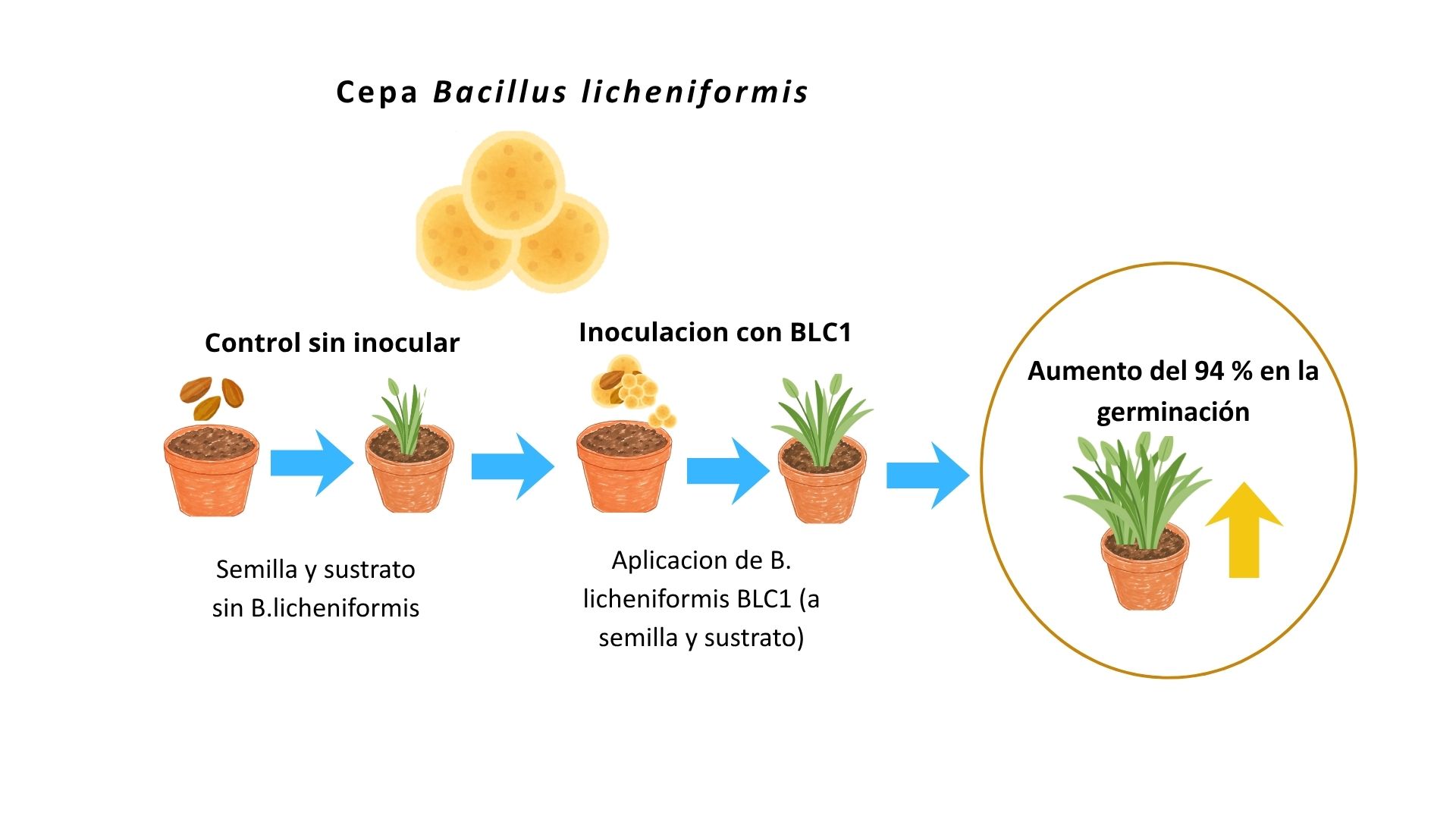
The cherry tomato (Solanum lycopersicum var. Cherry) has become a high-value horticultural crop due to its organoleptic properties, nutritional contribution, and adaptability to diverse production systems. However, during the initial stages of development, it faces multiple biotic and abiotic challenges that negatively affect its yield. In this study, the effect of the microbial inoculant Bacillus licheniformis as a plant growth promoter (PGPR) on cherry tomato seedlings was evaluated. For this purpose, a controlled trial was conducted, applying a selected strain of B. licheniformis to the substrate and seeds, while key agronomic variables were measured, such as germination percentage, seedling height, root length, number of true leaves, and aerial and root biomass. The results showed significant differences (p < 0.05) between treatments with and without inoculation, highlighting a 94% increase in germination, enhanced root development, and greater biomass accumulation in treated seedlings. These effects are attributed to the production of phytohormones, nutrient solubilization, and potential synthesis of bioactive metabolites by the strain used. In conclusion, B. licheniformis demonstrates high potential as a biostimulant in the early stages of cherry tomato cultivation, representing a viable biotechnological alternative to promote more efficient and sustainable plant development.
References
Ahmad, E., Sharma, P. K., & Khan, M. S. (2022). IAA biosynthesis in bacteria and its role in plant-microbe interaction for drought stress management. In Plant Stress Mitigators (pp. 235–258). Springer Nature Singapore.
Ait Bessai, S., Bensidhoum, L., & Nabti, E.-H. (2022). Optimization of IAA production by telluric bacteria isolated from northern Algeria. Biocatalysis and Agricultural Biotechnology, 41(102319), 102319. https://doi.org/10.1016/j.bcab.2022.102319
Ali, N., Abbas, S. A. A. A., Sharif, L., Shafiq, M., Kamran, Z., Masah, Haseeb, M., & Shahid, M. A. (2024). Microbial extracellular polymeric substance and impacts on soil aggregation. In Bacterial Secondary Metabolites (pp. 221–237). Elsevier.
Basit, A., Shah, S. T., Ullah, I., Ullah, I., & Mohamed, H. I. (2021). Microbial bioactive compounds produced by endophytes (bacteria and fungi) and their uses in plant health. In Plant Growth-Promoting Microbes for Sustainable Biotic and Abiotic Stress Management (pp. 285–318). Springer International Publishing.
Basu, A., Prasad, P., Das, S. N., Kalam, S., Sayyed, R. Z., Reddy, M. S., & El Enshasy, H. (2021). Plant growth promoting rhizobacteria (PGPR) as green bioinoculants: Recent developments, constraints, and prospects. Sustainability, 13(3), 1140. https://doi.org/10.3390/su13031140
Batista, B. D., Dourado, M. N., Figueredo, E. F., Hortencio, R. O., Marques, J. P. R., Piotto, F. A., Bonatelli, M. L., Settles, M. L., Azevedo, J. L., & Quecine, M. C. (2021). The auxin-producing Bacillus thuringiensis RZ2MS9 promotes the growth and modifies the root architecture of tomato (Solanum lycopersicum cv. Micro-Tom). Archives of Microbiology, 203(7), 3869–3882. https://doi.org/10.1007/s00203-021-02361-z
Caballero, P., Macías-Benítez, S., Moya, A., Rodríguez-Morgado, B., Martín, L., Tejada, M., Castaño, A., & Parrado Rubio, J. (2022). Biochemical and microbiological soil effects of a biostimulant based on Bacillus licheniformis-fermented sludge. Agronomy, 12(8), 1743. https://doi.org/10.3390/agronomy12081743
Castillo-Alfonso, F., Quintana-Menéndez, A., Vigueras-Ramírez, G., Sales-Cruz, A. M., Rosales-Colunga, L. M., & Olivares-Hernández, R. (2022). Analysis of the propionate metabolism in Bacillus subtilis during 3-Indolacetic production. Microorganisms, 10(12), 2352. https://doi.org/10.3390/microorganisms10122352
Chandra, P., Khobra, R., Sundha, P., Sharma, R. K., Jasrotia, P., Chandra, A., Singh, D. P., & Singh, G. P. (2021). Plant growth promoting Bacillus-based bio formulations improve wheat rhizosphere biological activity, nutrient uptake and growth of the plant. Acta Physiologiae Plantarum, 43(11). https://doi.org/10.1007/s11738-021-03310-5
Chandran, H., Meena, M., & Swapnil, P. (2021). Plant growth-promoting rhizobacteria as a green alternative for sustainable agriculture. Sustainability, 13(19), 10986. https://doi.org/10.3390/su131910986
Chen, X., Ye, X., Yu, X., Zhao, J., Song, M., Yin, D., & Yu, J. (2024). Analysis of the regulatory mechanism of exogenous IAA-mediated tryptophan accumulation and synthesis of endo-genous IAA in Chlorococcum humicola. Chemosphere, 354, 141633. https://doi.org/10.1016/j.chemosphere.2024.141633
Gowtham, H. G., Singh, S. B., Shilpa, N., Aiyaz, M., Nataraj, K., Udayashankar, A. C., Amruthesh, K. N., Murali, M., Poczai, P., Gafur, A., Almalki, W. H., & Sayyed, R. Z. (2022). Insight into recent progress and perspectives in improvement of antioxidant machinery upon PGPR augmentation in plants under drought stress: A review. Antioxidants, 11(9), 1763. https://doi.org/10.3390/antiox11091763
Gupta, A., Mishra, R., Rai, S., Bano, A., Pathak, N., Fujita, M., Kumar, M., & Hasanuzzaman, M. (2022). Mechanistic insights of plant growth promoting bacteria mediated drought and salt stress tolerance in plants for sustainable agriculture. International Journal of Molecular Sciences, 23(7), 3741. https://doi.org/10.3390/ijms23073741
Lastochkina, O., Aliniaeifard, S., Garshina, D., Garipova, S., Pusenkova, L., Allagulova, C., Fedorova, K., Baymiev, A., Koryakov, I., & Sobhani, M. (2021). Seed priming with endophytic Bacillus subtilis strain-specifically improves growth of Phaseolus vulgaris plants under normal and salinity conditions and exerts anti-stress effect through induced lignin deposition in roots and decreased oxidative and osmotic damages. Journal of Plant Physiology, 263, 153462. https://doi.org/10.1016/j.jplph.2021.153462
Lynch, J. P., Strock, C. F., Schneider, H. M., Sidhu, J. S., Ajmera, I., Galindo-Castañeda, T., Klein, S. P., & Hanlon, M. T. (2021). Root anatomy and soil resource capture. Plant and Soil, 466(1–2), 21–63. https://doi.org/10.1007/s11104-021-05010-y
Lyu, D., Ruan, E. D., Backer, R., Gagné-Bourque, F., & Smith, D. L. (2025). Changes in morpho-physiological traits and phytochemical composition of Cannabis sativa L. treated with microbial biostimulants across different substrates. Industrial Crops and Products, 224, 120377. https://doi.org/10.1016/j.indcrop.2024.120377
Mahapatra, S., Yadav, R., & Ramakrishna, W. (2022). Bacillus subtilis impact on plant growth, soil health and environment: Dr. Jekyll and Mr. Hyde. Journal of Applied Microbiology, 132(5), 3543–3562. https://doi.org/10.1111/jam.15480
Medison, R. G., Jiang, J., Medison, M. B., Tan, L.-T., Kayange, C. D. M., Sun, Z., & Zhou, Y. (2023). Evaluating the potential of Bacillus licheniformis YZCUO202005 isolated from lichens in maize growth promotion and biocontrol. Heliyon, 9(10), e20204. https://doi.org/10.1016/j.heliyon.2023.e20204
Mishra, B. S., Sharma, M., & Laxmi, A. (2022). Role of sugar and auxin crosstalk in plant growth and development. Physiologia Plantarum, 174(1), e13546. https://doi.org/10.1111/ppl.13546
Naik, S. A. T. S., Hongal, S., Harshavardhan, M., Chandan, K., Kumar, A. J. S., Ashok, Kyriacou, M. C., Rouphael, Y., & Kumar, P. (2021). Productive characteristics and fruit quality traits of cherry tomato hybrids as modulated by grafting on different Solanum spp. Rootstocks under Ralstonia solanacearum infested greenhouse soil. Agronomy, 11(7), 1311. https://doi.org/10.3390/agronomy11071311
Ni, S., Wu, Y., Zhu, N., Leng, F., & Wang, Y. (2024). Bacillus licheniformis YB06: A rhizosphere-genome-wide analysis and plant growth-promoting analysis of a plant growth-promoting Rhizobacterium isolated from Codonopsis pilosula. Microorganisms, 12(9), 1861. https://doi.org/10.3390/microorganisms12091861
Pérez-Marín, J., Issa-Issa, H., Clemente-Villalba, J., García-Garví, J. M., Hernández, F., Carbonell-Barrachina, Á. A., Calín-Sánchez, Á., & Noguera-Artiaga, L. (2021). Physicochemical, volatile, and sensory characterization of promising cherry tomato (Solanum lycopersicum L.) cultivars: Fresh market aptitudes of pear and round fruits. Agronomy, 11(4), 618. https://doi.org/10.3390/agronomy11040618
Ramirez-Olea, H., Reyes-Ballesteros, B., & Chavez-Santoscoy, R. A. (2022). Potential application of the probiotic Bacillus licheniformis as an adjuvant in the treatment of diseases in humans and animals: A systematic review. Frontiers in Microbiology, 13, 993451. https://doi.org/10.3389/fmicb.2022.993451
Rawat, P., Das, S., Shankhdhar, D., & Shankhdhar, S. C. (2021). Phosphate-solubilizing microorganisms: Mechanism and their role in phosphate solubilization and uptake. Journal of Soil Science and Plant Nutrition, 21(1), 49–68. https://doi.org/10.1007/s42729-020-00342-7
Rezk, A., Abhary, M., & Akhkha, A. (2021). Tomato (Solanum lycopersicum L.) Breeding Strategies for Biotic and Abiotic Stresses. In Advances in Plant Breeding Strategies: Vegetable Crops (pp. 363–405). Springer International Publishing. https://doi.org/10.1007/978-3-030-66961-4_10
Rolón-Cárdenas, G. A., Arvizu-Gómez, J. L., Soria-Guerra, R. E., Pacheco-Aguilar, J. R., Alatorre-Cobos, F., & Hernández-Morales, A. (2022). The role of auxins and auxin-producing bacteria in the tolerance and accumulation of cadmium by plants. Environmental Geochemistry and Health, 44(11), 3743–3764. https://doi.org/10.1007/s10653-021-01179-4
Tang, J., Li, Y., Zhang, L., Mu, J., Jiang, Y., Fu, H., Zhang, Y., Cui, H., Yu, X., & Ye, Z. (2023). Biosynthetic pathways and functions of indole-3-acetic acid in microorganisms. Microorganisms, 11(8). https://doi.org/10.3390/microorganisms11082077
Timofeeva, A. M., Galyamova, M. R., & Sedykh, S. E. (2023). Plant growth-promoting soil bacteria: Nitrogen fixation, phosphate solubilization, siderophore production, and other biological activities. Plants, 12(24). https://doi.org/10.3390/plants12244074
Tsotetsi, T., Nephali, L., Malebe, M., & Tugizimana, F. (2022). Bacillus for plant growth promotion and stress resilience: What have we learned? Plants, 11(19), 2482. https://doi.org/10.3390/plants11192482
Xiong, P., Zhang, Z., & Peng, X. (2022). Root and root‐derived biopore interactions in soils: A review. Journal of Plant Nutrition and Soil Science, 185(5), 643–655. https://doi.org/10.1002/jpln.202200003
Xu, Y., Dong, M., Xiao, H., Young Quek, S., Ogawa, Y., Ma, G., & Zhang, C. (2024). Advances in spray-dried probiotic microcapsules for targeted delivery: a review. Critical Reviews in Food Science and Nutrition, 64(30), 11222–11238. https://doi.org/10.1080/10408398.2023.2235424
Yusfi, L. A., Tjong, D. H., Chaniago, I., & Jamsari, J. (2023). Screening the effect of YM media component and tryptophan levels on IAA production of Serratia plymuthica UBCF_13. AIP Conference Proceedings, 2730, 080001.
Zhang, J., Zhu, S., Ma, N., Johnston, L. J., Wu, C., & Ma, X. (2021). Metabolites of microbiota response to tryptophan and intestinal mucosal immunity: A therapeutic target to control intestinal inflammation. Medicinal Research Reviews, 41(2), 1061–1088. https://doi.org/10.1002/med.21752
Published
Issue
Section
License
Copyright (c) 2026 Angel Virgilio Cedeño Moreira, Gregorio Humberto Vásconez Montufar, Milton Fernando Cabezas Guerrero, Ronald Oswaldo Villamar-Torres

This work is licensed under a Creative Commons Attribution-NonCommercial 4.0 International License.
The author does not retain copyright or publication rights indefinitely. The author retains all moral rights, particularly the right of authorship and the right to the integrity of the article.