Peruvian native chili peppers (Capsicum spp.): A comprehensive review of their diversity, phytochemical richness, industrial potential, and future perspectives
DOI:
https://doi.org/10.17268/sci.agropecu.2026.58Keywords:
Capsicum, Bioactive compounds, Volatile profile, Geographical distribution, Industrial applications, VOSviewer, BibliometrixAbstract
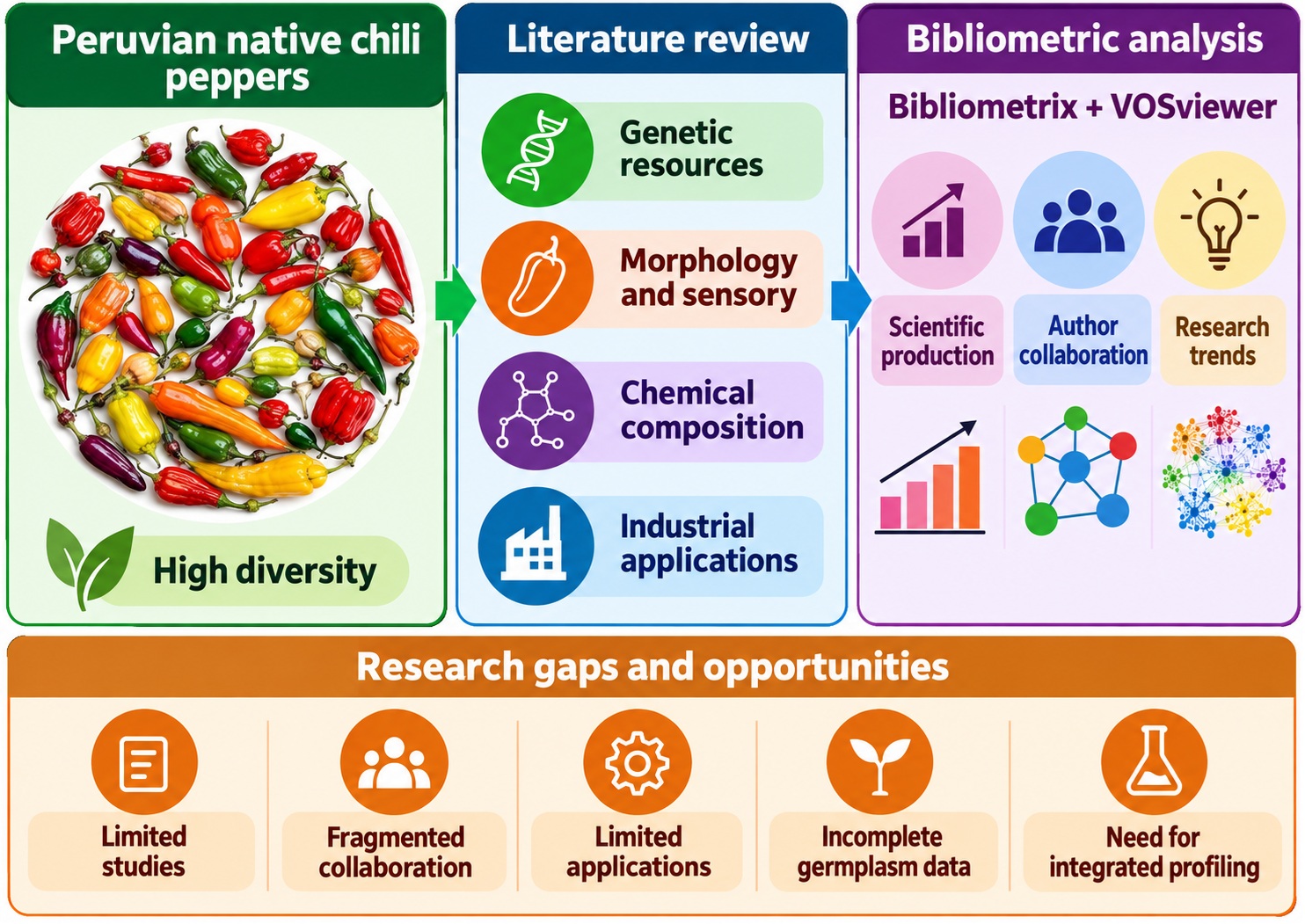
Peru is one of the countries with the greatest diversity of native chili peppers, which make a significant contribution to the highly valued gastronomy of this nation. However, the use of these chili peppers remains localized, resulting in a limited number of studies focused on these species, which restricts their industrial utilization and increases the risk of extinction. For this reason, this review addresses topics ranging from their geographical distribution and genetic resources (encompassing national collections such as INIA with 712 accessions within a global germplasm context including the WVC with 8,264 accessions) to their industrial applications, including morphological characteristics, sensory profiles, and chemical composition. It was observed that native Peruvian chili peppers have the potential to be used in the development of pharmaceutical, cosmetic, and food products, due to their content of compounds with biological activity such as capsaicinoids, carotenoids, phenolic compounds, vitamins, and minerals; they also present a wide range of pungency levels according to the Scoville scale. Finally, a bibliometric analysis was conducted using Bibliometrix and VOSviewer, where it was found that despite an increase in publications in recent years, native Peruvian chili peppers are still poorly represented in international scientific databases. Overall, this work addresses important information for the sustainable valorization and conservation of Peruvian Capsicum genetic resources, as it highlights its potential as a source of bioactive compounds to be used in different fields of industry.
References
Akmal, M., Hasnain, N., Rehan, A., Iqbal, U., Hashmi, S., Fatima, K., Farooq, M. Z., Khosa, F., Siddiqi, J., & Khan, M. K. (2020). Glioblastome multiforme: A bibliometric analysis. World Neurosurgery, 136, 270–282. https://doi.org/10.1016/J.WNEU.2020.01.027
Albrecht, E., Zhang, D., Mays, A. D., Saftner, R. A., & Stommel, J. R. (2012). Genetic diversity in Capsicum baccatum is significantly influenced by its ecogeographical distribution. BMC Genetics, 13(1), 1–15. https://doi.org/10.1186/1471-2156-13-68
Aliaga Camarena, J. C., Jamanca Gonzales, N. C., & Vega Portalatino, E. J. (2021). Análisis proximal fisicoquímico y metabólico de frutos del ecotipo Capsicum chinense JACQ. “Ají supano” para fines industriales. REBIOL, 40(2), 256–264. https://doi.org/10.17268/rebiol.2020.40.02.12
Allemand, A., Leonardi, B. F., Zimmer, A. R., Moreno, S., Romão, P. R. T., & Gosmann, G. (2016). Red pepper (Capsicum baccatum) extracts present anti-inflammatory effects in vivo and inhibit the production of TNF-α and NO in vitro. Journal of Medicinal Food, 19(8), 759–767. https://doi.org/10.1089/JMF.2015.0101
Alma Solis, M., & Vergara Cobian, C. E. (2023). Lineodes guenée (Crambidae: Spilomelinae) of Peru: New reports of larval feeding on solanaceae and new species. Proceedings of the Entomological Society of Washington, 124(4), 845–859. https://doi.org/10.4289/0013-8797.124.4.845
Alvarez-Parrilla, E., De La Rosa, L. A., Amarowicz, R., & Shahidi, F. (2012). Protective effect of fresh and processed Jalapeño and Serrano peppers against food lipid and human LDL cholesterol oxidation. Food Chemistry, 133(3), 827–834. https://doi.org/10.1016/J.FOODCHEM.2012.01.100
Araújo, C. M. M., Silva Filho, D. F., Ticona-Benavente, C. A., & Batista, M. R. A. (2018). Morphoagronomic characteristics display high genetic diversity in Murupi chili pepper landraces. Horticultura Brasileira, 36(1), 83–87. https://doi.org/10.1590/S0102-053620180114
Arbizu, C. I., Saldaña, C. L., Ferro-Mauricio, R. D., Chávez-Galarza, J. C., Herrera, J., et al. (2022). Characterization of the complete chloroplast genome of a Peruvian landrace of Capsicum chinense Jacq. (Solanaceae), arnaucho chili pepper. Mitochondrial DNA Part B, 7(1), 156–158. https://doi.org/10.1080/23802359.2021.2014366
Arora, R., Gill, N. S., Chauhan, G., & Rana, A. C. (2011). An overview about versatile molecule capsaicin. International Journal of Pharmaceutical Sciences and Drug Research, 3(4), 280–286.
Ashil, J., Febi, J., Jestin, V. T., Syam, D. S., Balu, M., Ratheesh, M., & Krishnakumar, I. M. (2021). Influence of a novel food-grade formulation of red chili extract (Capsicum annum) on overweight subjects: Randomized, double-blinded, placebo-controlled study. Journal of Dietary Supplements, 18(4), 387–405. https://doi.org/10.1080/19390211.2020.1780363
Aza-González, C., Núñez-Palenius, H. G., & Ochoa-Alejo, N. (2011). Molecular biology of capsaicinoid biosynthesis in chili pepper (Capsicum spp.). Plant Cell Reports, 30(5), 695–706. https://doi.org/10.1007/s00299-010-0968-8
Baba, V. Y., Rocha, K. R., Gomes, G. P., de Fátima Ruas, C., Ruas, P. M., Rodrigues, R., & Gonçalves, L. S. A. (2016). Genetic diversity of Capsicum chinense accessions based on fruit morphological characterization and AFLP markers. Genetic Resources and Crop Evolution, 63(8), 1371–1381. https://doi.org/10.1007/s10722-015-0325-4
Bacon, K., Boyer, R., Denbow, C., O’Keefe, S., Neilson, A., & Williams, R. (2017). Antibacterial activity of jalapeño pepper (Capsicum annuum var. annuum) extract fractions against select foodborne pathogens. Food Science & Nutrition, 5(3), 730–738. https://doi.org/10.1002/FSN3.453
Baenas, N., Belović, M., Ilic, N., Moreno, D. A., & García-Viguera, C. (2019). Industrial use of pepper (Capsicum annum L.) derived products: Technological benefits and biological advantages. Food Chemistry, 274, 872–885. https://doi.org/10.1016/J.FOODCHEM.2018.09.047
Bernstein, P. S., Li, B., Vachali, P. P., Gorusupudi, A., Shyam, R., Henriksen, B. S., & Nolan, J. M. (2016). Lutein, zeaxanthin, and meso-zeaxanthin: The basic and clinical science underlying carotenoid-based nutritional interventions against ocular disease. Progress in Retinal and Eye Research, 50, 34–66. https://doi.org/10.1016/J.PRETEYERES.2015.10.003
Bogusz, S., Libardi, S. H., Dias, F. F. G., Coutinho, J. P., Bochi, V. C., Rodrigues, D., Melo, A. M. T., & Godoy, H. T. (2018). Brazilian Capsicum peppers: capsaicinoid content and antioxidant activity. Journal of the Science of Food and Agriculture, 98(1), 217–224. https://doi.org/10.1002/JSFA.8459
Bogusz, S., Março, P. H., Valderrama, P., Damasceno, F. C., Aranda, M. S., et al. (2015). Analysis of volatile compounds in Capsicum spp. by headspace solid-phase microextraction and GC × GC-TOFMS. Analytical Methods, 7(2), 521–529. https://doi.org/10.1039/C4AY01455C
Boiko, Y. A., Kravchenko, I. A., Shandra, A. A., & Boiko, I. A. (2017). Extraction, identification and anti-inflammatory activity of carotenoids out of Сapsicum Anuum L. Journal of Herbmed Pharmacology Journal Homepage: J Herbmed Pharmacol, 6(1), 10–15.
Bosland, P. W., & Votava, E. J. (2012). Peppers: Vegetable and Spice Capsicums (2nd ed.). https://doi.org/10.1080/01140671.2012.745161
Butcher, J. D., Crosby, K. M., Yoo, K. S., Patil, B. S., Ibrahim, A. M. H., Leskovar, D. I., & Jifon, J. L. (2012). Environmental and genotypic variation of capsaicinoid and flavonoid concentrations in habanero (Capsicum chinense) peppers. HortScience, 47(5), 574–579. https://doi.org/10.21273/HORTSCI.47.5.574
Carvalho, A. V., de Andrade Mattietto, R., de Oliveira Rios, A., de Almeida Maciel, R., Moresco, K. S., & de Souza Oliveira, T. C. (2015). Bioactive compounds and antioxidant activity of pepper (Capsicum sp.) genotypes. Journal of Food Science and Technology, 52(11), 7457–7464. https://doi.org/10.1007/s13197-015-1833-0
Chen, L., & Kang, Y. H. (2013). Anti-inflammatory and antioxidant activities of red pepper (Capsicum annuum L.) stalk extracts: Comparison of pericarp and placenta extracts. Journal of Functional Foods, 5(4), 1724–1731. https://doi.org/10.1016/J.JFF.2013.07.018
Chularojmontri, L., Suwatronnakorn, M., & Wattanapitayakul, S. K. (2010). Influence of capsicum extract and capsaicin on endothelial health. Journal of the Medical Association of Thailand, 93(2), 92–101.
Danza, A., Mastromatteo, M., Cozzolino, F., Lecce, L., Lampignano, V., Laverse, J., & Del Nobile, M. A. (2014). Processing and characterization of durum wheat bread enriched with antioxidant from yellow pepper flour. LWT - Food Science and Technology, 59(1), 479–485. https://doi.org/10.1016/J.LWT.2014.06.001
Dawidowicz, A. L., & Olszowy, M. (2011). Antioxidant properties of BHT estimated by ABTS assay in systems differing in pH or metal ion or water concentration. European Food Research and Technology, 232(5), 837–842. https://doi.org/10.1007/s00217-011-1451-7
de Freitas Marinho, L., Sganzerla, W. G., Ferreira, V. C., Jimenez Moreno, J. A., Rostagno, M. A., & Forster-Carneiro, T. (2023). Advances in green extraction methods, biological properties, and applications of betanin and vitexin: An updated review and bibliometric analysis. Biocatalysis and Agricultural Biotechnology, 51, 102744. https://doi.org/10.1016/J.BCAB.2023.102744
de Sá Mendes, N., & Branco de Andrade Gonçalves, É. C. (2020). The role of bioactive components found in peppers. Trends in Food Science & Technology, 99, 229–243. https://doi.org/10.1016/J.TIFS.2020.02.032
de Sá Mendes, N., Coimbra, P. P. S., Santos, M. C. B., Cameron, L. C., Ferreira, M. S. L., Buera, M. del P., & Gonçalves, É. C. B. A. (2020). Capsicum pubescens as a functional ingredient: Microencapsulation and phenolic profilling by UPLC-MSE. Food Research International, 135. https://doi.org/10.1016/j.foodres.2020.109292
de Sá Mendes, N., Favre, L. C., Rolandelli, G., Ferreira, C. dos S., Gonçalves, É. C. B. de A., & Buera, M. del P. (2019). Flour from “fruits and vegetables” waste with addition of a South-American pepper (Capsicum baccatum) proposed as food ingredient. International Journal of Food Science & Technology, 55(3), 1230–1237. https://doi.org/10.1111/IJFS.14358
de Sá Mendes, N., Santos, M. C. P., Santos, M. C. B., Cameron, L. C., Ferreira, M. S. L., & Gonçalves, É. C. B. A. (2019). Characterization of pepper (Capsicum baccatum) - A potential functional ingredient. LWT, 112, 108209. https://doi.org/10.1016/J.LWT.2019.05.107
Duranova, H., Valkova, V., & Gabriny, L. (2022). Chili peppers (Capsicum spp.): the spice not only for cuisine purposes: an update on current knowledge. Phytochemistry Reviews 2021 21:4, 21(4), 1379–1413. https://doi.org/10.1007/S11101-021-09789-7
Espichán, F., Rojas, R., Quispe, F., Cabanac, G., & Marti, G. (2022). Metabolomic characterization of 5 native Peruvian chili peppers (Capsicum spp.) as a tool for species discrimination. Food Chemistry, 386. https://doi.org/10.1016/j.foodchem.2022.132704
Estrada, R., Tantalean, J. F. C., Saldaña, C. L., Romero, Y., Vilcara, E., & Arbizu, C. I. (2024). Draft genome and SSR data mining of a Peruvian landrace of Capsicum chinense, the arnaucho chili pepper. Genetic Resources and Crop Evolution, 1–9. https://doi.org/10.1007/s10722-024-01941-4
Fabozzi, A., Della Corte, L., Formisano, C., Giampaolino, P., Nappi, C., & Bifulco, G. (2020). Effects of an oral supplement based on cucurbita maxima and Capsicum annum on symptoms of overactive bladder in female population: an observational study. Advances in Integrative Medicine, 7(3), 158–162. https://doi.org/10.1016/J.AIMED.2020.05.003
Fattori, V., Hohmann, M. S. N., Rossaneis, A. C., Pinho-Ribeiro, F. A., & Verri, W. A. (2016). Capsaicin: Current understanding of its mechanisms and therapy of pain and other pre-clinical and clinical uses. Molecules, 21(7), 844. https://doi.org/10.3390/MOLECULES21070844
Fernández-Bedmar, Z., & Alonso-Moraga, A. (2016). In vivo and in vitro evaluation for nutraceutical purposes of capsaicin, capsanthin, lutein and four pepper varieties. Food and Chemical Toxicology, 98, 89–99. https://doi.org/10.1016/J.FCT.2016.10.011
Ferrando, B. O., Baenas, N., & Periago, M. J. (2024). Changes in carotenoids and quality parameters of sweet Paprika (Capsicum annuum) after an accelerated heat treatment. Antioxidants, 13(12), 1492. https://doi.org/10.3390/antiox13121492
Ghasemnezhad, M., Sherafati, M., & Payvast, G. A. (2011). Variation in phenolic compounds, ascorbic acid and antioxidant activity of five coloured bell pepper (Capsicum annum) fruits at two different harvest times. Journal of Functional Foods, 3(1), 44–49. https://doi.org/10.1016/J.JFF.2011.02.002
Giri, T. K., Pramanik, K., Barman, T. K., & Maity, S. (2017). Nano-encapsulation of dietary phytoconstituent capsaicin on emulsome: Evaluation of anticancer activity through the measurement of liver oxidative stress in rats. Anti-Cancer Agents in Medicinal Chemistry, 17(12), 1669–1678. https://doi.org/10.2174/1871520617666170419121322
Giuffrida, D., Dugo, P., Torre, G., Bignardi, C., Cavazza, A., Corradini, C., & Dugo, G. (2013). Characterization of 12 Capsicum varieties by evaluation of their carotenoid profile and pungency determination. Food Chemistry, 140(4), 794–802. https://doi.org/10.1016/J.FOODCHEM.2012.09.060
Giuffrida, D., Dugo, P., Torre, G., Bignardi, C., Cavazza, A., Corradini, C., & Dugo, G. (2014). Evaluation of carotenoid and capsaicinoid contents in powder of red chili peppers during one year of storage. Food Research International, 65(PB), 163–170. https://doi.org/10.1016/J.FOODRES.2014.06.019
González-López, J., Rodríguez-Moar, S., & Silvar, C. (2021). Correlation analysis of high-throughput fruit phenomics and biochemical profiles in native peppers (Capsicum spp.) from the primary center of diversification. Agronomy, 11(2). https://doi.org/10.3390/agronomy11020262
González-Zamora, A., Sierra-Campos, E., Luna-Ortega, J. G., Pérez-Morales, R., Ortiz, J. C. R., & García-Hernández, J. L. (2013). Characterization of different Capsicum varieties by evaluation of their capsaicinoids content by high performance liquid chromatography, determination of pungency and effect of high temperature. Molecules, 18(11), 13471–13486. https://doi.org/10.3390/MOLECULES181113471
Grebenstein, N., & Frank, J. (2012). Rapid baseline-separation of all eight tocopherols and tocotrienols by reversed-phase liquid-chromatography with a solid-core pentafluorophenyl column and their sensitive quantification in plasma and liver. Journal of Chromatography A, 1243, 39–46. https://doi.org/10.1016/J.CHROMA.2012.04.042
Guevara Pérez, A., Villanueva-Quejia, E., Nolazco Cama, D., Llontop, G., & Cancino Chávez, K. (2021). Effects of applying saturated steam as an Organic Sterilization System (OSS) in mirasol chili pepper (Capsicum baccatum var. pendulum) and panca chili pepper (Capsicum chinense Jacq.). Enfoque UTE, 12(3), 1–10. https://doi.org/10.29019/enfoqueute.675
Günel, Z., Varhan, E., Koç, M., Topuz, A., & Sahin-Nadeem, H. (2021). Production of pungency-suppressed capsaicin microcapsules by spray chilling. Food Bioscience, 40, 100918. https://doi.org/10.1016/J.FBIO.2021.100918
Gurnani, N., Gupta, M., Mehta, D., & Mehta, B. K. (2016). Chemical composition, total phenolic and flavonoid contents, and in vitro antimicrobial and antioxidant activities of crude extracts from red chilli seeds (Capsicum frutescens L.). Journal of Taibah University for Science, 10(4), 462–470. https://doi.org/10.1016/J.JTUSCI.2015.06.011
Gurung, T., Techawongstien, S., Suriharn, B., & Techawongstien, S. (2011). Impact of environments on the accumulation of capsaicinoids in Capsicum spp. HortScience, 46(12), 1576–1581. https://doi.org/10.21273/HORTSCI.46.12.1576
Hazekawa, M., Hideshima, Y., Ono, K., Nishinakagawa, T., Kawakubo-Yasukochi, T., Takatani-Nakase, T., & Nakashima, M. (2017). Anti-inflammatory effects of water extract from bell pepper (Capsicum annuum L. var. grossum) leaves in vitro. Experimental and Therapeutic Medicine, 14(5), 4349–4355. https://doi.org/10.3892/ETM.2017.5106
Hernández-Pérez, T., Gómez-García, M. del R., Valverde, M. E., & Paredes-López, O. (2020). Capsicum annuum (hot pepper): An ancient Latin-American crop with outstanding bioactive compounds and nutraceutical potential. A review. Comprehensive Reviews in Food Science and Food Safety, 19(6), 2972–2993. https://doi.org/10.1111/1541-4337.12634
Hervert-Hernández, D., Sáyago-Ayerdi, S. G., & Goñi, I. (2010). Bioactive compounds of four hot pepper varieties (Capsicum annuum L.), antioxidant capacity, and intestinal bioaccessibility. Journal of Agricultural and Food Chemistry, 58(6), 3399–3406. https://doi.org/10.1021/JF904220W
Iglesias Cruz, A. C. (2020). Vista de variabilidad del fruto en el ecotipo ají “charapita” (Capsicum frutescens L.) de la Amazonía peruana. Ciencia Amazónica, 8(2), 167–184. https://doi.org/10.22386/ca.v8i2.295
Jäger, M., Jiménez, A., & Amaya, K. (2013a). Guía de oportunidades de mercado para los ajíes nativos de Perú. Compilación de los estudios de mercado realizados dentro del marco del proyecto “Rescate y Promoción de Ajíes Nativos en su Centro de Origen” para Perú (Bioversity International, Ed.).
Jäger, M., Jiménez, A., & Amaya, K. (2013b). Las cadenas de valor de los ajíes nativos de Perú. Compilación de los estudios realizados dentro del marco del proyecto “Rescate y Promoción de Ajíes Nativos en su Centro de Origen” para Perú.
Jarret, R. L., Barboza, G. E., da Costa Batista, F. R., Berke, T., Chou, Y.-Y., et al. (2019). Capsicum—An Abbreviated Compendium. Journal of the American Society for Horticultural Science, 144(1), 3–22. https://doi.org/10.21273/JASHS04446-18
Jeon, G., Choi, Y., Lee, S. M., Kim, Y., Oh, M., Jeong, H. S., & Lee, J. (2012). Antioxidant and antiproliferative properties of hot pepper (Capsicum annuum L.) seeds. Journal of Food Biochemistry, 36(5), 595–603. https://doi.org/10.1111/J.1745-4514.2011.00571.X
Jeong, W. Y., Jin, J. S., Cho, Y. A., Lee, J. H., Park, S., et al. (2011). Determination of polyphenols in three Capsicum annuum L. (bell pepper) varieties using high-performance liquid chromatography-tandem mass spectrometry: Their contribution to overall antioxidant and anticancer activity. Journal of Separation Science, 34(21), 2967–2974. https://doi.org/10.1002/JSSC.201100524
Joshi, D. D., Somkuwar, B. G., Kharkwal, H., & Chander, S. (2022). Aroma based varieties of Capsicum chinense Jacq., geographical distribution and scope for expansion of the species. Journal of Applied Research on Medicinal and Aromatic Plants, 29, 100379. https://doi.org/10.1016/j.jarmap.2022.100379
Juániz, I., Ludwig, I. A., Bresciani, L., Dall’Asta, M., Mena, P., Del Rio, D., Cid, C., & de Peña, M. P. (2016a). Catabolism of raw and cooked green pepper (Capsicum annuum) (poly)phenolic compounds after simulated gastrointestinal digestion and faecal fermentation. Journal of Functional Foods, 27, 201–213. https://doi.org/10.1016/J.JFF.2016.09.006
Juániz, I., Ludwig, I. A., Huarte, E., Pereira-Caro, G., Moreno-Rojas, J. M., Cid, C., & De Peña, M. P. (2016b). Influence of heat treatment on antioxidant capacity and (poly)phenolic compounds of selected vegetables. Food Chemistry, 197, 466–473. https://doi.org/10.1016/J.FOODCHEM.2015.10.139
Kim, J. S., Ha, T. Y., Kim, S., Lee, S. J., & Ahn, J. (2017). Red paprika (Capsicum annuum L.) and its main carotenoid capsanthin ameliorate impaired lipid metabolism in the liver and adipose tissue of high-fat diet-induced obese mice. Journal of Functional Foods, 31, 131–140. https://doi.org/10.1016/J.JFF.2017.01.044
Kollmannsberger, H., Rodríguez-Burruezo, A., Nitz, S., & Nuez, F. (2011). Volatile and capsaicinoid composition of ají (Capsicum baccatum) and rocoto (Capsicum pubescens), two Andean species of chile peppers. Journal of the Science of Food and Agriculture, 91(9), 1598–1611. https://doi.org/10.1002/JSFA.4354
Ksibi, I. El, Slama, R. Ben, Faidi, K., Ticha, M. Ben, & M’henni, M. F. (2015). Mixture approach for optimizing the recovery of colored phenolics from red pepper (Capsicum annum L.) by-products as potential source of natural dye and assessment of its antimicrobial activity. Industrial Crops and Products, 70, 34–40. https://doi.org/10.1016/J.INDCROP.2015.03.017
Kumar, R., Dwivedi, N., Singh, R. K., Kumar, S., Rai, V. P., & Singh, M. (2011). A review on molecular characterization of pepper for capsaicin and oleoresin. International Journal of Plant Breeding and Genetics, 5(2), 99–110. https://doi.org/10.3923/IJPBG.2011.99.110
Libreros, D., Van Zonneveld, M. J., Petz, M., Meckelmann, S. W., Ríos, L., Peña, K., Amaya, K., & Ramírez, M. (2013). Catálogo de ajíes (Capsicum spp.) peruanos promisorios conservados en el banco de semillas del INIA - Perú. In Instituto Nacional de Innovación Agraria. Bioversity International. https://repositorio.inia.gob.pe/handle/20.500.12955/88
Ligarda Samanez, C. A., Choque-Quispe, D., Allende Allende, L. F., Ramos Pacheco, B. S., & Peralta-Guevara, D. E. (2023). Calidad sensorial y proximal en conservas de mondongo de res (Bos taurus) en salsa de ají amarillo (Capsicum baccatum). Ciencia y Tecnología Agropecuaria, 24(1), 2741. https://doi.org/10.21930/rcta.vol24_num1_art:2741
López Medina, E., López Zavaleta, A., Gil Rivero, A. E., Mostacero León, J., De la Cruz Castillo, A. J., & Villena Zapata, L. (2020). Morfometría de frutos y semillas del “ají mochero” Capsicum chinense Jacq. Ciencia y Tecnología Agropecuaria, 21(3), 1–11. https://doi.org/10.21930/rcta.vol21_num3_art:1598
Lu, M., Ho, C. T., & Huang, Q. (2017). Extraction, bioavailability, and bioefficacy of capsaicinoids. Journal of Food and Drug Analysis, 25(1), 27–36. https://doi.org/10.1016/J.JFDA.2016.10.023
Marini, E., Magi, G., Mingoia, M., Pugnaloni, A., & Facinelli, B. (2015). Antimicrobial and anti-virulence activity of capsaicin against erythromycin-resistant, cell-invasive group A streptococci. Frontiers in Microbiology, 6. https://doi.org/10.3389/FMICB.2015.01281
Meckelmann, S. W., Jansen, C., Riegel, D. W., van Zonneveld, M., Ríos, L., Peña, K., Mueller-Seitz, E., & Petz, M. (2015a). Phytochemicals in native Peruvian Capsicum pubescens (Rocoto). European Food Research and Technology, 241(6), 817–825. https://doi.org/10.1007/s00217-015-2506-y
Meckelmann, S. W., Riegel, D. W., van Zonneveld, M., Ríos, L., Peña, K., Mueller-Seitz, E., & Petz, M. (2015b). Capsaicinoids, flavonoids, tocopherols, antioxidant capacity and color attributes in 23 native Peruvian chili peppers (Capsicum spp.) grown in three different locations. European Food Research and Technology, 240(2), 273–283. https://doi.org/10.1007/s00217-014-2325-6
Meckelmann, S. W., Riegel, D. W., Van Zonneveld, M. J., Ríos, L., Peña, K., Ugas, R., Quinonez, L., Mueller-Seitz, E., & Petz, M. (2013). Compositional characterization of native Peruvian chili peppers (Capsicum spp.). Journal of Agricultural and Food Chemistry, 61(10), 2530–2537. https://doi.org/10.1021/jf304986q
Mendiratta, S. K., Shinde, A. T., & Mane, B. G. (2013). Effect of added vegetable (Carrot, Radish and Capsicum) as functional ingredients in mutton nuggets. Journal of Meat Science and Technology, 1(2), 71–76.
Menichini, F., Tundis, R., Bonesi, M., Loizzo, M. R., Conforti, F., et al. (2009). The influence of fruit ripening on the phytochemical content and biological activity of Capsicum chinense Jacq. cv Habanero. Food Chemistry, 114(2), 553–560. https://doi.org/10.1016/J.FOODCHEM.2008.09.086
MIDAGRI. (2020, September 3). Más de 200 mil toneladas de ajíes se producen a nivel nacional. Ministerio de Desarrollo Agrario y Riego, Gobierno Del Perú. https://www.gob.pe/institucion/midagri/noticias/297684-mas-de-200-mil-toneladas-de-ajies-se-producen-a-nivel-nacional
Mokhtar, M., Soukup, J., Donato, P., Cacciola, F., Dugo, P., Riazi, A., Jandera, P., & Mondello, L. (2015). Determination of the polyphenolic content of a Capsicum annuum L. extract by liquid chromatography coupled to photodiode array and mass spectrometry detection and evaluation of its biological activity. Journal of Separation Science, 38(2), 171–178. https://doi.org/10.1002/JSSC.201400993
Molnár, H., Kónya, É., Zalán, Z., Bata-Vidács, I., Tömösközi-Farkas, R., Székács, A., & Adányi, N. (2018). Chemical characteristics of spice paprika of different origins. Food Control, 83, 54–60. https://doi.org/10.1016/j.foodcont.2017.04.028
Morales-Soriano, E., Kebede, B., Ugás, R., Grauwet, T., Van Loey, A., & Hendrickx, M. (2018). Flavor characterization of native Peruvian chili peppers through integrated aroma fingerprinting and pungency profiling. Food Research International, 109, 250–259. https://doi.org/10.1016/j.foodres.2018.04.030
Morales-Soriano, E., Panozzo, A., Ugás, R., Grauwet, T., Van Loey, A., & Hendrickx, M. (2019). Carotenoid profile and basic structural indicators of native Peruvian chili peppers. European Food Research and Technology, 245(3), 717–732. https://doi.org/10.1007/s00217-018-3193-2
Nascimento, P. L. A., Nascimento, T. C. E. S., Ramos, N. S. M., Silva, G. R., Gomes, J. E. G., et al. (2014). Quantification, antioxidant and antimicrobial activity of phenolics isolated from different extracts of Capsicum frutescens (pimenta malagueta). Molecules, 19(4), 5434–5447. https://doi.org/10.3390/MOLECULES19045434
Nwachukwu, I. D., Udenigwe, C. C., & Aluko, R. E. (2016). Lutein and zeaxanthin: Production technology, bioavailability, mechanisms of action, visual function, and health claim status. Trends in Food Science & Technology, 49, 74–84. https://doi.org/10.1016/J.TIFS.2015.12.005
Oguzie, E. E., Oguzie, K. L., Akalezi, C. O., Udeze, I. O., Ogbulie, J. N., & Njoku, V. O. (2013). Natural products for materials protection: Corrosion and microbial growth inhibition using Capsicum frutescens biomass extracts. ACS Sustainable Chemistry and Engineering, 1(2), 214–225. https://doi.org/10.1021/sc300145k
Ortega Morales, C. F., Irie, K., & Kawase, M. (2025). A comparative analysis of fruit quality and flavor in Capsicum chinense and Capsicum annuum from Myanmar, Peru, and Japan. International Journal of Plant Biology, 16(3), 90. https://doi.org/10.3390/ijpb16030090
Ortiz, R., Delgado de la Flor, F., Alvarado, G., & Crossa, J. (2010). Classifying vegetable genetic resources—A case study with domesticated Capsicum spp. Scientia Horticulturae, 126(2), 186–191. https://doi.org/10.1016/J.SCIENTA.2010.07.007
Palombo, N. E., & Carrizo García, C. (2022). Geographical patterns of genetic variation in Locoto Chile (Capsicum pubescens) in the Americas Inferred by Genome-Wide Data Analysis. Plants, 11(21), 2911. https://doi.org/10.3390/plants11212911
Patel, K., Calderon, R., Asencios, E., Vilchez, D., Marcelo, M., & Rojas, R. (2016a). Agro-morphological characteristics and sensory evaluation of native Peruvian chili peppers. Journal of Agricultural Science and Technology B, 6(3), 180–187. https://doi.org/10.17265/2161-6264/2016.03.005
Patel, K., Ruiz, C., Calderon, R., Marcelo, M., & Rojas, R. (2016b). Characterisation of volatile profiles in 50 native Peruvian chili pepper using solid phase microextraction–gas chromatography mass spectrometry (SPME–GCMS). Food Research International, 89, 471–475. https://doi.org/10.1016/j.foodres.2016.08.023
Pérez-Vásquez, R., Pasquel-Reátegui, J. L., & Vélez-Erazo, E. M. (2026). Recovery of bioactive compounds from three varieties of Charapita chili pepper (Capsicum frutescens) by ultrasound-assisted extraction. Journal of Food Measurement and Characterization, 20(4), 4675–4689. https://doi.org/10.1007/S11694-025-03953-9
Porta, B., Ríos, M., Cañedo, V., & Aréstegui, K. (2024). Diversidad de uchus (Capsicum spp.) en Warmiragra, sierra central de Perú: criterios de selección, manejo tradicional y uso cultural. In Editorial de la Universidad Veracruzana (Ed.), Chiles, ajíes y pimentas: Capsicum en el Caribe, Centro y Sudamérica (pp. 333–359).
Pugliese, A., Loizzo, M. R., Tundis, R., O’Callaghan, Y., Galvin, K., Menichini, F., & O’Brien, N. (2013). The effect of domestic processing on the content and bioaccessibility of carotenoids from chili peppers (Capsicum species). Food Chemistry, 141(3), 2606–2613. https://doi.org/10.1016/J.FOODCHEM.2013.05.046
Quispe, F., Marcelo, M., Chanamé, J., Bederski, S., & Snachez, L. (2019). Caracterización agro - morfológica y químico - nutricional de cinco ajíes promisorios del INIA - PERÚ (F. Quispe Jacobo, Ed.; 1st ed.).
Ranilla, L. G., Kwon, Y. I., Apostolidis, E., & Shetty, K. (2010). Phenolic compounds, antioxidant activity and in vitro inhibitory potential against key enzymes relevant for hyperglycemia and hypertension of commonly used medicinal plants, herbs and spices in Latin America. Bioresource Technology, 101(12), 4676–4689. https://doi.org/10.1016/J.BIORTECH.2010.01.093
Raza, K., Shareef, M. A., Singal, P., Sharma, G., Negi, P., & Katare, O. P. (2014). Lipid-based capsaicin-loaded nano-colloidal biocompatible topical carriers with enhanced analgesic potential and decreased dermal irritation. Journal of Liposome Research, 24(4), 290–296. https://doi.org/10.3109/08982104.2014.911314
Reyes-Escogido, M. D. L., Gonzalez-Mondragon, E. G., & Vazquez-Tzompantzi, E. (2011). Chemical and pharmacological aspects of capsaicin. Molecules, 16(2), 1253–1270. https://doi.org/10.3390/MOLECULES16021253
Rodriguez, G., Cervi, A., Citti, F., Aguirre, E., Estivi, L., de Fatima Arevalo-Oliva, M., et al. (2026). Characterization of cold-pressed oils extracted from seeds of different Capsicum species. Food Production, Processing and Nutrition, 8(1), 64-. https://doi.org/10.1186/S43014-026-00423-7
Rodríguez-Burruezo, A., González-Mas, M. del C., & Nuez, F. (2010). Carotenoid composition and vitamin A value in ají (Capsicum baccatum L.) and rocoto (C. pubescens R. & P.), 2 pepper species from the andean region. Journal of Food Science, 75(8), S446–S453. https://doi.org/10.1111/J.1750-3841.2010.01795.X
Rodríguez-Burruezo, A., Kollmannsberger, H., González-Mas, M. C., Nitz, S., & Fernando, N. (2010). HS-SPME comparative analysis of genotypic diversity in the volatile fraction and aroma-contributing compounds of Capsicum fruits from the annuum−chinense−frutescens complex. Journal of Agricultural and Food Chemistry, 58(7), 4388–4400. https://doi.org/10.1021/JF903931T
Rojas, R., Patel, K., Ruiz, C., Calderón, R., Asencios, E., Quispe, F., & Marcelo, M. (2016). Ajíes nativos peruanos - caracterización agro-morfológica, químico-nutricional y sensorial (R. Rojas, Ed.; 1st ed.). Universidad Peruana Cayetano Heredia.
Ruiz-Lau, N., Medina-Lara, F., Minero-García, Y., Zamudio-Moreno, E., Guzmán-Antonio, A., Echevarría-Machado, I., & Martínez-Estévez, M. (2011). Water deficit affects the accumulation of capsaicinoids in fruits of Capsicum chinense Jacq. HortScience, 46(3), 487–492. https://doi.org/10.21273/HORTSCI.46.3.487
Saito, M., & Yoneshiro, T. (2013). Capsinoids and related food ingredients activating brown fat thermogenesis and reducing body fat in humans. Current Opinion in Lipidology, 24(1), 71–77. https://doi.org/10.1097/MOL.0B013E32835A4F40
Salas-Zeta, E. L., Bernal-Canales, K. L., Delgado-Lazo, A., Pacheco-Lizárraga, G., Hermoza-Gutiérrez, M., et al. (2026). Comprehensive Morpho-Functional Profiling of Peruvian Andean Capsicum pubescens Germplasm Reveals Promising Accessions with High Agronomic and Nutraceutical Value. Plants, 15(2), 288. https://doi.org/10.3390/plants15020288
Sandoval-Castro, C. J., Valdez-Morales, M., Oomah, B. D., Gutiérrez-Dorado, R., Medina-Godoy, S., & Espinosa-Alonso, L. G. (2017). Bioactive compounds and antioxidant activity in scalded Jalapeño pepper industrial byproduct (Capsicum annuum). Journal of Food Science and Technology, 54(7), 1999–2010. https://doi.org/10.1007/S13197-017-2636-2
Sarpras, M., Gaur, R., Sharma, V., Chhapekar, S. S., Das, J., et al. (2016). Comparative analysis of fruit metabolites and pungency candidate genes expression between bhut jolokia and other Capsicum species. PLOS ONE, 11(12), e0167791. https://doi.org/10.1371/JOURNAL.PONE.0167791
SENASA. (2024). Exportación de ajíes peruanos superó las 27 mil toneladas certificadas este año. Servicio Nacional de Sanidad Agraria Del Perú - Plataforma Del Estado Peruano.
Shanmugaprakash, M., Jayashree, C., Vinothkumar, V., Senthilkumar, S. N. S., Siddiqui, S., Rawat, V., & Arshad, M. (2015). Biochemical characterization and antitumor activity of three phase partitioned L-asparaginase from Capsicum annuum L. Separation and Purification Technology, 142, 258–267. https://doi.org/10.1016/J.SEPPUR.2014.12.036
Sluijs, I., Cadier, E., Beulens, J. W. J., van der A, D. L., Spijkerman, A. M. W., & van der Schouw, Y. T. (2015). Dietary intake of carotenoids and risk of type 2 diabetes. Nutrition, Metabolism and Cardiovascular Diseases, 25(4), 376–381. https://doi.org/10.1016/j.numecd.2014.12.008
Sociedad Peruana de Gastronomía, Programa de Hortalizas de la Universidad Nacional Agraria La Molina, Instituto de Innovación Agraria, & Instituto de Investigaciones en Hotelería y Turismo de la Universidad San Martín de Porres. (2009). Ajíes Peruanos sazón para el mundo (Sociedad Peruana de Gastronomía, Ed.; 1st ed.). El Comercio S.A.
Song, J. X., Ren, H., Gao, Y. F., Lee, C. Y., Li, S. F., Zhang, F., Li, L., & Chen, H. (2017). Dietary capsaicin improves glucose homeostasis and alters the gut microbiota in obese diabetic ob/ob mice. Frontiers in Physiology, 8, 602. https://doi.org/10.3389/FPHYS.2017.00602
Sricharoen, P., Lamaiphan, N., Patthawaro, P., Limchoowong, N., Techawongstien, S., & Chanthai, S. (2017). Phytochemicals in Capsicum oleoresin from different varieties of hot chilli peppers with their antidiabetic and antioxidant activities due to some phenolic compounds. Ultrasonics Sonochemistry, 38, 629–639. https://doi.org/10.1016/J.ULTSONCH.2016.08.018
Sudré, C. P., Gonçalves, L. S. A., Rodrigues, R., Do Amaral, A. T., Riva-Souza, E. M., & Bento, C. D. S. (2010). Genetic variability in domesticated Capsicum spp as assessed by morphological and agronomic data in mixed statistical analysis. Genetics and Molecular Research: GMR, 9(1), 283–294. https://doi.org/10.4238/VOL9-1GMR698
Thongin, S., Den-udom, T., Uppakara, K., Sriwantana, T., Sibmooh, N., Laolob, T., Boonthip, C., Wichai, U., Muta, K., & Ketsawatsomkron, P. (2022). Beneficial effects of capsaicin and dihydrocapsaicin on endothelial inflammation, nitric oxide production and antioxidant activity. Biomedicine & Pharmacotherapy, 154, 113521. https://doi.org/10.1016/J.BIOPHA.2022.113521
Toledo, A., Aragón, L., & Casas, A. (2024). Space-time analysis, severity of the wilt disease in escabeche pepper (Capsicum baccatum var. Pendulum) and identification of the causal agent (Phytophthora capsici L.) under subtropical climate conditions in Peru. Scientia Agropecuaria, 15(4), 557–567. https://doi.org/10.17268/sci.agropecu.2024.041
Topuz, A., Dincer, C., Özdemir, K. S., Feng, H., & Kushad, M. (2011). Influence of different drying methods on carotenoids and capsaicinoids of paprika (Cv., Jalapeno). Food Chemistry, 129(3), 860–865. https://doi.org/10.1016/J.FOODCHEM.2011.05.035
Tundis, R., Menichini, F., Bonesi, M., Conforti, F., Statti, G., Menichini, F., & Loizzo, M. R. (2013). Antioxidant and hypoglycaemic activities and their relationship to phytochemicals in Capsicum annuum cultivars during fruit development. LWT - Food Science and Technology, 53(1), 370–377. https://doi.org/10.1016/J.LWT.2013.02.013
Ugás, R. (2012). Clasificación de los ajíes del Perú. In R. Ugás & V. Mendoza (Eds.), El punto de ají (1st ed., pp. 8–17). Programa de Hortalizas, UNALM y Programa de cooperación universitaria UNALM - VLIR.
Valková, V., Ďúranová, H., Ivanišová, E., Galovičová, L., Godočíková, L., Borotová, P., et al. (2021). Antioxidant and antimicrobial activities of fruit extracts from different fresh chili peppers. Acta Scientiarum Polonorum, Technologia Alimentaria, 20(4), 465–472. https://doi.org/10.17306/j.afs.0977
Van Zonneveld, M., Ramirez, M., Williams, D. E., Petz, M., Meckelmann, S., et al. (2015). Screening genetic resources of Capsicum peppers in their primary center of diversity in Bolivia and Peru. PLOS ONE, 10(9). https://doi.org/10.1371/JOURNAL.PONE.0134663
Venier, N. A., Colquhoun, A. J., Sasaki, H., Kiss, A., Sugar, L., Adomat, H., Fleshner, N. E., Klotz, L. H., & Venkateswaran, V. (2015). Capsaicin: A novel radio-sensitizing agent for prostate cancer. The Prostate, 75(2), 113–125. https://doi.org/10.1002/PROS.22896
Viacava, G. E., Ansorena, M. R., Roura, S. I., González-Aguilar, G. A., & Ayala-Zavala, J. F. (2013). Fruit processing byproducts as a source of natural antifungal compounds. Antifungal Metabolites from Plants, 447–461. https://doi.org/10.1007/978-3-642-38076-1_16
Vieira-Bard, G. C., Nascimento, V. V., Oliveira, A. E. A., Rodrigues, R., Da Cunha, M., et al. (2014). Vicilin-like peptides from Capsicum baccatum L. seeds are α-amylase inhibitors and exhibit antifungal activity against important yeasts in medical mycology. Peptide Science, 102(4), 335–343. https://doi.org/10.1002/BIP.22504
Villar, J. E. (2019). Capsaicinoides, compuestos fenólicos, actividad antioxidante in vitro y color de 100 accesiones de Capsicum spp. [Tesis de maestría]. Universidad Nacional Agraria La Molina.
Villa-Rivera, M. G., & Ochoa-Alejo, N. (2020). Chili pepper carotenoids: Nutraceutical properties and mechanisms of action. Molecules, 25(23), 5573. https://doi.org/10.3390/molecules25235573
Von Borowski, R. G., Zimmer, K. R., Leonardi, B. F., Trentin, D. S., Silva, R. C., et al. (2019). Red pepper Capsicum baccatum: source of antiadhesive and antibiofilm compounds against nosocomial bacteria. Industrial Crops and Products, 127, 148–157. https://doi.org/10.1016/J.INDCROP.2018.10.011
Wahyuni, Y., Ballester, A. R., Sudarmonowati, E., Bino, R. J., & Bovy, A. G. (2013). Secondary metabolites of Capsicum species and their importance in the human diet. Journal of Natural Products, 76(4), 783–793. https://doi.org/10.1021/np300898z
Wahyuni, Y., Ballester, A. R., Tikunov, Y., de Vos, R. C. H., Pelgrom, K. T. B., et al. (2013). Metabolomics and molecular marker analysis to explore pepper (Capsicum sp.) biodiversity. Metabolomics, 9(1), 130–144. https://doi.org/ 10.1007/s11306-012-0432-6
Yang, C. Y., Mandal, P. K., Han, K. H., Fukushima, M., Choi, K., Kim, C. J., & Lee, C. H. (2010). Capsaicin and tocopherol in red pepper seed oil enhances the thermal oxidative stability during frying. Journal of Food Science and Technology, 47(2), 162–165. https://doi.org/10.1007/s13197-010-0032-2
Yseki, M., Crispin, A., Abad, T., Prado, A., Novoa, P., & Shady, R. (2024). The first comprehensive macroremains analysis of edible plants from Vichama, Peru (1800–1500 bce). Vegetation History and Archaeobotany, 34(1), 91–100. https://doi.org/10.1007/s00334-024-01004-9
Zamudio-Moreno, E., Echevarria-Machado, I., Medina-Lara, M. de F., Calva-Calva, G., Miranda-Ham, M. de L., & Martinez-Estevez, M. (2014). Role of peroxidases in capsaicinoids degradation in habanero pepper (Capsicum chinense Jacq.) plants grown under water deficit conditions. Australian Journal of Crop Science, 8(3), 448–454.
Downloads
Published
Issue
Section
License
Copyright (c) 2026 Scientia Agropecuaria

This work is licensed under a Creative Commons Attribution-NonCommercial 4.0 International License.
The authors who publish in this journal accept the following conditions:
a. The authors retain the copyright and assign to the magazine the right of the first publication, with the work registered with the Creative Commons attribution license, which allows third parties to use the published information whenever they mention the authorship of the work and the First publication in this journal.
b. Authors may make other independent and additional contractual arrangements for non-exclusive distribution of the version of the article published in this journal (eg, include it in an institutional repository or publish it in a book) as long as it clearly indicates that the work Was first published in this journal.
c. Authors are encouraged to publish their work on the Internet (for example, on institutional or personal pages) before and during the review and publication process, as it can lead to productive exchanges and a greater and faster dissemination of work Published (see The Effect of Open Access).