
Transferência nuclear de células somáticas na clonagem reprodutiva de ruminantes domésticos e selvagens: Uma revisão
DOI:
https://doi.org/10.17268/sci.agropecu.2026.54Palavras-chave:
Clonagem; Ruminantes; Modificação epigenética; Transferência nuclear; Células doadoras.Resumo
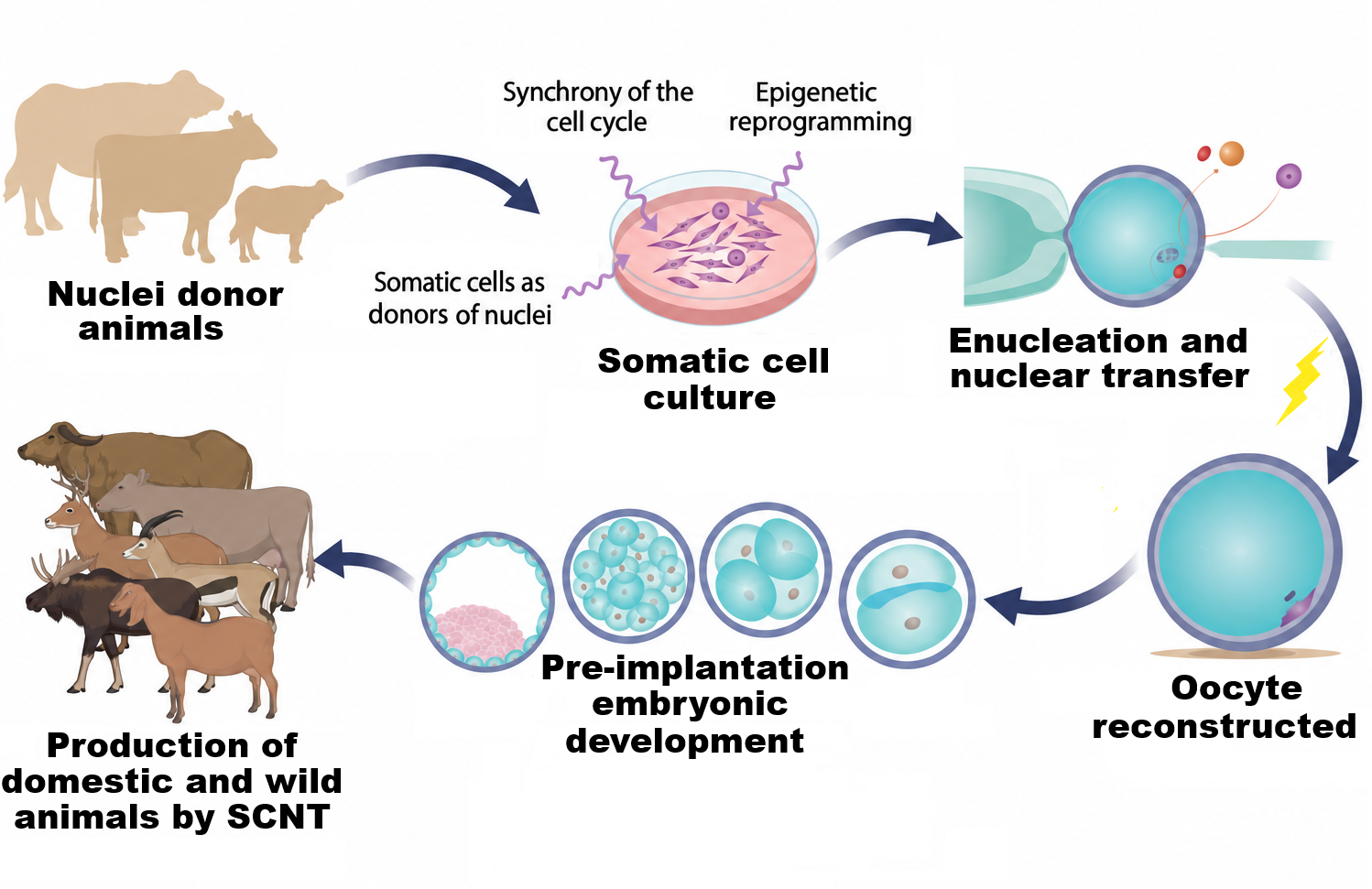
A transferência nuclear de células somáticas (TNCS) na clonagem reprodutiva representa uma biotecnologia promissora tanto para ruminantes domésticos quanto para ruminantes selvagens. Ela oferece oportunidades para a preservação da biodiversidade, reprogramação nuclear para gerar células pluripotentes induzidas e pesquisa sobre o desenvolvimento embrionário. No entanto, apesar do seu potencial, diversos aspectos da clonagem, especialmente em mamíferos selvagens, ainda são incertos. Um dos principais desafios é obter células doadoras citoplasmáticas capazes de reprogramar células somáticas para um estado totipotente por meio do TNCS. Embora a clonagem tenha sido bem-sucedida em várias espécies de mamíferos, a maioria dos embriões clonados não se desenvolve até o termo, resultando em baixa eficiência geral da clonagem. Vários fatores influenciam o sucesso da clonagem, sendo a reprogramação epigenética aberrante uma das principais causas de falhas no desenvolvimento embrionário e anomalias na progênie. Por isso, os pesquisadores têm buscado aprimorar cada etapa do procedimento de TNCS e corrigir a reprogramação epigenética anormal modulando a metilação do DNA, modificações de histonas e regulando a expressão gênica relacionada ao embrião. Esta revisão explora os avanços e desafios associados ao TNCS em espécies de ruminantes, abrangendo animais domésticos e selvagens. Examina diferentes etapas da técnica, incluindo obstáculos técnicos iniciais, como a seleção de células doadoras, anomalias placentárias e problemas de saúde. Por meio de uma análise abrangente, esta revisão busca fornecer uma visão do estado atual do TNCS em ruminantes domésticos e selvagens, identificando caminhos para futuras pesquisas e melhorias.
Referências
Adams, L., Liu, Y., & Polejaeva, I. A. (2024). Current status of interspecies somatic cell nuclear transfer and meta-analysis of the effects of phylogenetic distance on embryonic and fetal development. Mammal Review, 54(4), 387–403. https://doi.org/10.1111/mam.12352
Akagi, S., & Matsukawa, K. (2022). Effects of Trichostatin A on the Timing of the First Cleavage and In Vitro Developmental Potential of Bovine Somatic Cell Nuclear Transfer Embryos. Cellular Reprogramming, 24(3), 142-149. https://doi.org/10.1089/cell.2022.0003
Al-Ghadi, M. Q., Alhimaidi, A. R., Iwamoto, D., Al-Mutary, M. G., Ammari, A. A., Saeki, K. O., & Aleissa, M. S. (2020). The in vitro development of cloned sheep embryos treated with Scriptaid and Trichostatin (A). Saudi Journal of Biological Sciences, 27(9), 2280-2286. https://doi.org/10.1016/j.sjbs.2020.04.039
Ammari, A. A., Al Ghadi, M. G., Amran, R. A., Al Malahi, N. M., & Alhimaidi, A. R. (2022). Interspecific nuclear transfer blastocysts reconstructed from Arabian Oryx somatic cells and domestic cow ooplasm. Veterinary Sciences, 10(1), 17. https://doi.org/10.3390/vetsci10010017
Arnold, D., Lefebvre, R., & Smith, L. (2006). Characterization of the placenta specific bovine mammalian achaete scute-like homologue 2 (Mash2) gene. Placenta, 27(11-12), 1124-1131. https://doi.org/10.1016/j.placenta.2005.12.001
Baguisi, A., Behboodi, E., Melican, D. T., Pollock, J. S., Destrempes, M. M., Cammuso, C., Williams, J. L., Nims, S. D., Porter, C. A., & Midura, P. (1999). Production of goats by somatic cell nuclear transfer. Nature Biotechnology, 17(5), 456-461. https://doi.org/10.1038/86327
Beaujean, N., Taylor, J., Gardner, J., Wilmut, I., Meehan, R., & Young, L. (2004). Effect of limited DNA methylation reprogramming in the normal sheep embryo on somatic cell nuclear transfer. Biology of reproduction, 71(1), 185-193. https://doi.org/10.1095/biolreprod.103.026559
Behdarvandiyan, P., Hosseini, S. S., Jafarpour, F., Hajian, M., Hosseini, M., Rahimi, M., Moradi, R., Motamedi, Y. K., Bender, A., & Nasr-Esfahani, M. H. (2021). Transcriptional Drug Repositioning Improves Development Of Somatic Cell Nuclear Transfer Embryos Via Inhibition Of CDK4/6 And Cyclin D1 During First Cleavage of Bovine Pseudo-Zygotes. https://doi.org/10.21203/rs.3.rs-450025/v1
Berg, D. K., Li, C., Asher, G., Wells, D. N., & Oback, B. (2007). Red deer cloned from antler stem cells and their differentiated progeny. Biology of Reproduction, 77(3), 384-394. https://doi.org/10.1095/biolreprod.106.058172
Borges, A. A., & Pereira, A. F. (2019). Potential role of intraspecific and interspecific cloning in the conservation of wild mammals. Zygote, 27(3), 111–117. https://doi.org/10.1017/S0967199419000170
Briggs, R., & King, T. J. (1952). Transplantation of living nuclei from blastula cells into enucleated frogs’ eggs. Proceedings of the National Academy of Sciences, 38(5), 455-463. https://doi.org/10.1073/pnas.38.5.455
Bromhall, J. D. (1975). Nuclear transplantation in the rabbit egg. Nature, 258(5537), 719-722. https://doi.org/10.1038/258719a0
Chavatte-Palmer, P., Camous, S., Jammes, H., Le Cleac’h, N., Guillomot, M., & Lee, R. (2012). Placental perturbations induce the developmental abnormalities often observed in bovine somatic cell nuclear transfer. Placenta, 33, S99-S104. https://doi.org/10.1016/j.placenta.2011.09.012
Chavatte-Palmer, P., Remy, D., Cordonnier, N., Richard, C., Issenman, H., Laigre, P., Heyman, Y., & Mialot, J.-P. (2004). Health status of cloned cattle at different ages. Cloning & Stem Cells, 6(2), 94-100.
Cho, S., Ock, S., Yoo, J., Mohana Kumar, B., Choe, S., & Rho, G. (2005). Effects of confluent, roscovitine treatment and serum starvation on the cell‐cycle synchronization of bovine foetal fibroblasts. Reproduction in Domestic Animals, 40(2), 171-176. https://doi.org/10.1111/j.1439-0531.2005.00577.x
Cibelli, J. B., Stice, S. L., Golueke, P. J., Kane, J. J., Jerry, J., Blackwell, C., Ponce de León, F. A., & Robl, J. M. (1998). Cloned transgenic calves produced from nonquiescent fetal fibroblasts. Science, 280(5367), 1256-1258. https://doi.org/10.1126/science.280.5367.1256
Ciptadi, G. (2007). Pemanfaatan teknologi kloning hewan untuk konservasi sumber genetik ternak lokal melalui realisasi bank sel somatis. TERNAK TROPIKA Journal of Tropical Animal Production, 6(2), 60-65.
Constant, F., Guillomot, M., Heyman, Y., Vignon, X., Laigre, P., Servely, J. L., Renard, J. P., & Chavatte-Palmer, P. (2006). Large offspring or large placenta syndrome? Morphometric analysis of late gestation bovine placentomes from somatic nuclear transfer pregnancies complicated by hydrallantois. Biology of reproduction, 75(1), 122-130. https://doi.org/10.1095/biolreprod.106.051581
Da Silva, C. G., Martins, C. F., Cardoso, T. C., Da Cunha, E. R., Bessler, H. C., Martins, G. H. L., Pivato, I., & Báo, S. N. (2016). Production of bovine embryos and calves cloned by nuclear transfer using mesenchymal stem cells from amniotic fluid and adipose tissue. Cellular Reprogramming, 18(2), 127-136. https://doi.org/10.1089/cell.2015.0064
de Aguiar, L. H., Lee, Y. L., Abdelhady, A. W., Koganti, P. P., Selvaraj, V., & Cheong, S. H. (2026). Flexible oocyte manipulation with delayed maturation and improved somatic cell nuclear transfer efficiency using induced pluripotent stem cells. Theriogenology, 251, 117754. https://doi.org/10.1016/j.theriogenology.2025.117754
Ding, X., Wang, Y., Zhang, D., Guo, Z., & Zhang, Y. (2008). Increased pre-implantation development of cloned bovine embryos treated with 5-aza-2′-deoxycytidine and trichostatin A. Theriogenology, 70(4), 622-630. https://doi.org/10.1016/j.theriogenology.2008.04.042.
Enright, B. P., Sung, L.-Y., Chang, C.-C., Yang, X., & Tian, X. C. (2005). Methylation and Acetylation Characteristics of Cloned Bovine Embryos from Donor Cells Treated with 5-aza-2′-Deoxycytidine1. Biology of reproduction, 72(4), 944-948. https://doi.org/10.1095/biolreprod.104.033225
Fatira, E., Havelka, M., Labbé, C., Depincé, A., Pšenička, M., & Saito, T. (2019). A newly developed cloning technique in sturgeons; an important step towards recovering endangered species. Scientific Reports, 9(1), 10453. https://doi.org/10.1038/s41598-019-46892-4
Ferreira, H. da S., Oliveira, G. B. de, Sanguinet, E. de O., Feijó, A. L. da S., Pinzón-Osorio, C. A., Benvenutti, V. R., Köhler, L. F., Bertolini, M., Almeida-Souza, F., Moraes Junior, F. de J., Driemeier, D., Abreu-Silva, A. L., Rodrigues, J. L. R., & Bertolini, M. (2025). Origin, viability, and cell cycle status of seminal somatic cells for potential application in cattle cloning via nuclear transfer. Reproductive Biology, Article 101170. https://doi.org/10.1016/j.repbio.2025.101170
Folch, J., Cocero, M. J., Chesné, P., Alabart, J. L., Domínguez, V., Cognié, Y., Roche, A., Fernández-Arias, A., Martí, J., & Sánchez, P. (2009). First birth of an animal from an extinct subspecies (Capra pyrenaica pyrenaica) by cloning. Theriogenology, 71(6), 1026-1034. https://doi.org/10.1016/j.theriogenology.2008.11.005
Fu, L., Yan, F. X., An, X. R., & Hou, J. (2014). Effects of the histone methyltransferase inhibitor UNC 0638 on Histone H3K9 dimethylation of cultured ovine somatic cells and development of resulting early cloned embryos. Reproduction in Domestic Animals, 49(2), e21-e25. https://doi.org/10.1111/rda.12277
Fulka Jr, J., Miyashita, N., Nagai, T., & Ogura, A. (2004). Do cloned mammals skip a reprogramming step? Nature Biotechnology, 22(1), 25-26. https://doi.org/10.1038/nbt0104-25
Fulka, J., Fulka, H., St John, J., Galli, C., Lazzari, G., Lagutina, I., & Loi, P. (2008). Cybrid human embryos–warranting opportunities to augment embryonic stem cell research. Trends in Biotechnology, 26(9), 469-474. https://doi.org/10.1016/j.tibtech.2008.06.001
Galli, C., & Lazzari, G. (2008). The manipulation of gametes and embryos in farm animals. Reproduction in Domestic Animals, 43, 1-7. https://doi.org/10.1111/j.1439-0531.2008.01136.x
Galli, C., Duchi, R., Moor, R. M., & Lazzari, G. (1999). Mammalian leukocytes contain all the genetic information necessary for the development of a new individual. Cloning, 1(3), 161-170. https://doi.org/10.1089/15204559950019924
Gao, C., Zhou, X., Gu, S., Li, J., Wang, J., Zhang, Y., Zhao, W., Wei, X., Lu, L., & Zhao, Q. (2025). Establishment of Interspecies Somatic Cell Nuclear Transfer and Transgene-Free Inducible Pluripotent Stem Cells for Versatile Conservation of the Germplasm Resource of Wild Boar. Animal Research and One Health. https://doi.org/10.1002/aro2.70025
Gao, G., Wang, S., Zhang, J., Su, G., Zheng, Z., Bai, C., Yang, L., Wei, Z., Wang, X., & Liu, X. (2019). Transcriptome-wide analysis of the SCNT bovine abnormal placenta during mid-to late gestation. Scientific Reports, 9(1), 20035. https://doi.org/10.1038/s41598-019-56566-w
Gentry, A. W. (2000). The ruminant Radiation. 11–45. Antelopes, deer and relatives: fossil record, behavioral ecology, systematics and conservation. Yale University Press, New Haven.
Gibbons, J., Arat, S., Rzucidlo, J., Miyoshi, K., Waltenburg, R., Respess, D., Venable, A., & Stice, S. (2002). Enhanced survivability of cloned calves derived from roscovitine-treated adult somatic cells. Biology of Reproduction, 66(4), 895-900. https://doi.org/10.1095/biolreprod66.4.895
Goto, Y., Hirayama, M., Takeda, K., Tukamoto, N., Sakata, O., Kaeriyama, H., & Geshi, M. (2013). Effect of synchronization of donor cells in early G 1‐phase using shake‐off method on developmental potential of somatic cell nuclear transfer embryos in cattle. Animal Science Journal, 84(8), 592-599. https://doi.org/10.1111/asj.12047
Gu, S., Wei, X., Zhang, Y., Wang, J., Tang, L., Zhao, W., Wang, J., & Huang, Y. (2026). Derivation of Embryonic Stem Cells from an Endangered Cattle Breed via Somatic Cell Nuclear Transfer. Cells, 15(7), 627. https://doi.org/10.3390/cells15070627
Gurdon, J. B. (1962). The developmental capacity of nuclei taken from intestinal epithelium cells of feeding tadpoles. Development, 10(4), 622-640. https://doi.org/10.1242/dev.10.4.622
Gurdon, J. B., & Uehlinger, V. (1966). “Fertile” intestine nuclei. Nature, 210(5042), 1240-1241. https://doi.org/1038/2101240a0
Hajian, M., Hosseini, S., Forouzanfar, M., Abedi, P., Ostadhosseini, S., Hosseini, L., Moulavi, F., Gourabi, H., Shahverdi, A., & Vosough Taghi Dizaj, A. (2011). “Conservation cloning” of vulnerable Esfahan mouflon (Ovis orientalis isphahanica): in vitro and in vivo studies. European Journal of Wildlife Research, 57, 959-969. DOI:10.1007/s10344-011-0510-5
Hernández Martínez, S., Hernández Pichardo, J. E., Vazquez Avendaño, J. R., Ambríz García, D. A., & Navarro Maldonado, M. D. C. (2020). Developmental dynamics of cloned Mexican bighorn sheep embryos using morphological quality standards. Veterinary Medicine and Science, 6(3), 382-392.https://doi.org/10.1002/vms3.242
Heyman, Y., Chavatte-Palmer, P., LeBourhis, D., Camous, S., Vignon, X., & Renard, J. P. (2002). Frequency and occurrence of late-gestation losses from cattle cloned embryos. Biology of reproduction, 66(1), 6-13. https://doi.org/10.1095/biolreprod66.1.6
Hill, J. R., Burghardt, R. C., Jones, K., Long, C. R., Looney, C. R., Shin, T., Spencer, T. E., Thompson, J. A., Winger, Q. A., & Westhusin, M. E. (2000). Evidence for placental abnormality as the major cause of mortality in first-trimester somatic cell cloned bovine fetuses. Biology of Reproduction, 63(6), 1787-1794. https://doi.org/10.1095/biolreprod63.6.1787
Hill, J. R., Roussel, A., Cibelli, J., Edwards, J., Hooper, N., Miller, M., Thompson, J., Looney, C., Westhusin, M., & Robl, J. (1999). Clinical and pathologic features of cloned transgenic calves and fetuses (13 case studies). Theriogenology, 51(8), 1451-1465. https://doi.org/10.1016/S0093-691X(99)00089-8
Holt, W. V., Pickard, A. R., & Prather, R. S. (2004). Wildlife conservation and reproductive cloning. Reproduction, 127(3), 317-324. https://doi.org/10.1530/rep.1.00074
Hoshino, Y., Hayashi, N., Taniguchi, S., Kobayashi, N., Sakai, K., Otani, T., Iritani, A., & Saeki, K. (2009). Resurrection of a bull by cloning from organs frozen without cryoprotectant in a− 80 C freezer for a decade. PloS one, 4(1), e4142. https://doi.org/10.1371/journal.pone.0004142
Hosseini, S. M., Dufort, I., Nieminen, J., Moulavi, F., Ghanaei, H. R., Hajian, M., Jafarpour, F., Forouzanfar, M., Gourbai, H., & Shahverdi, A. H. (2016). Epigenetic modification with trichostatin A does not correct specific errors of somatic cell nuclear transfer at the transcriptomic level; highlighting the non-random nature of oocyte-mediated reprogramming errors. BMC Genomics, 17, 1-21. https://doi.org/10.1186/s12864-015-2264-z
Hu, J., Wang, F., Zhu, X., Yuan, Y., Ding, M., & Gao, S. (2010). Mouse ZAR1‐like (XM_359149) colocalizes with mRNA processing components and its dominant‐negative mutant caused two‐cell‐stage embryonic arrest. Developmental Dynamics, 239(2), 407-424. https://doi.org/10.1002/dvdy.22170
Janssen, D., Edwards, M., Koster, J., Lanza, R., & Ryder, O. (2003). 206 Postnatal management of chryptorchid banteng calves cloned by nuclear transfer utilizing frozen fibroblast cultures and enucleated cow ova. Reproduction, Fertility and Development, 16(2), 224-224. https://doi.org/10.1071/RDv16n1Ab206
Jiang, Y., Kelly, R., Peters, A., Fulka, H., Dickinson, A., Mitchell, D. A., & St John, J. C. (2011). Interspecies somatic cell nuclear transfer is dependent on compatible mitochondrial DNA and reprogramming factors. PLoS ONE, 6(1), e14805. https://doi.org/10.1371/journal.pone.0014805
Kasinathan, P., Knott, J. G., Wang, Z., Jerry, D. J., & Robl, J. M. (2001). Production of calves from G1 fibroblasts. Nature Biotechnology, 19(12), 1176-1178.
Kato, Y., Imabayashi, H., Mori, T., Tani, T., Taniguchi, M., Higashi, M., Matsumoto, M., Umezawa, A., & Tsunoda, Y. (2004). Nuclear transfer of adult bone marrow mesenchymal stem cells: developmental totipotency of tissue-specific stem cells from an adult mammal. Biology of Reproduction, 70(2), 415-418. https://doi.org/10.1095/biolreprod.103.020271
Kato, Y., Tani, T., & Tsunoda, Y. (2000). Cloning of calves from various somatic cell types of male and female adult, newborn and fetal cows. Journal of Reproduction and Fertility, 120(2), 231-238. https://doi.org/10.1530/jrf.0.1200231
Kato, Y., Tani, T., Sotomaru, Y., Kurokawa, K., Kato, J.-y., Doguchi, H., Yasue, H., & Tsunoda, Y. (1998). Eight calves cloned from somatic cells of a single adult. Science, 282(5396), 2095-2098. https://doi.org/10.1126/science.282.5396.2095
Kawamura, T., Suzuki, J., Wang, Y. V., Menendez, S., Morera, L. B., Raya, A., Wahl, G. M., & Belmonte, J. C. I. (2009). Linking the p53 tumour suppressor pathway to somatic cell reprogramming. Nature, 460(7259), 1140-1144. https://doi.org/10.1038/nature08311
Keefer, C. L. (2015). Artificial cloning of domestic animals. Proceedings of the National Academy of Sciences, 112(29), 8874-8878. https://doi.org/10.1073/pnas.1501718112
Kohan-Ghadr, H., Lefebvre, R., Fecteau, G., Smith, L., Murphy, B., Junior, J. S., Girard, C., & Hélie, P. (2008). Ultrasonographic and histological characterization of the placenta of somatic nuclear transfer-derived pregnancies in dairy cattle. Theriogenology, 69(2), 218-230. https://doi.org/10.1016/j.theriogenology.2007.09.028
Kwong, P., Nam, H., Wan Khadijah, W., Kamarul, T., & Abdullah, R. (2014). Comparison of in vitro developmental competence of cloned caprine embryos using donor karyoplasts from adult bone marrow mesenchymal stem cells vs ear fibroblast cells. Reproduction in Domestic Animals, 49(2), 249-253. https://doi.org/10.1111/rda.12262
Lanza, R. P., Cibelli, J. B., Diaz, F., Moraes, C. T., Farin, P. W., Farin, C. E., Hammer, C. J., West, M. D., & Damiani, P. (2000). Cloning of an endangered species (Bos gaurus) using interspecies nuclear transfer. Cloning, 2(2), 79-90. https://doi.org/10.1089/152045500436104
Lee, B., Wirtu, G. G., Damiani, P., Pope, E., Dresser, B. L., Hwang, W., & Bavister, B. D. (2003). Blastocyst development after intergeneric nuclear transfer of mountain bongo antelope somatic cells into bovine oocytes. Cloning & Stem Cells, 5(1), 25-33. https://doi.org/10.1089/153623003321512139
Li, S., Wei, S., Li, G., Hu, M., Lin, J., & Bao, W. (2026). Efficient derivation and transcriptional characterization of mouse extra-embryonic endoderm stem cell lines generated by somatic cell nuclear transfer Stem Cells International, 2026(1), 1968738. https://doi.org/10.1155/sci/1968738
Li, W., Yan, W., Hao, F., Hao, L., & Liu, D. (2022). Effects of crotonylation on reprogramming of Cashmere goat somatic cells with different differentiation degrees. Animals, 12(20), 2848. https://doi.org/10.3390/ani12202848
Li, X., Li, Z., Jouneau, A., Zhou, Q., & Renard, J.-P. (2003). Nuclear transfer: progress and quandaries. Reproductive Biology and Endocrinology, 1(1), 1-6. https://doi.org/10.1186/1477-7827-1-84
Li, Y., Dai, Y., Du, W., Zhao, C., Wang, H., Wang, L., Li, R., Liu, Y., Wan, R., & Li, N. (2006). Cloned endangered species takin (Budorcas taxicolor) by inter‐species nuclear transfer and comparison of the blastocyst development with yak (Bos grunniens) and bovine. Molecular Reproduction and Development: Incorporating Gamete Research, 73(2), 189-195. https://doi.org/10.1002/mrd.20405
Li, Y., Dai, Y., Du, W., Zhao, C., Wang, L., Wang, H., Liu, Y., Li, R., & Li, N. (2007). In vitro development of yak (Bos grunniens) embryos generated by interspecies nuclear transfer. Animal Reproduction Science, 101(1-2), 45-59. https://doi.org/10.1016/j.anireprosci.2006.09.018
Li, Y., Sun, S., Xu, Y., Zhang, J., Du, Y., Cao, Y., Liao, Z., Xie, Y., Bian, X., Huang, J., Wang, M., Liu, Z., Sun, Q., & Lu, F. (2025). Efficient somatic cell nuclear transfer by overcoming both pre‐ and post‐implantation epigenetic barriers. Advanced Science. https://doi.org/10.1002/advs.202504669
Liu, W., Liu, X., Wang, C., Gao, Y., Gao, R., Kou, X., Zhao, Y., Li, J., Wu, Y., & Xiu, W. (2016). Identification of key factors conquering developmental arrest of somatic cell cloned embryos by combining embryo biopsy and single-cell sequencing. Cell Discovery, 2(1), 1-15. https://doi.org/10.1038/celldisc.2016.10
Loi, P., Iuso, D., Czernik, M., & Ogura, A. (2016). A new, dynamic era for somatic cell nuclear transfer? Trends in Biotechnology, 34(10), 791-797. https://doi.org/10.1016/j.tibtech.2016.03.008
Loi, P., Modlinski, J., & Ptak, G. (2011). Interspecies somatic cell nuclear transfer: a salvage tool seeking first aid. Theriogenology, 76(2), 217-228. https://doi.org/10.1016/j.theriogenology.2011.01.016
Loi, P., Ptak, G., Barboni, B., Fulka Jr, J., Cappai, P., & Clinton, M. (2001). Genetic rescue of an endangered mammal by cross-species nuclear transfer using post-mortem somatic cells. Nature Biotechnology, 19(10), 962-964. https://doi.org/10.1038/nbt1001-962
Long, C. R., Westhusin, M. E., & Golding, M. C. (2014). Reshaping the transcriptional frontier: epigenetics and somatic cell nuclear transfer. Molecular Reproduction and Development, 81(2), 183-193. https://doi.org/10.1002/mrd.22271
Luo, C., Lu, F., Wang, X., Wang, Z., Li, X., Gong, F., Jiang, J., Liu, Q., & Shi, D. (2013). Treatment of donor cells with trichostatin A improves in vitro development and reprogramming of buffalo (Bubalus bubalis) nucleus transfer embryos. Theriogenology, 80(8), 878-886. https://doi.org/10.1016/j.theriogenology.2013.07.013
Ma, H., Marti Gutierrez, N., Morey, R., Van Dyken, C., Kang, E., Hayama, T., Lee, Y., Li, Y., Tippner-Hedges, R., Wolf, D. P., Paull, D., Chen, Y., Ramsey, C., Reinholdt, L., Ryder, O. A., Muñoz, J., Mitalipov, S. (2016). Incompatibility between nuclear and mitochondrial genomes contributes to an interspecies reproductive barrier. Cell Metabolism, 24(2), 283–294. https://doi.org/10.1016/j.cmet.2016.06.012
Madheshiya, P. K., Sahare, A. A., Jyotsana, B., Singh, K. P., Saini, M., Raja, A. K., Kaith, S., Singla, S. K., Chauhan, M. S., & Manik, R. S. (2015). Production of a cloned buffalo (Bubalus bubalis) calf from somatic cells isolated from urine. Cellular Reprogramming, 17(3), 160-169. https://doi.org/10.1089/cell.2014.0097
Magalhães, L. C., Cortez, J. V., Bhat, M. H., Sampaio, A. C. N., Freitas, J. L., Duarte, J. M., Melo, L. M., & Freitas, V. J. (2020). In vitro development and mitochondrial gene expression in brown brocket deer (Mazama gouazoubira) embryos obtained by interspecific somatic cell nuclear transfer. Cellular Reprogramming, 22(4), 208-216. https://doi.org/10.1089/cell.2019.006
Mansour, N., Lamghari, F., Nasef, M., Al Busaidi, T.M., Hossein, M.S., Jeong, Y.I., Kang, M., Kim, H., Bae, Y., Eum, B.H., 2023. Effect of the interval from GnRH administration after ovarian super-stimulation on the recovered oocytes, and effect of the transferred cloned blastocysts on the pregnancy rate and pregnancy loss in dromedary camel. Theriogenology 208, 1–7. https://doi.org/10.1016/j.theriogenology.2023.05.007.
Mao, T., Han, C., Deng, R., Wei, B., Meng, P., Luo, Y., & Zhang, Y. (2018). Treating donor cells with 2-PCPA corrects aberrant histone H3K4 dimethylation and improves cloned goat embryo development. Systems Biology in Reproductive Medicine, 64(3), 174-182. https://doi.org/10.1080/19396368.2018.1446229
Matilainen, O., Quirós, P. M., & Auwerx, J. (2017). Mitochondria and epigenetics—crosstalk in homeostasis and stress. Trends in Cell Biology, 27(6), 453–463. https://doi.org/10.1016/j.tcb.2017.02.004
Matoba, S., Liu, Y., Lu, F., Iwabuchi, K. A., Shen, L., Inoue, A., & Zhang, Y. (2014). Embryonic development following somatic cell nuclear transfer impeded by persisting histone methylation. Cell, 159(4), 884-895. https://doi.org/10.1016/j.cell.2014.09.055
Matoba, S., Wang, H., Jiang, L., Lu, F., Iwabuchi, K. A., Wu, X., Inoue, K., Yang, L., Press, W., & Lee, J. T. (2018). Loss of H3K27me3 imprinting in somatic cell nuclear transfer embryos disrupts post-implantation development. Cell Stem Cell, 23(3), 343-354. e345. https://doi.org/10.1016/j.stem.2018.06.008
Meissner, A., & Jaenisch, R. (2006). Mammalian nuclear transfer. Developmental dynamics: an official publication of the American Association of Anatomists, 235(9), 2460-2469. https://doi.org/10.1002/dvdy.20915
Melo, L. M., Silva, S. B., Magalhães, L. C., Cortez, J. V., Kumar, S., Duarte, J. M., Rola, L. D., Chaves, M. S., & Freitas, V. J. (2022). The use of somatic cell nuclear transfer to obtain interspecific cloned embryos from brown brocket deer karyoplast and bovine cytoplast: Embryo development and nuclear gene expression. Theriogenology Wild, 1, 100001. https://doi.org/10.1016/j.therwi.2022.100001
Meredith, R. W., Janečka, J. E., Gatesy, J., Ryder, O. A., Fisher, C. A., Teeling, E. C., Goodbla, A., Eizirik, E., Simão, T. L. L., Stadler, T., Rabosky, D. L., Honeycutt, R. L., Flynn, J. J., Ingram, C. M., Steiner, C., Williams, T. L., Robinson, T. J., Burk-Herrick, A., Westerman, M., … Murphy, W. J. (2011). Impacts of the Cretaceous Terrestrial Revolution and KPg extinction on mammal diversification. Science, 334(6055), 521–524. https://doi.org/10.1126/science.1211028
Nel-Themaat, L., Gómez, M. C., Pope, C. E., Lopez, M., Wirtu, G., Jenkins, J. A., Cole, A., Dresser, B. L., Bondioli, K. R., & Godke, R. A. (2008). Cloned embryos from semen. Part 2: intergeneric nuclear transfer of semen-derived eland (Taurotragus oryx) epithelial cells into bovine oocytes. Cloning and Stem Cells, 10(1), 161-172. https://doi.org/10.1089/clo.2007.0069
Oback, B. (2008). Cloning from stem cells: different lineages, different species, same story. Reproduction, Fertility and Development, 21(1), 83-94. https://doi.org/10.1071/RD08212
Ogura, A., Inoue, K., & Wakayama, T. (2013). Recent advancements in cloning by somatic cell nuclear transfer. Philosophical Transactions of the Royal Society B: Biological Sciences, 368(1609), 20110329. https://doi.org/10.1098/rstb.2011.0329
Ogura, A., Matoba, S., & Inoue, K. (2021). 25th anniversary of cloning by somatic-cell nuclear transfer: Epigenetic abnormalities associated with somatic cell nuclear transfer. Reproduction, 162(2), F45–F58. https://doi.org/10.1530/rep-21-0013
Olivera, R., Moro, L. N., Jordan, R., Luzzani, C., Miriuka, S., Radrizzani, M., Donadeu, F. X., & Vichera, G. (2016). In vitro and in vivo development of horse cloned embryos generated with iPSCs, mesenchymal stromal cells and fetal or adult fibroblasts as nuclear donors. PloS one, 11(10), e0164049. https://doi.org/10.1371/journal.pone.0164049
Palmieri, C., Loi, P., Ptak, G., & Della Salda, L. (2008). A review of the pathology of abnormal placentae of somatic cell nuclear transfer clone pregnancies in cattle, sheep, and mice. Veterinary pathology, 45(6), 865-880. https://doi.org/10.1354/vp.45-6-865
Pan, X., Zhang, Y., Guo, Z., & Wang, F. (2014). Development of interspecies nuclear transfer embryos reconstructed with argali (Ovis ammon) somatic cells and sheep ooplasm. Cell Biology International, 38(2), 211-218. https://doi.org/10.1002/cbin.10191
Pankammoon, P., Salinas, M. B. S., Thitaram, C., & Sathanawongs, A. (2025). The complexities of interspecies somatic cell nuclear transfer: From biological and molecular insights to future perspectives. International Journal of Molecular Sciences, 26(7), 3310. https://doi.org/10.3390/ijms26073310
Prather, R. S., Barnes, F. L., Sims, M. M., Robl, J. M., Eyestone, W. H., & First, N. L. (1987). Nuclear transplantation in the bovine embryo: assessment of donor nuclei and recipient oocyt. Biology of Reproduction, 37(4), 859-866. https://doi.org/10.1095/biolreprod37.4.859
Priya, D., Selokar, N., Raja, A., Saini, M., Sahare, A., Nala, N., Palta, P., Chauhan, M., Manik, R., & Singla, S. (2014). Production of wild buffalo (Bubalus arnee) embryos by interspecies somatic cell nuclear transfer using domestic buffalo (Bubalus bubalis) oocytes. Reproduction in Domestic Animals, 49(2), 343-351. https://doi.org/10.1111/rda.12284
Rakha, A. (2015). Cloning efficiency and a comparison between donor cell types. Cloning and Transgenesis, 2, 141. DOI: 10.4172/2168-9849.1000141
Rissi, V. B., Glanzner, W. G., de Macedo, M. P., Mujica, L. K. S., Campagnolo, K., Gutierrez, K., Bridi, A., Baldassarre, H., Gonçalves, P. B. D., & Bordignon, V. (2019). Inhibition of RNA synthesis during Scriptaid exposure enhances gene reprogramming in SCNT embryos. Reproduction, 157(2), 123-133. https://doi.org/10.1530/REP-18-0366
Rola, L. D., Buzanskas, M. E., Melo, L. M., Chaves, M. S., Freitas, V. J. F., & Duarte, J. M. B. (2021). Assisted reproductive technology in Neotropical deer: A model approach to preserving genetic diversity. Animals, 11(7), 1961. https://doi.org/10.3390/ani11071961
Saini, M., Selokar, N., Raja, A., Sahare, A., Singla, S., Chauhan, M., Manik, R., & Palta, P. (2015). Effect of donor cell type on developmental competence, quality, gene expression, and epigenetic status of interspecies cloned embryos produced using cells from wild buffalo and oocytes from domestic buffalo. Theriogenology, 84(1), 101-108. e101. https://doi.org/10.1016/j.theriogenology.2015.02.018
Sampaio, R. V., Sangalli, J. R., De Bem, T. H. C., Ambrizi, D. R., Del Collado, M., Bridi, A., ... & Meirelles, F. V. (2020). Catalytic inhibition of H3K9me2 writers disturbs epigenetic marks during bovine nuclear reprogramming. Scientific Reports, 10(1), 11493. https://doi.org/10.1038/s41598-020-67733-9
Sandhu, A., Mohapatra, S. K., Singh, M. K., Singla, S. K., Chauhan, M. S., & Manik, R. S. (2023). Effects of epigenetic modifier on the developmental competence and quantitative expression of genes in male and female buffalo (Bubalus bubalis) cloned embryos. Zygote, 31(2), 129-139. https://doi.org/10.1017/S0967199422000600
Sansinena, M. J., Hylan, D., Hebert, K., Denniston, R. S., & Godke, R. A. (2005). Banteng (Bos javanicus) embryos and pregnancies produced by interspecies nuclear transfer. Theriogenology, 63(4), 1081-1091. https://doi.org/10.1016/j.theriogenology.2004.05.025
Savy, V., Alberio, V., Vans Landschoot, G., Moro, L. N., Olea, F. D., Rodríguez-Álvarez, L., & Salamone, D. F. (2021). Effect of embryo aggregation on in vitro development of adipose-derived mesenchymal stem cell-derived bovine clones. Cellular Reprogramming, 23(5), 277-289. https://doi.org/10.1089/cell.2021.0026
Sawai, K. (2009). Studies on gene expression in bovine embryos derived from somatic cell nuclear transfer. Journal of Reproduction and Development, 55(1), 11-16. https://doi.org/10.1262/jrd.20131
Sawai, K., Fujii, T., HirAyAmA, H., HASHizumE, T., & Minamihashi, A. (2012). Epigenetic status and full-term development of bovine cloned embryos treated with trichostatin A. Journal of Reproduction and Development, 58(3), 302-309. https://doi.org/10.1262/jrd.2011-020
Selokar, N. L., Saini, M., Muzaffer, M., Krishnakanth, G., Saha, A. P., Chauhan, M. S., Manik, R., Palta, P., Madan, P., & Singla, S. K. (2012). Roscovitine treatment improves synchronization of donor cell cycle in G0/G1 stage and in vitro development of handmade cloned buffalo (Bubalus bubalis) embryos. Cellular Reprogramming, 14(2), 146-154. https://doi.org/10.1089/cell.2011.0076
Selokar, N. L., Singh, M. K., Tripathi, G., Patel, K., Verma, R., Singh, P., Aswall A., & Chauhan, M. S. (2025). Birth of India’s first cloned cattle and analysis of its health and reproduction status: A case study. Scientific Reports, 15(1), 26957. https://doi.org/10.1038/s41598-025-10225-5
Shi, D., Lu, F., Wei, Y., Cui, K., Yang, S., Wei, J., & Liu, Q. (2007). Buffalos (Bubalus bubalis) cloned by nuclear transfer of somatic cells. Biology of Reproduction, 77(2), 285-291. https://doi.org/10.1095/biolreprod.107.060210
Smith, L. C., & Murphy, B. D. (2004). Genetic and epigenetic aspects of cloning and potential effects on offspring of cloned mammals. Cloning & Stem Cells, 6(2), 126-132. https://doi.org/10.1089/1536230041372319
Son, Y.-B., Jeong, Y.I., Jeong, Y.W., Olsson, P.O., Hossein, M.S., Cai, L., Kim, S., Choi, E.J., Sakaguchi, K., Tinson, A., 2022. Development and pregnancy rates of Camelus dromedarius-cloned embryos derived from in vivo-and in vitro-matured oocytes. Anim. Biosci. 35 (2), 177. https://doi.org/10.5713/ab.21.0131.
Song, H., Qi, Z., He, J., Yan, Y., Wang, J., Min, S., Chen, Q., & Liu, X. (2026). Effect of RGFP966 application in key steps of sheep somatic cell nuclear transfer on cloned embryo development. Animal Reproduction Science, 289, 108159. https://doi.org/10.1016/j.anireprosci.2026.108159
Speman, H. (1938). Embryonic development and induction. The American Journal of the Medical Sciences, 196(5), 738.
Srirattana, K., Imsoonthornruksa, S., Laowtammathron, C., Sangmalee, A., Tunwattana, W., Thongprapai, T., Chaimongkol, C., Ketudat-Cairns, M., & Parnpai, R. (2012). Full-term development of gaur-bovine interspecies somatic cell nuclear transfer embryos: Effect of trichostatin A treatment. Cellular Reprogramming, 14(3), 248–257. https://doi.org/10.1089/cell.2011.0099
Su, R., Ding, F., Sorgog, M., Li, L., Bai, S., Nasenochir N., Ritu, X., & Herrid, M. (2025). Optimization of handmade cloning enhances pregnancy rates and live calf production in cattle. Scientific Reports, 15(1), 15032. https://doi.org/10.1038/s41598-025-96511-8
Sun, X., Wang, S., Zhang, Y., Wang, H., Wang, L., Ying, L., Li, R., & Li, N. (2008). Cell-cycle synchronization of fibroblasts derived from transgenic cloned cattle ear skin: effects of serum starvation, roscovitine and contact inhibition. Zygote, 16(2), 111-116. https://doi.org/10.1017/S0967199407004522
Tajuddin, T., Moeis, M., Belu, W., Rupaedah, B., & Suyanto, S. (2015). Bioteknologi. Universitas Terbu
Tasripoo, K., Srisakwattana, K., & Sophon, S. (2018). Buffalo and various ruminant embryos production by inter-species, inter-genus and inter-subfamily somatic cell nuclear transfer. Buffalo Bulletin, 37(2), 163-168.
Vazquez-Avendaño, J. R., Hernández-Martínez, S., Hernández-Pichardo, J. E., Rivera-Rebolledo, J. A., Ambriz-García, D. A., & Navarro-Maldonado, M. D. C. (2017). Effect of sequential human medium use in the production of blastocysts of female Ovis canadensis mexicana by interspecies handmade cloning. Acta zoológica mexicana, 33(2), 328-338.
Venegas, F., Guillomot, M., Vignon, X., Servely, J. L., Audouard, C., Montiel, E., Le Bourhis, D., Perón, S., Soto, P., & Rojas, M. (2006). Obtaiment of Pudu (Pudu pudu) deer embryos by the somatic nuclear transfer technique. International Journal of Morphology, 24(2):285-292. http://dx.doi.org/10.4067/S0717-95022006000300026
Wakayama, S., Kohda, T., Obokata, H., Tokoro, M., Li, C., Terashita, Y., Mizutani, E., Kishigami, S., Ishino, F., & Wakayama, T. (2013). Successful serial recloning in the mouse over multiple generations. Cell Stem Cell, 12(3), 293-297. https://doi.org/10.1016/j.stem.2013.01.005
Wang, L., Peng, T., Zhu, H., Lv, Z., Liu, T., Shuai, Z., Gao, H., Cai, T., Cao, X., & Wang, H. (2007). In vitro development of reconstructed ibex (Capra ibex) embryos by nuclear transfer using goat (Capra hircus) oocytes. Small Ruminant Research, 73(1-3), 135-141. https://doi.org/10.1016/j.smallrumres.2006.12.009
Wang, L.-J., Zhang, H., Wang, Y.-S., Xu, W.-B., Xiong, X.-R., Li, Y.-Y., Su, J.-M., Hua, S., & Zhang, Y. (2011). Scriptaid improves in vitro development and nuclear reprogramming of somatic cell nuclear transfer bovine embryos. Cellular Reprogramming (Formerly" Cloning and Stem Cells"), 13(5), 431-439. https://doi.org/10.1089/cell.2011.0024
Wang, X., Qu, J., Li, J., He, H., Liu, Z., & Huan, Y. (2020). Epigenetic reprogramming during somatic cell nuclear transfer: recent progress and future directions. Frontiers in Genetics, 11, 205. https://doi.org/10.3389/fgene.2020.00205
Wang, Y., Zhang, Y., Mao, T., Yan, B., Deng, R., Wei, B., Zhang, Y., & Liu, J. (2017). Treatment donor cells with UNC0638 modify the abnormal histone H3K9 dimethylation and gene expression in cloned goat embryos. Small Ruminant Research, 156, 27-32. https://doi.org/10.1016/j.smallrumres.2017.08.011
Wani, N. A., Hong, S., & Vettical, B. S. (2018). Cytoplast source influences development of somatic cell nuclear transfer (SCNT) embryos in vitro but not their development to term after transfer to synchronized recipients in dromedary camels (Camelus dromedarius). Theriogenology, 118, 137-143. https://doi.org/10.1016/j.theriogenology.2018.05.021
Wani, N. A., Kumar, K. P., Hong, S., & Umer, M. A. (2022). Telomere length in dromedary camels (Camelus dromedarius) produced by somatic cell nuclear transfer (SCNT) and their age-matched naturally produced counterparts. Theriogenology, 177, 151-156. https://doi.org/10.1016/j.theriogenology.2021.10.012
Wani, N. A., Vettical, B. S., & Hong, S. B. (2017). First cloned Bactrian camel (Camelus bactrianus) calf produced by interspecies somatic cell nuclear transfer: A step towards preserving the critically endangered wild Bactrian camels. PloS one, 12(5), e0177800. https://doi.org/10.1371/journal.pone.0177800
Wani, N. A., Wernery, U., Hassan, F., Wernery, R., & Skidmore, J. (2010). Production of the first cloned camel by somatic cell nuclear transfer. Biology of Reproduction, 82(2), 373-379. Press. https://doi.org/10.1093/biolreprod/83.s1.29
Wani, N.A., Hong, S.B., 2020. Effect of roscovitine pretreatment on in vitro maturation of oocytes and their subsequent developmental after chemical activation in dromedary camel (Camelus dromedarius). Theriogenology 157, 176–180. https://doi.org/10.1016/j.theriogenology.2020.07.025.
Wells, D., Laible, G., Tucker, F., Miller, A., Oliver, J., Xiang, T., Forsyth, J., Berg, M., Cockrem, K., & L’Huillier, P. (2003). Coordination between donor cell type and cell cycle stage improves nuclear cloning efficiency in cattle. Theriogenology, 59(1), 45-59. https://doi.org/10.1016/S0093-691X(02)01273-6
Westhusin, M. (2003). CVM researchers first to clone white-tailed deer. Texas A&M University, College of Veterinary Medicine & Biomedical Sciences.
White, K. L., Bunch, T. D., Mitalipov, S., & Reed, W. A. (1999). Establishment of pregnancy after the transfer of nuclear transfer embryos produced from the fusion of argali (Ovis ammon) nuclei into domestic sheep (Ovis aries) enucleated oocytes. Cloning, 1(1), 47-54. https://doi.org/10.1089/15204559950020085
Willadsen, S. M. (1986). Nuclear transplantation in sheep embryos. Nature, 320(6057), 63-65. https://doi.org/10.1038/320063a0
Wilmut, I., Schnieke, A. E., McWhir, J., Kind, A. J., & Campbell, K. H. (1997). Viable offspring derived from fetal and adult mammalian cells. Nature, 385(6619), 810-813. https://doi.org/10.1089/clo.2006.0002
Xiao, J., Li, Q., Qu, P., Zhang, Z., Pan, S., Wang, Y., & Zhang, Y. (2016). Isolation of bovine skin-derived precursor cells and their developmental potential after nuclear transfer. Cellular Reprogramming (Formerly" Cloning and Stem Cells"), 18(6), 411-418. https://doi.org/10.1089/cell.2016.0021
Xie, B., Wang, J., Liu, S., Wang, J., Xue, B., Li, J., Wei, R., Zhao, Y., & Liu, Z. (2014). Positive correlation between the efficiency of induced pluripotent stem cells and the development rate of nuclear transfer embryos when the same porcine embryonic fibroblast lines are used as donor cells. Cellular Reprogramming, 16(3), 206-214. https://doi.org/10.1089/cell.2013.0080
Xu, J., Shi, P., Zhao, X., Shen, P., Feng, Y., Lu, F., & Shi, D. (2021). Cell synchronization by Rapamycin improves the developmental competence of buffalos (Bubalus bubalis) somatic cell nuclear transfer embryos. Reproduction in Domestic Animals, 56(2), 313-323. https://doi.org/10.1111/rda.13868
Yagcioglu, S., Ersoy, N., Demir, K., Birler, S., & Pabuccuoglu, S. (2023). Can roscovitine and trichostatin A be alternatives to standard protocols for cell cycle synchronization of ovine adult and foetal fibroblast cells?. Reproduction in Domestic Animals, 58(9), 1251-1260. https://doi.org/10.1111/rda.14425
Yauri, F. M., Duque, R. M., De Stefano, A., Ratner, L. D., Alberio, V., & Salamone, D. F. (2026). Interspecific SCNT in yak followed by embryo aggregation improves early in vitro developmental parameters without restoring pluripotent gene expression. Theriogenology, 254, 117811. https://doi.org/10.1016/j.theriogenology.2026.117811
Zhao, X., Du, M., Wu, S., Du, Z., Liu, S., Yang, L., Ma H., Zhang L., Song L., Bail C., Su G & Li, G. (2024). High histone crotonylation modification in bovine fibroblasts promotes cell proliferation and the developmental efficiency of preimplantation nuclear transfer embryos. Scientific Reports, 14(1), 10295. https://doi.org/10.21203/rs.3.rs-3873199/v1
Zhao, Z. J., Li, R. C., Cao, H. H., Zhang, Q. J., Jiang, M. X., OuYang, Y. C., Nan C. L, Lei Z. L., Song X. F., Sun Q. Y. & Chen, D. Y. (2007). Interspecies nuclear transfer of Tibetan antelope using caprine oocyte as recipient. Molecular Reproduction and Development: Incorporating Gamete Research, 74(4), 412-419. https://doi.org/10.1002/mrd.20608
Zhou, C., Zhang, J., Zhang, M., Wang, D., Ma, Y., Wang, Y., Wang, Y., Huang, Y., & Zhang, Y. (2020). Transcriptional memory inherited from donor cells is a developmental defect of bovine cloned embryos. FASEB Journal, 34(1), 1637–1651. https://doi.org/10.1096/fj.201900578RR
Zhu, C., Liu, Y., Xu, H., Wang, S., Zhou, H., Cao, J., Meng, F., & Zhang, Y. (2025). Production of second-generation sheep clones via somatic cell nuclear transfer using amniotic cells as nuclear donors. Theriogenology, 232, 79–86. https://doi.org/10.1016/j.theriogenology.2024.11.001
Zuo, Y., Gao, Y., Su, G., Bai, C., Wei, Z., Liu, K., Li, Q., Bou, S., & Li, G. (2014). Irregular transcriptome reprogramming probably causes the developmental failure of embryos produced by interspecies somatic cell nuclear transfer between the Przewalski's gazelle and the bovine. BMC Genomics, 15, 1113. https://doi.org/10.1186/1471-2164-15-1113
Downloads
Publicado
Edição
Seção
Licença
Direitos autorais (c) 2026 Scientia Agropecuaria

Este trabalho está licenciado sob uma licença Creative Commons Attribution-NonCommercial 4.0 International License.
The authors who publish in this journal accept the following conditions:
a. The authors retain the copyright and assign to the magazine the right of the first publication, with the work registered with the Creative Commons attribution license, which allows third parties to use the published information whenever they mention the authorship of the work and the First publication in this journal.
b. Authors may make other independent and additional contractual arrangements for non-exclusive distribution of the version of the article published in this journal (eg, include it in an institutional repository or publish it in a book) as long as it clearly indicates that the work Was first published in this journal.
c. Authors are encouraged to publish their work on the Internet (for example, on institutional or personal pages) before and during the review and publication process, as it can lead to productive exchanges and a greater and faster dissemination of work Published (see The Effect of Open Access).