An integral soil quality index based on nematodes for mining-impacted Andean soils
DOI:
https://doi.org/10.17268/sci.agropecu.2025.063Palavras-chave:
Microbiological parameters, physicochemical parameters, soil ecosystems, soil quality indices, soil nematodes, stress gradientResumo
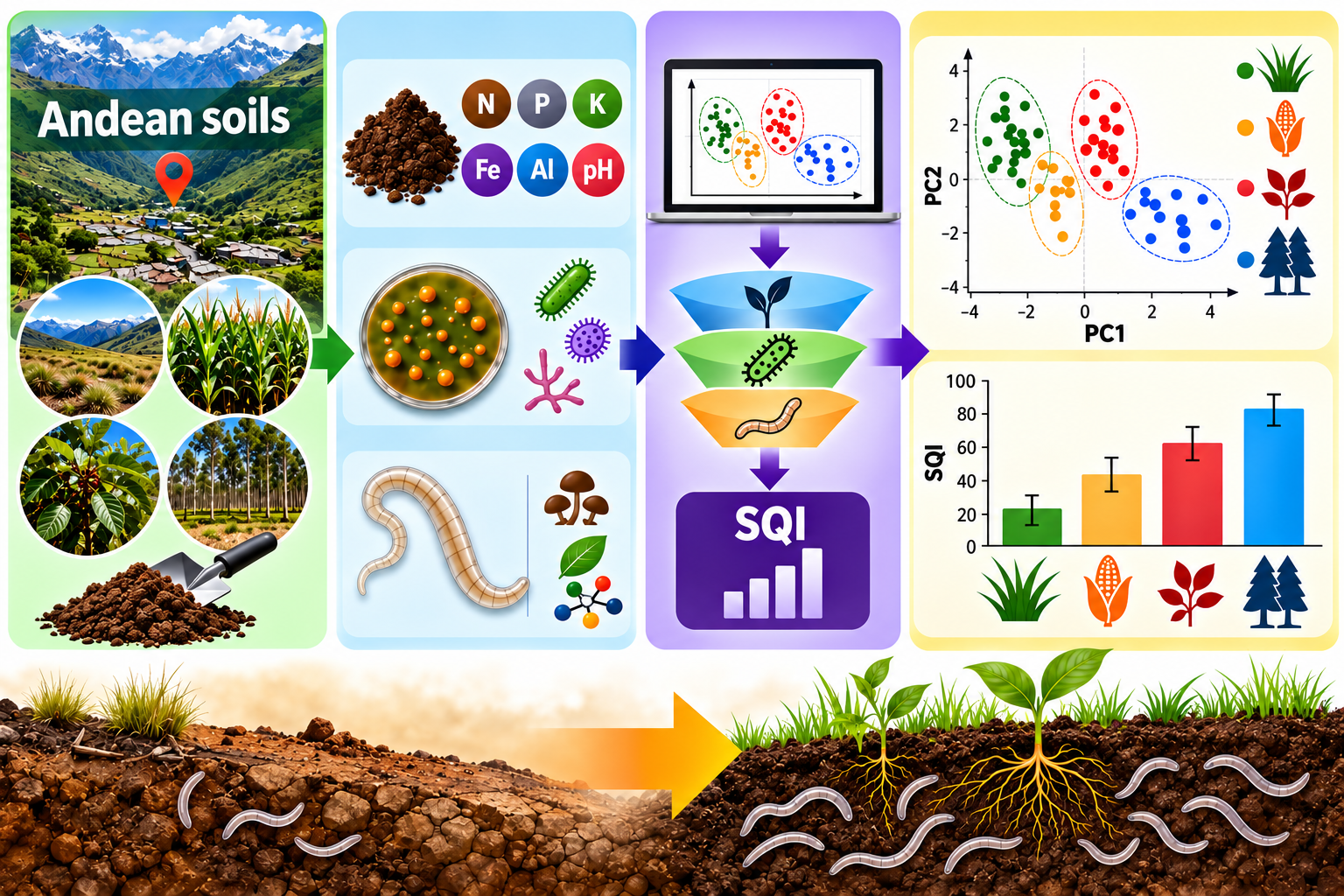
Mining activities, while economically important, have caused significant soil degradation, affecting soil quality, ecosystem functioning, and sustainability in Andean ecosystems. This study developed an integral soil quality index based on physicochemical, microbiological, and nematode indicators to assess soil degradation in the Ollachea mining area, Peru. We collected soil samples from four land-use systems (natural pasture, Zea mays cultivation, Ficus sp. cultivation, and Eucalyptus sp. forest) during two dry and two rainy seasons. The proposed index integrates complementary indicators related to soil chemical properties, nutrient availability, metal contamination, microbial activity, and nematode community structure to characterize soil quality and detect ecological stress associated with mining disturbance. The results showed that the index effectively discriminated soil quality by land use and season, with Eucalyptus sp. forest soils showing the highest soil quality status, whereas cultivated and mining-impacted soils exhibited lower quality associated with greater environmental stress. The main contributors to soil stress were related to microbial and metal-associated indicators, particularly total actinomycetes (6.53), Al (1.87), and Fe (1.65), highlighting their relevance in mining-impacted soils. Furthermore, nematode-based biological responses increased the index's sensitivity to seasonal ecological changes. Compared with other soil quality indices, the proposed integral index performed better, showing strong correlations with soil quality patterns in both dry and rainy seasons (r = 0.97 and r = 0.95, respectively). Overall, this study shows that a nematode-enhanced integral soil quality index provides a robust, transferable approach for monitoring mining-impacted soils and supporting ecological restoration strategies in Andean ecosystems.
Referências
Adebayo, O., Noble Strohm, T., Acosta-Martinez, V., Fonte, S. J., Schipanski, M., Mikha, M. M., Bista, P., Angadi, S. V., & Ghimire, R. (2026). Linking biological and organic matter indicators of soil health with soil water functions in semi-arid compost-amended and intensified cropping systems. Geoderma, 466, 117692. https://doi.org/10.1016/j.geoderma.2026.117692
Afzal, S., Imran, Z., & Ahmad, W. (2025). Paddy field conversion to apple orchards reshapes soil nematode communities and ecosystem sustainability in the Kashmir valley. Discover Environment, 3(1), 189. https://doi.org/10.1007/s44274-025-00397-2
Afzal, S., Nesar, H., Imran, Z., & Ahmad, W. (2023). Change in land-use from natural forest impacts functional composition and metabolic footprint of soil nematode community in Western Himalayas. Acta Ecologica Sinica, 43(5), 842–852. https://doi.org/10.1016/J.CHNAES.2022.12.004
Bajgai, Y., Lal, R., Demyan, M. S., Lorenz, K., Ogg, A., & Sabah, N. U. (2026). Assessing impact of conservation agriculture practices on soil physical properties under on‐farm conditions in Central Ohio, USA. Soil Science Society of America Journal, 90(1). https://doi.org/10.1002/saj2.70183
Benti Chalchissa, F., & Kuris, B. K. (2024). Modeling the impacts of extreme climate scenarios on soil acidity (pH and exchangeable aluminum) in Abbay River Basin, Ethiopia. Heliyon, 10(12), e33448. https://doi.org/10.1016/j.heliyon.2024.e33448
Buch, A. C., Yadav, K. K., Sims, D. B., Correia, M. E. F., Marques, E. D., Obaidullah, A. J., & Silva-Filho, E. V. (2025). Effects of mine tailings on the structure and diversity of microbial communities in riparian soils. Environmental Geochemistry and Health, 47(9), 394. https://doi.org/10.1007/s10653-025-02682-8
Canning, A. D. (2026). Vermicompost Alters Soil Microbial Communities and Decomposition but Increases Nitrate Leaching in Tropical Sugarcane. Ecology and Evolution, 16(1). https://doi.org/10.1002/ece3.72925
Cao, Q., Zhao, J., Ma, W., Cui, D., Zhang, X., Liu, J., & Chen, H. (2024). Heavy metals in homestead soil: Metal fraction contents, bioaccessibility, and risk assessment. Journal of Hazardous Materials, 480, 135933. https://doi.org/10.1016/j.jhazmat.2024.135933
Carlson, P. E., Johnson, R. K., Aroviita, J., Velle, G., & Fölster, J. (2023). Assessing acidity impacts in Nordic lakes and streams: Development of a macroinvertebrate-based multimetric index to quantify degradation and recovery. Ecological Indicators, 155, 111028. https://doi.org/10.1016/J.ECOLIND.2023.111028
Cavone, C., Rutigliano, A., Cotugno, P., Rolando, L., De Carolis, C., Barra Caracciolo, A., et al. (2025). Synergistic Effects of Lavandula angustifolia and a Bacterial Consortium on Bioremediation of a Heavy Metal-Contaminated Soil. Plants, 14(17), 2734. https://doi.org/10.3390/plants14172734
Cheng, J., Sun, J., Yao, K., Xu, M., & Cao, Y. (2022). A variable selection method based on mutual information and variance inflation factor. Spectrochimica Acta Part A: Molecular and Biomolecular Spectroscopy, 268, 120652. https://doi.org/10.1016/J.SAA.2021.120652
Coleman, D. C., Callaham, M. A., & Crossley, D. A. (2018). Secondary Production: Activities of Heterotrophic Organism. The Soil Fauna. In Fundamentals of Soil Ecology (Vol. 9780128052518, pp. 77–171). Elsevier. https://doi.org/10.1016/B978-0-12-805251-8.00004-1
Daly, E. J., Kim, K., Hernandez-Ramirez, G., & Klimchuk, K. (2023). The response of soil physical quality parameters to a perennial grain crop. Agriculture, Ecosystems & Environment, 343, 108265. https://doi.org/10.1016/J.AGEE.2022.108265
Deviren Saygin, S., Arı, F., Temiz, Ç., Arslan, Ş., Ünal, M. A., & Erpul, G. (2021). Analysis of soil cohesion by fluidized bed methodology using integrable differential pressure sensors for a wide range of soil textures. Computers and Electronics in Agriculture, 191, 106525. https://doi.org/10.1016/j.compag.2021.106525
Darko, E., Afriyie-Debrah, C., Anning, A., Fei-Baffoe, B., Hogarh, J. N., Obirikorang, K. A., Osei-Twumasi, D., & Keteku, A. K. (2025). Reclamation after Gold Mining: implication of Reclamation Practices on Soil Physicochemical Properties and Heavy Metal Concentration. Environmental Reports, 8(1), 25–36. https://doi.org/10.51470/ER.2026.8.1.25
Deluz, C., Sebag, D., Verrecchia, E., & Boivin, P. (2024). Soil organic matter thermal pools as influenced by depth, tillage, and soil texture – A Rock-Eval® analysis study on the cropland soils of the Swiss Plateau. Geoderma, 445, 116871. https://doi.org/10.1016/j.geoderma.2024.116871
Devassy, M., John, E., & Mariam Paul, N. (2023). Characterization of plant growth promoting activity of actinomycetes isolated from biochar enhanced rhizosphere soil. Materials Today: Proceedings. https://doi.org/10.1016/J.MATPR.2023.11.007
Díaz-Martínez, E., Acosta, H., Cardenas, J., Carlotto, V., & Rodríguez, R. (2001). Paleozoic diamictites in the Peruvian Altiplano: evidence and tectonic implications. Journal of South American Earth Sciences, 14(6), 587–592. https://doi.org/10.1016/S0895-9811(01)00054-2
Díaz-Rivera, D. M., Luna Hernández, M. J., & Chunga Pacherre, E. R. (2025). La minería aurifera informal impacta los suelos del distrito Carabayllo en Lima-Perú. Revista Ñeque, 8(22), 471–482. https://doi.org/10.33996/revistaneque.v8i21.207
Diop, M., El Mejahed, K., Acuña-Guzman, S. F., Cicek, H., Zine El Abidine, A., El Gharous, M., & Beniaich, A. (2026). Effects of tillage reversal and crop rotation on soil health and soil organic carbon fractions and stocks in wheat-based cropping systems under dryland Morocco. Journal of Agriculture and Food Research, 26, 102641. https://doi.org/10.1016/j.jafr.2026.102641
Du Preez, G., Daneel, M., De Goede, R., Du Toit, M. J., Ferris, H., Fourie, H., et al. (2022). Nematode-based indices in soil ecology: Application, utility, and future directions. Soil Biology and Biochemistry, 169, 108640. https://doi.org/10.1016/J.SOILBIO.2022.108640
Esmaeili Ofogh, A. R., Ebrahimi Dorche, E., Birk, S., & Bruder, A. (2023). Effect of seasonal variability on the development and application of a novel Multimetric Index based on benthic macroinvertebrate communities – A case study from streams in the Karun river basin (Iran). Ecological Indicators, 146, 109843. https://doi.org/10.1016/J.ECOLIND.2022.109843
Ferreira, V., Boyero, L., Calvo, C., Correa, F., Figueroa, R., Gonçalves, J. F., et al. (2019). A Global Assessment of the Effects of Eucalyptus Plantations on Stream Ecosystem Functioning. Ecosystems, 22(3), 629–642. https://doi.org/10.1007/s10021-018-0292-7
Ferretti, G., Rosinger, C., Diaz-Pines, E., Faccini, B., Coltorti, M., & Keiblinger, K. M. (2024). Soil quality increases with long-term chabazite-zeolite tuff amendments in arable and perennial cropping systems. Journal of Environmental Management, 354, 120303. https://doi.org/10.1016/J.JENVMAN.2024.120303
Figueroa Pizarro, J., Tapia-Iglesias, T., Apaza-Lazarinos, D., & Puell-Saavedra, A. (2023). El oso andino en Ollachea (Puno, Perú) y las actividades antrópicas que amenazan su presencia. Revista de Investigaciones Altoandinas - Journal of High Andean Research, 25(4), 249–261. https://doi.org/10.18271/ria.2023.592
Franco-Martinez, L., Tvarijonaviciute, A., Martinez-Subiela, S., Teles, M., & Tort, L. (2019). Chemiluminescent assay as an alternative to radioimmunoassay for the measurement of cortisol in plasma and skin mucus of Oncorhynchus mykiss. Ecological Indicators, 98, 634–640. https://doi.org/10.1016/j.ecolind.2018.11.046
Gamito, S., & Furtado, R. (2009). Feeding diversity in macroinvertebrate communities: A contribution to estimate the ecological status in shallow waters. Ecological Indicators, 9(5), 1009–1019. https://doi.org/10.1016/J.ECOLIND.2008.11.012
Garate-Quispe, J., Quispe-Sueros, L., Herrera-Machaca, M., Cabanillas, F., Rodriguez-Achata, L., & Alarcon-Aguirre, G. (2026). Recovery of soil properties and tree diversity over 24 years after plantation establishment on lands degraded by gold mining in the Peruvian Amazon. Plant and Soil, 519(2), 1145–1162. https://doi.org/10.1007/s11104-025-08181-0
Gargiulo, L., Mele, G., & Terribile, F. (2013). Image analysis and soil micromorphology applied to study physical mechanisms of soil pore development: An experiment using iron oxides and calcium carbonate. Geoderma, 197–198, 151–160. https://doi.org/10.1016/j.geoderma.2013.01.008
Gattoni, K., Mann, M., & Sprunger, C. D. (2026). Which indicators are most effective at detecting rapid shifts in soil health? Agricultural & Environmental Letters, 11(1). https://doi.org/10.1002/ael2.70056
Ge, L., Yuan, X., Zhang, L., Li, H., Liu, X., & Zhu, X. (2024). Uncovering the Relationship Between Soil Bacterial Community and Heavy Metals in a Copper Waste Pile. Minerals, 14(12), 1237. https://doi.org/10.3390/min14121237
Gilioli, G., Sperandio, G., Hatjina, F., & Simonetto, A. (2019). Towards the development of an index for the holistic assessment of the health status of a honey bee colony. Ecological Indicators, 101, 341–347. https://doi.org/10.1016/j.ecolind.2019.01.024
Guo, X., Zhang, W., Lu, Y., Yang, H., Shi, L., Li, F.-M., Zhou, J., & Jones, D. L. (2025). Biodegradable microplastics decreased plant-derived and increased microbial-derived carbon formation in soil: a two-year field trial. Carbon Research, 4(1), 61. https://doi.org/10.1007/s44246-025-00231-7
Hertel, D., Harteveld, M. A., & Leuschner, C. (2009). Conversion of a tropical forest into agroforest alters the fine root-related carbon flux to the soil. Soil Biology and Biochemistry, 41(3), 481–490. https://doi.org/10.1016/j.soilbio.2008.11.020
Hoy, C. W., Grewal, P. S., Lawrence, J. L., Jagdale, G., & Acosta, N. (2008). Canonical correspondence analysis demonstrates unique soil conditions for entomopathogenic nematode species compared with other free-living nematode species. Biological Control, 46(3), 371–379. https://doi.org/10.1016/J.BIOCONTROL.2008.06.001
Hu, J., Chen, G., Wang, F., Hassan, W. M., Cai, M., Fan, W., & Yuan, X. (2024). Nematodes as biological indicators of urban heat island effects in the Chongqing area urban green spaces. Ecological Indicators, 158, 111439. https://doi.org/10.1016/J.ECOLIND.2023.111439
Huang, W., Zong, M., Fan, Z., Feng, Y., Li, S., Duan, C., & Li, H. (2021). Determining the impacts of deforestation and corn cultivation on soil quality in tropical acidic red soils using a soil quality index. Ecological Indicators, 125, 107580. https://doi.org/10.1016/J.ECOLIND.2021.107580
Huisa-Mamani, F., Arizaca-Avalos, A., & Llanque-Maquera, O. E. (2025). Mercury pollution in water, soil, and biota induced by artisanal gold mining: A case study from Ananea District, Puno, Peru. Journal of Degraded and Mining Lands Management, 12(2), 7159–7171. https://doi.org/10.15243/jdmlm.2025.122.7159
Hutapea, F. J., Volkova, L., Mendham, D. S., & Weston, C. J. (2024). Eucalyptus pellita substantially outperforms Acacia mangium in tropical savannah ecosystem of Australia, but strategies are needed to maintain soil nutrients. Forest Ecology and Management, 562, 121930. https://doi.org/10.1016/J.FORECO.2024.121930
Ikoyi, I., Grange, G., Finn, J. A., & Brennan, F. P. (2023). Plant diversity enhanced nematode-based soil quality indices and changed soil nematode community structure in intensively-managed agricultural grasslands. European Journal of Soil Biology, 118, 103542. https://doi.org/10.1016/J.EJSOBI.2023.103542
Ingram, J. C. (2008). Berger–Parker Index. Encyclopedia of Ecology, Five-Volume Set, 1–5, 332–334. https://doi.org/10.1016/B978-008045405-4.00091-4
Kabala, C., & Jedrzejewski, S. (2024). Comparison of cation exchange capacity extraction methods for soil data harmonization and soil classification in Central and East Europe. Geoderma, 450, 117044. https://doi.org/10.1016/j.geoderma.2024.117044
Kanwar, R. S., Patil, J. A., & Yadav, S. (2021). Prospects of using predatory nematodes in biological control for plant parasitic nematodes – A review. Biological Control, 160, 104668. https://doi.org/10.1016/J.BIOCONTROL.2021.104668
Karaca, S., Dengiz, O., Demirağ Turan, İ., Özkan, B., Dedeoğlu, M., Gülser, F., Sargin, B., Demirkaya, S., & Ay, A. (2021). An assessment of pasture soils quality based on multi-indicator weighting approaches in semi-arid ecosystem. Ecological Indicators, 121, 107001. https://doi.org/10.1016/J.ECOLIND.2020.107001
Kim, J. H., Choi, J. Y., Park, D. H., & Je, Y. H. (2024). Potential of secondary metabolites from soil-derived actinomycetes as juvenile hormone disruptor and insecticides. Journal of Asia-Pacific Entomology, 27(3), 102279. https://doi.org/10.1016/J.ASPEN.2024.102279
Knapp-Lawitzke, F., Von Samson-Himmelstjerna, G., & Demeler, J. (2014). Rapid method for recovery of strongylid third stage larvae of parasitic nematodes from small soil samples. Experimental Parasitology, 142(1), 91–94. https://doi.org/10.1016/J.EXPPARA.2014.04.006
Konadu-Amoah, B., Kwaw, A. K., Adam, A. B., Kazapoe, R. W., Osei-Owusu, B. A., & Appiah-Adjei, E. K. (2026). Illegal small-scale mining (galamsey) in Ghana: environmental pollution and remediation approaches—a review. Environmental Geochemistry and Health, 48(7), 323. https://doi.org/10.1007/s10653-026-03214-8
Kudrin, A. A., Zuev, A. G., Taskaeva, A. A., Konakova, T. N., Kolesnikova, A. A., et al. (2021). Spruce girdling decreases abundance of fungivorous soil nematodes in a boreal forest. Soil Biology and Biochemistry, 155, 108184. https://doi.org/10.1016/J.SOILBIO.2021.108184
Labat, F., & Usseglio-Polatera, P. (2023). A new bioassessment multimetric index (BECOME) and diagnostic tool (BECOMEd) for small standing waters. Ecological Indicators, 154, 110831. https://doi.org/10.1016/J.ECOLIND.2023.110831
Li, K., Xing, X., Wang, S., Liao, R., Hassan, M. U., Aamer, M., Barbanti, L., Wen, T., & Xu, H. (2024). Organic fertilisation enhances network complexity among bacteria, fungi, and protists by improving organic matter and phosphorus in acidic agricultural soils. European Journal of Soil Biology, 122, 103649. https://doi.org/10.1016/J.EJSOBI.2024.103649
Liang, Y., Bai, T., Liu, B., Yu, W., & Teng, W. (2022). Different antioxidant regulation mechanisms in response to aluminum-induced oxidative stress in Eucalyptus species. Ecotoxicology and Environmental Safety, 241, 113748. https://doi.org/10.1016/J.ECOENV.2022.113748
Liu, J., Zhang, W., Wang, R., Wu, S., Bai, X., Wang, X., Zhu, W., & Ding, C. (2026a). Functional decoupling between plant remediation efficacy and microbial metal resistance in iron tailings: A Robinia pseudoacacia-driven paradox. Ecotoxicology and Environmental Safety, 310, 119760. https://doi.org/10.1016/j.ecoenv.2026.119760
Liu, J., Wang, D., Wang, X., Kou, Y., Zhao, W., Liu, Q., & Yin, H. (2026b). Structural changes in soil microbial and nematode communities enhance soil carbon mineralization following subalpine forest conversion to plantations. Geoderma, 466, 117695. https://doi.org/10.1016/j.geoderma.2026.117695
Liu, J., Zhao, W., He, H., Kou, Y., & Liu, Q. (2022). Variations in the community patterns of soil nematodes at different soil depths across successional stages of subalpine forests. Ecological Indicators, 136, 108624. https://doi.org/10.1016/J.ECOLIND.2022.108624
Maina, S., Karuri, H., & Mugweru, J. (2022). Nematode assemblages, food web indices and metabolic footprints in maize-pigeon pea agro-ecosystems. Heliyon, 8(8), e10189. https://doi.org/10.1016/J.HELIYON.2022.E10189
Mills, S. A., Alster, C. J., & Moir, J. L. (2026). Seasonal dynamics outweigh management effects on microbial enzyme activity and stoichiometry in regenerative and conventional dryland pastures. Soil Advances, 5, 100106. https://doi.org/10.1016/j.soilad.2026.100106
Molina, C. I., Pinto, J., & Achá, D. (2022). Selection of macroinvertebrate metrics for rapid assessment of the human impact by biotic conditions of Bolivian Altiplano streams. Journal of South American Earth Sciences, 113, 103638. https://doi.org/10.1016/J.JSAMES.2021.103638
Mu, L., Zhou, H., Lu, Z., Wang, J., Sun, S., Li, A., Zhang, N., & Bao, L. (2025). Passivation effect of modified biochar on cadmium in mining contaminated soil. Scientific Reports, 15(1), 30402. https://doi.org/10.1038/s41598-025-15860-6
Mukherjee, A., & Lal, R. (2014). Comparison of soil quality index using three methods. PLoS ONE, 9(8), e105981. https://doi.org/10.1371/journal.pone.0105981
Nodirabonu, M., & Zafarjon, J. (2025). The ecological status of the soils in the environment of the almalyk mining and metallurgical combine and the impact of the pollution on the microorganisms. Environmental Contaminants Reviews, 8(1), 01–05. https://doi.org/10.26480/ecr.01.2025.14.18
O’brien, R. M. (2007). A Caution Regarding Rules of Thumb for Variance Inflation Factors. Quality & Quantity, 41(5), 673–690. https://doi.org/10.1007/s11135-006-9018-6
Oyebamiji, A. O., Olaolorun, O. A., Popoola, O. J., & Zafar, T. (2024). Assessment of heavy metal pollution in soils of Jebba Area, Nigeria: Concentrations, source analysis and implications for ecological and human health risks. Science of the Total Environment, 945, 173860. https://doi.org/10.1016/j.scitotenv.2024.173860
Ouyang, S., Zhou, Q., Yuan, P., Gao, Y., Sun, J., Zou, W., & Hu, X. (2023). Natural nanocolloids regulate the fate and phytotoxicity of hematite particles in water. Water Research, 232, 119678. https://doi.org/10.1016/J.WATRES.2023.119678
Oyedoh, O. P., Yang, W., Dhanasekaran, D., Santoyo, G., Glick, B. R., & Babalola, O. O. (2023). Rare rhizo-Actinomycetes: A new source of agroactive metabolites. Biotechnology Advances, 67, 108205. https://doi.org/10.1016/J.BIOTECHADV.2023.108205
P. Abatay, M., C. Macaraya, J., Villacorte-Tabelin, M., N. Sumaya, N. H., & T. Martinez, J. G. (2026). Nematode community structure of a small-scale mining area in Davao de Oro, Philippines. Ecotoxicology, 35(3), 55. https://doi.org/10.1007/s10646-026-03043-6
Pashkovsky, V., & Babych, O. (2026). Species composition and structure of the phytoneamatode complex of soybean in the Right-Bank Forest-Steppe of Ukraine. Biological Systems: Theory and Innovation, 17(2), 125–139. https://doi.org/10.31548/biologiya/2.2026.125
Pazhavand, Z., & Sadeghi, H. (2020). Using fig and eucalyptus for ecosystem restoration and management: good choices with carbon storage ability. Environmental Science and Pollution Research, 27(25), 31615–31622. https://doi.org/10.1007/s11356-020-09169-2
Peñaloza-Bojacá, G. F., Hjartarson, L., Alonso-Garcia, M., Aguilar, J. C. V., Rochefort, L., & Guêné-Nanchen, M. (2026). Successional stages and inferred functional profiles of bacterial communities under biocrusts in post-mining ecosystems of Western Boreal Quebec. Canadian Journal of Microbiology, 72, 1–16. https://doi.org/10.1139/cjm-2025-0090
Pen-Mouratov, S., & Dayan, T. (2019). Effect of piscivorous and omnivorous colonial birds’ activity on structure, abundance and diversity of soil free-living nematodes. Preliminary results from a study of the impact of avifauna on soil biota in Israel’s Mediterranean Coastal Plain. Ecological Indicators, 107, 105211. https://doi.org/10.1016/J.ECOLIND.2019.02.053
Perfanova, J., Atanassova, I., Harizanova, M., Nenova, L., Benkova, M., Simeonova, T., & Stoykova, M. (2025). Influence of biochar on the microflora in reclaimed soils in the area of the Medet mine from the Asarel-Medet metallurgical plant in Bulgaria. Bulgarian Journal of Crop Science, 62(4), 91–97. https://doi.org/10.61308/CMII1237
Poudel, A., Ayer, S., Joshi, R., Gautam, J., Timilsina, S., Khadka, K., Bhatta, K. P., & Maharjan, M. (2024). Effect of the irregular shelterwood system on soil organic carbon stock and soil quality of Shorea robusta Gaertn. f. forest in Nepal. Heliyon, 10(15), e35441. https://doi.org/10.1016/J.HELIYON.2024.E35441
Qin, F., Yang, F., Ming, A., Jia, H., Zhou, B., Xiong, J., & Lu, J. (2024). Mixture enhances microbial network complexity of soil carbon, nitrogen and phosphorus cycling in Eucalyptus plantations. Forest Ecology and Management, 553, 121632. https://doi.org/10.1016/J.FORECO.2023.121632
Qing, X., Wang, Y., Lu, X., Li, H., Wang, X., Li, H., & Xie, X. (2022). NemaRec: A deep learning-based web application for nematode image identification and ecological indices calculation. European Journal of Soil Biology, 110, 103408. https://doi.org/10.1016/J.EJSOBI.2022.103408
Rafael, O., Victory, C., & Ryan, N. (2023). Dominant plants mediate effects of grazing on soil nematode traits in a wet meadow grassland. Applied Soil Ecology, 191, 105047. https://doi.org/10.1016/J.APSOIL.2023.105047
Ribeiro, L. G., Puerari, H. H., Silva, A. O., Vaz, K. A., dos Santos, J. V., Nunes, C. A., et al. (2023). Structure and composition of the nematode community in a restoration area affected by iron tailings. Pedobiologia, 97–98, 150864. https://doi.org/10.1016/J.PEDOBI.2023.150864
Rincon-Vasquez, I. V., Fohrer, N., & Rosado, D. (2025). Assessing sediment toxicity risks with bioavailable metal fractions: new factors and index applied to the Colombian tropical Andes hotspot. Environmental Geochemistry and Health, 47(6), 222. https://doi.org/10.1007/s10653-025-02536-3
Rumiani, M., Hamhehzarghani, H., Karegar, A., & Ghaderi, R. (2021). Optimization of citrus tree sampling pattern for estimating population of citrus nematode in the soil of infested orchards in Fars province, southern Iran. Crop Protection, 142, 105523. https://doi.org/10.1016/J.CROPRO.2020.105523
Rybarczyk-Mydłowska, K., Ahmed, M., & Winiszewska, G. (2026). Comparative metabarcoding study performed on the mock soil nematode communities, composed of DESS-preserved and freshly extracted nematodes. Journal of Nematology, 58(1), 165–185. https://doi.org/10.2478/jofnem-2026-0014
Saedi, T., Shorafa, M., Gorji, M., & Khalili Moghadam, B. (2016). Indirect and direct effects of soil properties on soil splash erosion rate in calcareous soils of the central Zagross, Iran: A laboratory study. Geoderma, 271, 1–9. https://doi.org/10.1016/j.geoderma.2016.02.008
Salas-Mercado, D., Meza-Duman, R., Hermoza-Gutierrez, M., & Maldonado, I. (2022). Percepción Social de la Calidad del Agua y la Expansión Territorial de la Minería en Ollachea, Puno, Perú. Comuni@cción: Revista de Investigación En Comunicación y Desarrollo, 13(1), 16–28. https://doi.org/10.33595/2226-1478.13.1.580
Serrano, A. R., Peco, B., Morillo, J. A., & Ochoa-Hueso, R. (2024). Abandonment of traditional livestock grazing reduces soil fertility and enzyme activity, alters soil microbial communities, and decouples microbial networks, with consequences for forage quality in Mediterranean grasslands. Agriculture, Ecosystems & Environment, 366, 108932. https://doi.org/10.1016/J.AGEE.2024.108932
Shang, Y., Olesen, J. E., Lærke, P. E., Manevski, K., & Chen, J. (2024). Perennial cropping systems increased topsoil carbon and nitrogen stocks over annual systems—a nine-year field study. Agriculture, Ecosystems & Environment, 365, 108925. https://doi.org/10.1016/J.AGEE.2024.108925
Šidagytė-Copilas, E., & Arbačiauskas, K. (2022). A multimetric macroinvertebrate index for the assessment of the ecological status of Lithuanian rivers. Limnologica, 97, 126010. https://doi.org/10.1016/J.LIMNO.2022.126010
Sieriebriennikov, B., Ferris, H., & de Goede, R. G. M. (2014). NINJA: An automated calculation system for nematode-based biological monitoring. European Journal of Soil Biology, 61, 90–93. https://doi.org/10.1016/J.EJSOBI.2014.02.004
Syrbe, R.-U., Schorcht, M., Grunewald, K., & Meinel, G. (2018). Indicators for a nationwide monitoring of ecosystem services in Germany exemplified by the mitigation of soil erosion by water. Ecological Indicators, 94, 46–54. https://doi.org/10.1016/j.ecolind.2017.05.035
Sungur, Ş., & Okur, R. (2009). Using azomethine-H method determination of boron contents of various foods consumed in Hatay Region in Turkey. Food Chemistry, 115(2), 711–714. https://doi.org/10.1016/j.foodchem.2008.11.103
Tu, C., Lu, Q., Zhang, Y., Tian, J., Gao, Y., Liu, Y., et al. (2022). The soil nematode community indicates the soil ecological restoration of the Pinus massoniana plantation gap replanted with Cinnamomum longipaniculatum. Ecological Indicators, 136, 108678. https://doi.org/10.1016/J.ECOLIND.2022.108678
Tumy-Gomez, E. H., Arizaca-Avalos, A., Huisa-Mamani, F., Apaza-Chino, J., & Pastor-Contreras, W. (2025). Geostatistical modeling of soil contamination by arsenic and mercury in Mollehuaca, Peru. Journal of Degraded and Mining Lands Management, 12(5), 8547–8559. https://doi.org/10.15243/jdmlm.2025.125.8547
Utge Perri, S., Valerga Fernández, M., Scotti, A., Colombo, R., González, F., Valenzuela, L., Godeas, A., & Silvani, V. (2025). Responses of Arbuscular Mycorrhizal Fungi and Plant Communities to Long-Term Mining and Passive Restoration. Plants, 14(4), 580. https://doi.org/10.3390/plants14040580
Vasu, D., Tiwary, P., & Chandran, P. (2024). A novel and comprehensive soil quality index integrating soil morphological, physical, chemical, and biological properties. Soil and Tillage Research, 244, 106246. https://doi.org/10.1016/J.STILL.2024.106246
Wang, B., Dou, Y., Liang, C., Liu, C., Ao, D., Yao, H., Yang, E., An, S., & Wen, Z. (2024a). Microbial necromass in soil profiles increases less efficiently than root biomass in long-term fenced grassland: Effects of microbial nitrogen limitation and soil depth. Science of The Total Environment, 956, 177058. https://doi.org/10.1016/J.SCITOTENV.2024.177058
Wang, G., Hao, M., Tian, Z., Zhao, W., Dun, X., Zhang, Z., Wu, Q., & Gao, P. (2024b). Thinning shelter forest reduced the soil priming effect and soil microbial respiration by altering the contribution of soil organic carbon from different sources. Ecological Indicators, 166, 112447. https://doi.org/10.1016/J.ECOLIND.2024.112447
Wang, L., Qi, Y., Cao, L., Song, L., Hu, R., Li, Q., Zhao, Y., Liu, J., & Zhang, H. (2024c). Promoting role of nitrogen-fixing bacteria and biochar on nitrogen retention and degradation of PBAT plastics during composting. Environmental Pollution, 363, 125228. https://doi.org/10.1016/J.ENVPOL.2024.125228
Wang, Y., Wang, H., Liu, T., & Yu, S. (2025). Soil nematode communities as soil health indicators in rare earth mining areas of different restoration ages. Nematology, 27(8), 923–935. https://doi.org/10.1163/15685411-bja10431
Wiesel, L., Daniell, T. J., King, D., & Neilson, R. (2015). Determination of the optimal soil sample size to accurately characterise nematode communities in soil. Soil Biology and Biochemistry, 80, 89–91. https://doi.org/10.1016/J.SOILBIO.2014.09.026
Wilson, M. (2017). Manual de indicadores de calidad del suelo para las ecorregiones de Argentina. In Journal of Chemical Information and Modeling (1ra ed., Vol. 53, Number 9). Ediciones INTA. https://doi.org/10.1017/CBO9781107415324.004
Wondmagegn, T., & Mengistou, S. (2023). Development of macroinvertebrate based multimetric index for ecological health monitoring in Lake Hawassa, Ethiopia. Environmental and Sustainability Indicators, 18, 100242. https://doi.org/10.1016/J.INDIC.2023.100242
Xing, W., Gai, X., Xue, L., Li, S., Zhang, X., Ju, F., & Chen, G. (2024). Enriched rhizospheric functional microbiome may enhance adaptability of Artemisia lavandulaefolia and Betula luminifera in antimony mining areas. Frontiers in Microbiology, 15. https://doi.org/10.3389/fmicb.2024.1348054
Yadamsuren, O., Dashdondog, N., Puntsag, T., Gantugs, T., Gerelchuluun, Y., & Morse, J. C. (2024). Initial development of a benthic macroinvertebrate multimetric index for monitoring the ecological integrity of northern Mongolian streams. Limnologica, 106, 126171. https://doi.org/10.1016/J.LIMNO.2024.126171
Yang, X., Feng, Q., Zhu, M., Zhang, J., Yang, L., & Li, R. (2024). The Impact of Artificial Restoration of Alpine Grasslands in the Qilian Mountains on Vegetation, Soil Bacteria, and Soil Fungal Community Diversity. Microorganisms, 12(5), 854. https://doi.org/10.3390/microorganisms12050854
Young, E. H., & Unc, A. (2023). A review of nematodes as biological indicators of sustainable functioning for northern soils undergoing land-use conversion. Applied Soil Ecology, 183, 104762. https://doi.org/10.1016/J.APSOIL.2022.104762
Yu, L., Zhang, Y., Wang, Y., Yao, Q., & Yang, K. (2024). Effects of slow-release nitrogen and urea combined application on soil physicochemical properties and fungal community under total straw returning condition. Environmental Research, 252, 118758. https://doi.org/10.1016/J.ENVRES.2024.118758
Zenebe, M., Araya, T., Haile, M., Tadesse, T., Teka, K., & Birhane, E. (2026). Soil ecosystem function loss under traditional gold mining landscapes in Tigray, Ethiopia: A function‐based soil quality indices approach. Soil Science Society of America Journal, 90(2). https://doi.org/10.1002/saj2.70215
Zhou, B., Zhang, S., Zhao, W., Xiao, J., & Chen, M. (2026). Ecological restoration technologies for ion-adsorption rare earth mines: progress, challenges, and future directions. Environmental Reviews, 34, 1–14. https://doi.org/10.1139/er-2025-0194
Zhou, F., Guo, M., Liu, W., Watteau, F., Zhang, W., Morel, J. L., Séré, G., Tang, Y., & Qiu, R. (2025). Synergistic Roles of Plant–Microbe Interactions and Soil Aggregate Dynamics in the Phytostabilization of Ion-Adsorption Rare Earth Tailings. ACS Sustainable Chemistry & Engineering, 13(30), 12046–12056. https://doi.org/10.1021/acssuschemeng.5c03646
Zhou, J., Lu, M., Sheng, X., & Wu, J. (2022). Effects of nitrogen addition and warming on nematode ecological indices: A meta-analysis. European Journal of Soil Biology, 110, 103407. https://doi.org/10.1016/J.EJSOBI.2022.103407
Downloads
Publicado
Edição
Seção
Licença
Direitos autorais (c) 2026 Scientia Agropecuaria

Este trabalho está licenciado sob uma licença Creative Commons Attribution-NonCommercial 4.0 International License.
The authors who publish in this journal accept the following conditions:
a. The authors retain the copyright and assign to the magazine the right of the first publication, with the work registered with the Creative Commons attribution license, which allows third parties to use the published information whenever they mention the authorship of the work and the First publication in this journal.
b. Authors may make other independent and additional contractual arrangements for non-exclusive distribution of the version of the article published in this journal (eg, include it in an institutional repository or publish it in a book) as long as it clearly indicates that the work Was first published in this journal.
c. Authors are encouraged to publish their work on the Internet (for example, on institutional or personal pages) before and during the review and publication process, as it can lead to productive exchanges and a greater and faster dissemination of work Published (see The Effect of Open Access).