Integrating metal removal efficiency and bioclimatic adaptation in the selection of macrophytes for acid mine drainage treatment
Integración de la eficiencia de remoción metálica y la adaptación bioclimática en la selección de macrófitas para el tratamiento del drenaje ácido de mina
María Cárdenas-Gaudry1*; Johana Pumaylle2; Ronald Unocc2
1 Universidad Científica del Sur, Department of Environmental Engineering, Sustainable Water and Environmental Systems (SuWES), Panamericana Sur km 19, Lima, Perú.
2 Universidad Nacional Agraria La Molina, Faculty of Sciences, Av. La Molina s/n, Lima, Perú.
ORCID de los autores:
M. Cárdenas-Gaudry : https://orcid.org/0000-0003-1053-8456 J. Pumaylle: https://orcid.org/0009-0003-2048-6618
R. Unocc: https://orcid.org/0009-0000-7107-1138
ABSTRACT
Acid mine drainage (AMD) is one of the main environmental liabilities associated with mining activity due to its high acidity and elevated concentrations of metals and metalloids. In this context, phytoremediation using macrophytes represents a sustainable alternative for the passive treatment of these effluents. This review article comparatively evaluated eighteen macrophyte species considering their metal removal efficiency, pH tolerance, and bioclimatic adaptation. The results identified Vetiveria zizanioides as the species with the highest tolerance to acidic conditions, supporting pH values as low as 2.7 and increasing the effluent toward near-neutral conditions. In contrast, Juncus effusus, Typha orientalis, and Phragmites australis achieved removal efficiencies close to 99% for Fe, Mn, and As, as well as efficiencies above 90% for Zn, Cd, and Al. Copper removal showed the lowest efficiencies due to its high mobility and ionic competition under acidic conditions. Furthermore, the bioclimatic analysis revealed that variables such as biotemperature, precipitation, and water availability directly influence the stability and performance of macrophytes in treatment systems. It is concluded that the selection of macrophytes for AMD treatment should integrate geochemical, physiological, and bioclimatic criteria in order to optimize the efficiency and sustainability of constructed wetlands.
Keywords: acid mine drainage; phytoremediation; macrophytes; constructed wetlands; bioclimatic adaptation.
RESUMEN
El drenaje ácido de mina (DAM) constituye uno de los principales pasivos ambientales asociados a la actividad minera debido a su elevada acidez y alta concentración de metales y metaloides. En este contexto, la fitorremediación mediante macrófitas representa una alternativa sostenible para el tratamiento pasivo de estos efluentes. El presente artículo evaluó comparativamente dieciocho especies macrófitas considerando su eficiencia de remoción metálica, tolerancia al pH y adaptación bioclimática. Los resultados identificaron a Vetiveria zizanioides como la especie más tolerante, soportando pH de hasta 2.7 y favoreciendo la neutralización del efluente. Por otro lado, Juncus effusus, Typha orientalis y Phragmites australis destacaron por alcanzar eficiencias de remoción cercanas al 99% para Fe, Mn y As, así como superiores al 90% para Zn, Cd y Al. En contraste, la remoción de Cu presentó las menores eficiencias debido a su elevada movilidad y competencia iónica bajo condiciones ácidas. Asimismo, el análisis bioclimático evidenció que biotemperatura, precipitación y disponibilidad hídrica influyen sobre la estabilidad y desempeño de las especies en sistemas de tratamiento. Se concluye que la selección de macrófitas para el tratamiento del DAM debe integrar criterios geoquímicos, fisiológicos y bioclimáticos para optimizar la eficiencia y sostenibilidad de los humedales construidos.
Palabras clave: drenaje ácido de mina; fitorremediación; macrófitas; humedales construidos; adaptación bioclimática.
1. Introduction
Mining activity is one of the fundamental pillars of global economic development; however, its operation entails significant environmental challenges, among which acid mine drainage (AMD) generation stands out. This phenomenon originates from the oxidation of sulfide minerals exposed to water and atmospheric oxygen during mining activities, releasing effluents characterized by high acidity and elevated concentrations of sulfates, metals, and metalloids. Thomas et al. (2022) reported that this issue poses risks to both public health and ecosystem integrity due to the toxicity associated with metals and metalloids and their effects on aquatic biodiversity, vegetation, and soil microbiota.
In response to this problem, mining liabilities such as AMD require treatment strategies capable of mitigating impacts on water resources and surrounding ecosystems. In this context, active and passive treatments can be distinguished. Active treatments generally involve the continuous application of alkaline compounds to neutralize acidic effluents and promote metal precipitation; however, they usually require high operational costs and generate secondary residues whose management is often complex. Conversely, passive treatments employ more sustainable and low-cost processes to achieve similar long-term results (Naghoum et al., 2025).
Among passive treatments, phytoremediation has received increasing attention due to its applicability, low cost, ease of operation, and reduced adverse effects on soil and water compared to conventional physical and chemical remediation methods (Wibowo et al., 2022). This biotechnology is defined as an in situ or ex situ process that reduces the concentration of contaminants through biochemical mechanisms carried out by plants and associated microorganisms (Gil, 2020). In particular, aquatic macrophytes act as natural biofilters capable of removing contaminants through mechanisms such as rhizofiltration, phytoextraction, phytostimulation, phytodegradation, and phytostabilization, enabling the development of constructed wetlands for AMD treatment.
Despite the extensive literature regarding the ability of different macrophyte species to remove metals and metalloids, there is still limited comparative integration among metal removal efficiency, physiological pH tolerance, and bioclimatic adaptation of the evaluated species. Most studies focus on specific metals or experimental conditions, making it difficult to select suitable macrophytes for treatment systems applied in regions with different ecological characteristics.
Therefore, the objective of this review article is to comparatively evaluate the performance of different macrophyte species used in acid mine drainage treatment, considering both their metal removal efficiency and pH tolerance thresholds. Furthermore, the bioclimatic adaptation of the evaluated species is analyzed as a relevant factor to integrate phytoremediation capacity with the environmental conditions of treatment sites. In this way, this study aims to establish technical criteria contributing to the selection of macrophytes for passive treatment systems intended for the recovery of environments affected by mining liabilities.
2. Phytoremediation of acid mine drainage using macrophytes
2.1. Fundamentals and characterization of acid mine drainage
2.1.1. General overview
AMD corresponds to a geochemical, physical, and biological process generated by the oxidation of sulfide minerals, mainly pyrite (FeS₂), when exposed to water and atmospheric oxygen (Cervantes Macedo, 2014). Although it may occur naturally as acid rock drainage (ARD), mining activities significantly increase its generation and magnitude. AMD is characterized by low pH values (generally <4, with extreme values ranging from 1.5 to 2.5), high acidity, low alkalinity, elevated sulfate concentrations, and a high load of dissolved metals (Cervantes Macedo, 2014).
2.1.2. Formation Mechanisms
AMD formation mainly involves oxidation reactions of sulfide minerals in the presence of water and oxygen as the primary oxidizing agent. The rate and magnitude of these reactions depend on factors such as pH, temperature, and the activity of acidophilic bacteria, including Acidithiobacillus ferrooxidans and Leptospirillum ferrooxidans (Akcil & Koldas, 2006). The AMD formation process can be divided into three main stages
Initial oxidation (Stage I)
At this stage, pyrite is oxidized in the presence of oxygen and water, releasing ferrous iron (Fe²⁺), sulfates, and hydrogen ions (H⁺). Initially, the system may maintain neutral or slightly alkaline conditions due to the neutralizing capacity of carbonate minerals such as calcite.
FeS2 +  O2 + H2O→ Fe2+ + 2SO42- + 2H+
Oxidation of ferrous iron (Stage II)
Subsequently, the generated Fe²⁺ is oxidized to ferric iron (Fe³⁺), a reaction accelerated by acidophilic bacteria under pH conditions below 4.5. During this stage, sulfate concentration and system acidification increase.
Fe2+ +  O2 + H+ →Fe3+ +
  H2O
H2O
Ferric iron oxidation (Stage III)
Under highly acidic conditions, Fe³⁺ becomes the main oxidizing agent of pyrite, significantly accelerating acidity generation and the release of metals and metalloids into the environment. In addition, ferric hydroxides precipitate, producing the characteristic reddish coloration of AMD.
FeS2 + 14Fe3+ + 8H2O→15Fe2+ + 2SO42− + 16H+
Based on these simplified reactions, the overall acidity generation associated with pyrite oxidation can be represented by the following equation:
FeS2 + 15/4 O2 +7/2 H2O →Fe(OH)3 + 2SO42- + 4H+
Finally, the stabilization of ferric ions generated during pyrite oxidation can be represented by the following reaction:
FeS2 + 15/8O2 + 13/2Fe3+ + 17/4H2O → 15/2Fe2+ + 2SO42- + 17/2H+
The sequence of geochemical reactions involved in AMD formation and the associated pH evolution are summarized in Figure 1.
As illustrated in Figure 1, the progressive oxidation of sulfide minerals promotes acidity generation and metal mobilization, processes that ultimately determine the physicochemical characteristics of AMD.
2.1.3. Characterization of metals
AMD is characterized by containing a wide variety of dissolved or suspended metals and metalloids, mainly released through the oxidation of sulfide minerals such as pyrite (FeS₂), marcasite (FeS₂), chalcopyrite (CuFeS₂), chalcocite (Cu₂S), sphalerite (ZnS), galena (PbS), and arsenopyrite (FeAsS). These elements exhibit high toxicity, persistence, and the capacity for bioaccumulation and biomagnification within the trophic chain, affecting aquatic ecosystems and human health. Table 1 summarizes the main metals and metalloids commonly associated with AMD, their source minerals, and their principal environmental effects.
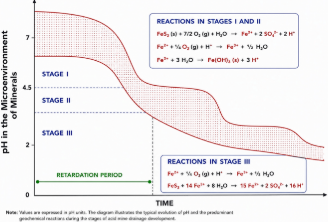
Figure 1. Stages of acid mine drainage (AMD) formation. The figure shows the evolution of pH and the main geochemical reactions associated with sulfide oxidation during acid mine drainage formation. Adapted from Raposo Garcia (2022).
2.1.4. Variability in AMD metal composition according to mining deposit type
The chemical composition of AMD varies depen-ding on deposit mineralogy, geology, climate, and factors such as granulometry and carbonate presence. Deposits rich in massive sulfides tend to generate effluents with higher acidity and metal concentrations compared to deposits poor in sulfide minerals. The main metals and geoche-mical characteristics associated with different mining deposit types are presented in Table 2.
2.2. Phytoremediation mechanisms by macrophytes
2.2.1 Phytoextraction
Phytoextraction corresponds to the mechanism through which macrophytes absorb, translocate, and accumulate metals present in acidic mine waters within their plant tissues, mainly leaves and stems suitable for harvesting. Plants form metal–phytochelatin (M–PC) complexes, which are subsequently transported into vacuoles for storage and cellular detoxification. This chelation process, mediated by cysteine-rich peptides, enhances tolerance to toxic metals. Likewise, lignocellulosic components such as cellulose, hemicellulose, and lignin possess functional groups, including sulfhydryl, amino, phosphate, carboxyl, and hydroxyl groups, capable of adsorbing metallic ions (Kumar et al., 2024).
2.2.2 Rhizofiltration
Rhizofiltration consists of removing metals and metalloids from contaminated waters through plant roots via adsorption, precipitation, and accumulation mechanisms in submerged organs. Surface adsorption enables the retention of metals and metalloids on the root surface through physicochemical interactions, whereas precipitation promotes the formation of insoluble compounds such as oxides, hydroxides, and sulfides on the roots. Furthermore, roots act as physical barriers facilitating metal accumulation within the internal tissues of the plant (Celi Fernández et al., 2025).
Table 1
Main metals and associated effects of AMD
Metal | Source mineral | Main environmental effects |
Fe | Pyrite | Produces ferric precipitates and contributes to acidity through hydrolysis processes. |
Al | Aluminosilicates | Toxic to aquatic organisms and precipitates under pH conditions above 4. |
Mn | Associated sulfides | May affect aquatic organisms and remains soluble under acidic conditions. |
Cu | Chalcopyrite | Exhibits high toxicity and potential for bioaccumulation in aquatic organisms. |
Zn | Sphalerite | High mobility in acidic environments and toxic effects on enzymatic processes. |
Pb | Galena | Neurotoxic metal with high environmental persistence. |
Cd | Associated sulfides | Highly toxic and potentially carcinogenic element. |
As | Arsenopyrite | Toxic metalloid associated with carcinogenic risks and water contamination. |
Note. The chemical composition of acid mine drainage depends on the mineralogy and geochemical characteristics of the deposit. Prepared by the authors based on U.S. Environmental Protection Agency (1994).
Table 2
Main metals and geochemical characteristics of acid mine drainage according to deposit type
Deposit type | Main metals/metalloids | Geochemical characteristics of AMD |
VMS (Volcanogenic Massive Sulfides) | Fe, Cu, Zn, Pb, As, Cd | High acid generation and elevated mobility of metals and metalloids due to the oxidation of massive sulfides. |
Coal | Fe, Al, Mn | Moderately acidic AMD associated with pyrite oxidation and the release of ferrous iron and aluminum. |
Cu–Mo Porphyries | Cu, Mo, As | Presence of drainage associated with hydrothermal alteration and the release of arsenic and trace metals. |
Iron deposits | Fe, Mn, Cr, Ni, Co | High concentrations of dissolved iron and manganese under oxidizing conditions. |
Lead–zinc deposits | Pb, Zn, Cd, As | High potential toxicity due to the presence of cadmium, lead, and arsenic. |
Gold deposits | As, Hg | Contamination risk associated with arsenic and mercury present in auriferous sulfide minerals. |
Note. The table summarizes the main metals and geochemical characteristics reported for different types of deposits associated with acid mine drainage generation. Prepared by the authors based on the reviewed literature.
2.2.3 Phytostimulation
Phytostimulation, also referred to as rhizodegradation or microbial phytostimulation, comprises the microbial degradation of contaminants mediated by microorganisms stimulated by root exudates. These exudates, composed of sugars, amino acids, organic acids, and enzymes, promote microbial growth in the rhizosphere. In addition, bacteria present in this zone produce siderophores capable of increasing the availability of iron (Fe³⁺) and other metals such as cadmium (Cd), nickel (Ni), arsenic (As), and lead (Pb), thereby enhancing phytoextraction processes. Plant growth-promoting bacteria (PGPB) also secrete organic acids such as gluconic, oxalic, and citric acids, which increase metal mobility in soils. Similarly, certain bacteria produce ACC deaminase, an enzyme that reduces ethylene-associated stress and promotes root development (Quevedo, 2021).
Additionally, several studies report that sulfate-reducing bacteria present in the rhizosphere indirectly contribute to metal removal through sulfate reduction and the formation of insoluble metal sulfides. These microbiological processes favor metal immobilization and complement the phytoremediation mechanisms developed by macrophytes in constructed wetland systems (Nguegang et al., 2021; Guo et al., 2026).
2.2.4 Phytodegradation
Phytodegradation comprises metabolic transfor-mation processes and microbial degradation of organic contaminants associated with AMD. Plants produce enzymes capable of transforming toxic compounds into less hazardous by-products, while root exudates stimulate the degradative activity of microorganisms present in the rhizosphere (Quevedo, 2021).
2.2.5 Phytostabilization
Phytostabilization immobilizes metals and metal-loids within the rhizosphere in order to reduce their bioavailability and limit their migration into ground-water. This mechanism involves root adsorption, precipitation, and complexation processes media-ted by exudates rich in organic acids and amino acids. Likewise, the hydraulic control exerted by plants contributes to maintaining hydrological stability within the system and reducing conta-minant dispersion (Kumar et al., 2024).
2.3. Influence of pH on AMD treatment efficiency
pH constitutes a determining factor in AMD reme-diation because it conditions both macrophyte survival and the chemical speciation of metals. Under extremely acidic conditions, elements such as Fe, Al, Mn, Cu, Zn, and Cd remain dissolved, increasing their mobility and toxicity. Consequen-tly, treatment efficiency depends on species capable of tolerating acidic conditions while simultaneously promoting effluent neutralization. To compare the tolerance of different macrophytes to acidic environments and their capacity to promote pH recovery, the minimum tolerated pH and the corresponding pH increase reported in the literature are summarized in Table 3.
Table 3
pH tolerance and neutralization capacity of macrophyte species used in AMD treatment
Species | Minimum tolerated pH | Final treatment pH | ΔpH |
Juncus ecuadoriensis | 2.5 | ND | ND |
Carex pichinchensis | 2.5 | ND | ND |
Myriophyllum aquaticum | 2.5 | ND | ND |
Vetiveria zizanioides | 2.7 | 7.0 | 4.3 |
Melaleuca cajuputi | 3.0 | 7.0 | 4.0 |
Nauclea orientalis | 3.0 | 7.0 | 4.0 |
Cyperus imbricatus | 3.1 | 7.4 | 4.3 |
Pennisetum purpureum | 3.1 | 7.4 | 4.3 |
Typha latifolia | 3.1 | 7.4 | 4.3 |
Phragmites mauritianus | 3.1 | 7.4 | 4.3 |
Phragmites australis | 3.6 | 7.0 | 3.4 |
Typha orientalis | 3.6 | 7.0 | 3.4 |
Cyperus glomeratus | 3.6 | 7.0 | 3.4 |
Scirpus validus | 3.6 | 7.0 | 3.4 |
Eichhornia crassipes | 3.8 | ND | ND |
Pistia stratiotes | 3.8 | ND | ND |
Juncus effusus | 4.0 | 7.0 | 3.0 |
Iris wilsonii | 4.0 | 7.0 | 3.0 |
Note. ND: not determined in the reviewed studies. Prepared by the authors based on the analyzed literature.
Table 3 reveals marked variability in pH tolerance thresholds, highlighting Juncus ecuadoriensis, Carex pichinchensis, and Myriophyllum aquaticum for their ability to grow under pH conditions as low as 2.5. Similarly, Vetiveria zizanioides exhibits high tolerance by growing from pH values of 2.7. This tolerance may be associated with adaptive mechanisms such as ionic exclusion and the formation of root iron plaques, which limit metal uptake into vascular tissues.
In addition to plant survival, the capacity to increase pH is fundamental for promoting metal precipitation as insoluble hydroxides. In this context, species such as Vetiveria zizanioides, Cyperus imbricatus, Pennisetum purpureum, Typha latifolia, and Phragmites mauritianus showed increases of up to 4.3 pH units, reaching near-neutral values (7.0–7.4).
Considering both acid tolerance and neutralization capacity, Vetiveria zizanioides exhibited the most favorable performance for AMD treatment under extreme conditions. However, complementary studies are still required for species in which final pH values were not reported (ND) in order to evaluate their applicability at larger scales. pH stabilization directly influences metal mobility and precipitation, aspects analysed in the following section.
2.4. Comparative evaluation of the phytoremediation capacity of macrophytes for major AMD metals
The chemical composition of AMD is characterized by high concentrations of metals and metalloids whose mobility and toxicity represent one of the main environmental challenges associated with this type of effluent. In this context, phytoremediation constitutes a sustainable biotechnological alterna-tive based on the use of macrophytes capable of removing, immobilizing, or transforming contami-nants through various physiological and rhizosphe-ric mechanisms. This section comparatively evaluates the performance of eighteen macrophyte species, considering their percentage removal efficiency for the major metals previously identified in Table 1. This analysis makes it possible to identify both the individual potential of each species and their applicability in multimetal systems, where ionic competition and geochemical interactions condition treatment efficiency. The comparative removal efficiencies reported for the evaluated species and metals are synthesized in Figure 2.
The removal efficiencies for iron (Fe) ranged from 57% to 99%, with Juncus effusus showing the highest removal efficiency (99.94%). This behavior is associated with extensive root systems and high rhizospheric oxygenation, conditions that promote the formation of iron plaques and the precipitation of Fe as oxides and hydroxides on root surfaces (Naghoum et al., 2025). In contrast, Pistia stratiotes exhibited the lowest efficiency (57%), probably due to its floating habit and lower interaction with contaminated substrates. These findings suggest that emergent macrophytes favor Fe adsorption and stabilization processes in AMD treatment systems.
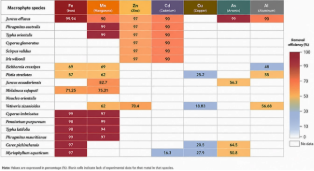
Figure 2. Comparative metal removal efficiency of macrophytes used in AMD treatment. Color intensity represents the removal percentage reported in the reviewed studies. ND: no reported data.
Manganese (Mn) removal efficiencies ranged from 62% to 99%, with Typha orientalis, Phragmites australis, and Pennisetum purpureum exhibiting the highest performance. This behavior may be attributed to rhizospheric oxygenation and pH increases toward near-neutral conditions, promoting Mn²⁺ oxidation and precipitation as insoluble oxides (Wu et al., 2022). Additionally, these species promote the development of Mn- and Fe-oxidizing microbial communities, accelerating metal immobilization within the system (Guo et al., 2026). Conversely, Pistia stratiotes and Vetiveria zizanioides showed the lowest efficiencies (62%), suggesting lower specific affinity for Mn under extreme acidic conditions.
Zinc (Zn) removal ranged from 70.4% to 97%, with Iris wilsonii, Scirpus validus, Cyperus glomeratus, Typha orientalis, Phragmites australis, and Juncus effusus showing the highest efficiencies. The high efficiency observed is associated with both phytoextraction processes and chemical precipitation mechanisms promoted by pH increases. Furthermore, several of these species exhibited bioconcentration factors (BCF) greater than 1, indicating a high capacity for Zn accumulation in plant tissues (Wu et al., 2022). In particular, Iris wilsonii showed the highest BCF, followed by Juncus effusus. Additionally, Naghoum et al. (2025) reported that the presence of Juncus effusus increased Zn removal from 94% in unplanted systems to 96% in vegetated wetlands due to enhanced rhizospheric processes and increased hydraulic retention time.
Species such as Iris wilsonii, Scirpus validus, Cyperus glomeratus, Typha orientalis, Phragmites australis, and Juncus effusus achieved cadmium (Cd) removal efficiencies close to 90%. This behavior is associated with rhizospheric oxygenation mechanisms, Cd precipitation into insoluble forms, and high phytoextraction capacity evidenced by bioconcentration factors greater than 1 (Wu et al., 2022). In contrast, Myriophyllum aquaticum showed the lowest efficiency (16.3%), possibly due to limited translocation to aerial tissues and predominant metal accumulation in roots (Nuñez-Bustamante et al., 2025). These findings demonstrate that effective Cd removal depends on both metal–plant affinity and rhizospheric stabilization capacity.
Copper (Cu) removal showed the lowest values among the evaluated metals, with efficiencies ranging from 18.83% to 27.9%. Myriophyllum aquaticum exhibited the best relative performance (27.9%), possibly due to its submerged growth habit and greater contact surface area for biosorption processes. However, the high mobility and solubility of Cu under strongly acidic conditions hinder its precipitation and immobilization (Nuñez-Bustamante et al., 2025). Additionally, ionic competition with predominant metals such as Fe and Al limits the availability of active adsorption sites within the rhizosphere (Nguegang et al., 2021). Together, these factors explain the lower Cu removal efficiency observed compared to other evaluated metals.
Arsenic (As) removal showed high variability, with efficiencies ranging from 50.8% to 99%. Juncus effusus achieved the highest removal percentage (99%), a behavior associated with its rhizospheric oxidation capacity and the formation of iron plaques that favor As(V) adsorption and precipitation (Naghoum et al., 2025). In contrast, Carex pichinchensis, Juncus ecuadoriensis, and Myriophyllum aquaticum showed moderate efficiencies. The lower removal observed may be related to the predominance of As(III) under extremely acidic conditions, a chemical species characterized by higher mobility and lower precipitation tendency (Nuñez-Bustamante et al., 2025). Likewise, competition with Fe and Al reduces the availability of rhizospheric retention sites (Wu et al., 2022).
Aluminum (Al) removal efficiency ranged from 48% to 90%, once again highlighting Juncus effusus as the species with the best performance. The high removal efficiency observed is associated with medium neutralization processes, Al precipitation as hydroxides, and intense rhizospheric activity promoted by extensive root systems (Naghoum et al., 2025). Conversely, Vetiveria zizanioides, Pistia stratiotes, and Eichhornia crassipes exhibited moderate or low efficiencies, possibly due to the high mobility of Al under extremely acidic conditions and ionic competition with other predominant metals in AMD (Nguegang et al., 2021). These results demonstrate that effective Al removal strongly depends on pH stabilization and the rhizospheric precipitation capacity of the system.
Nevertheless, direct comparison among species presents limitations associated with the methodological heterogeneity of the reviewed studies. Factors such as differences in initial metal concentrations, hydraulic retention times, pH conditions, experimental scale, and wetland type may significantly influence the reported efficiencies. Furthermore, a large proportion of the analyzed studies were conducted under controlled laboratory conditions or pilot-scale systems, limiting the direct extrapolation of results to real field scenarios. Consequently, standardized investigations are required to compare more consistently the phytoremediation performance of different macrophyte species.
2.5. Bioclimatic adaptation of macrophytes as a determining factor in treatment efficiency
Beyond water chemical composition, the long-term viability of phytoremediation systems depends on the adaptive capacity of macrophytes to local bioclimatic conditions. Variables such as biotemperature, precipitation, and water availability directly influence plant metabolism, rhizospheric microbial activity, and treatment stability. Consequently, inadequate species selection with respect to local ecological conditions may reduce the efficiency and sustainability of constructed wetlands.
In high-Andean or high-altitude regions, low temperatures may limit plant physiological activity and reduce microbiological processes associated with metal removal. In contrast, species adapted to humid tropical climates exhibit higher metabolic and transpiration rates, favoring phytoextraction and phytostabilization mechanisms. In this context, the Holdridge life zone classification represents a useful tool for selecting species compatible with the climatic conditions of each region and prioritizing native or ecologically adapted macrophytes.
Table 4 summarizes the bioclimatic characteristics and Holdridge life zones associated with the evaluated macrophyte species. The evaluated species occur across a wide range of climatic conditions, from dry subtropical environments to humid tropical forests. Mean annual temperatures ranged from 13.95 °C to 25.73 °C, whereas annual precipitation varied between 360 mm and 1969 mm. Likewise, RET values were lower in humid environments (0.77–1.12), indicating high water availability, whereas drier environments exhibited higher values (3.54), associated with greater water stress.
Species adapted to subtropical dry forests predominated, although macrophytes capable of developing under relatively humid conditions were also identified. These findings demonstrate the broad ecological plasticity of the analyzed species and suggest that bioclimatic adaptation constitutes a relevant criterion for optimizing the efficiency and stability of AMD treatment systems under different climatic regions.
Table 4
Bioclimatic characteristics and life zones of the evaluated macrophyte species
Evaluated species | Location | Mean biotemperature (°C) | Mean annual precipitation (mm) | RET | Life zone |
Juncus effusus | Ouixan, Nador, Morocco | 21.65 | 360.01 | 3.54 | Thorn woodland – Subtropical premontane |
Phragmites australis, Typha orientalis, Cyperus glomeratus, Scirpus validus, Iris wilsonii | Anxin, Hebei, China | 13.95 | 734.99 | 1.12 | Dry forest – Subtropical lower montane |
Eichhornia crassipes, Pistia stratiotes | Lampung, Indonesia | 25.73 | 1969.42 | 0.77 | Moist forest – Tropical |
Juncus ecuadoriensis, Carex pichinchensis, Myriophyllum aquaticum | Hualgayoc, Cajamarca, Peru | 16.91 | 571.37 | 1.74 | Dry forest – Subtropical lower montane |
Melaleuca cajuputi, Nauclea orientalis, Vetiveria zizanioides | Bogor, West Java, Indonesia | 25.11 | 1729.62 | 0.86 | Moist forest – Tropical |
Cyperus imbricatus, Pennisetum purpureum, Typha latifolia, Phragmites mauritianus | North Mara, Tanzania | 24.45 | 1051.93 | 1.37 | Dry forest – Tropical |
Note. RET: potential evapotranspiration ratio. Life zone classification was performed according to the Holdridge system using climatic data reported in literature and NASA POWER. Prepared by the authors.
3. Current and future challenges
One of the main challenges of phytoremediation applied to AMD is the scalability of treatment systems, since most reported results derive from laboratory or greenhouse-controlled experiments. Under real field conditions, macrophytes are exposed to seasonal flow variations, extreme acidity fluctuations, and biological competition, factors that may reduce the efficiency observed experimentally. Consequently, the design of constructed wetlands requires selecting species not only based on their metal accumulation capacity but also on their ecological adaptation and long-term functional stability.
Another important challenge concerns the selection between native and invasive species. Genera such as Typha and Phragmites have demonstrated high efficiency and colonization capacity in AMD-affected environments; however, their invasive potential may alter local biodiversity and modify the ecological structure of receiving ecosystems. In this context, the bioprospecting of native ecotypes represents an alternative of interest for developing treatment systems better adapted to the biogeographic conditions of each region.
Likewise, the management of contaminated plant biomass constitutes a technical and environ-mental challenge after the remediation process. Recent studies have proposed the energetic valorisation of this biomass through controlled thermochemical processes, including combustion, pyrolysis, and gasification, in order to generate heat or bioenergy. Nevertheless, these techno-logies require advanced control and filtration systems to prevent the atmospheric release of potentially volatile metals. In this sense, the integration of circular economy strategies could favor the valorization of by-products derived from AMD treatment and improve the overall sustainability of these systems.
Finally, recent investigations have highlighted the potential of hybrid constructed wetland systems, which combine vertical and horizontal flows to simultaneously optimize oxygenation, metal precipitation, and microbial activity. These systems improve treatment stability and increase removal efficiency under variable flow and acidity conditions, representing a promising alternative for full-scale applications (Nguegang et al., 2021; Naghoum et al., 2025).
4. Conclusions
This article demonstrates that macrophytes constitute a viable alternative for AMD treatment, promoting both the removal of metals and metalloids and the stabilization of pH conditions. Among the evaluated species, Vetiveria zizanioides exhibited high tolerance to extreme acidic conditions and strong neutralization capacity, whereas Juncus effusus, Typha latifolia, and Phragmites australis stood out for their efficiency in removing different metals under diverse environmental conditions.
Furthermore, it was identified that phytoremediation efficiency depends not only on metal–species affinity but also on bioclimatic factors such as biotemperature, precipitation, and water availability, which determine the adaptation and functional stability of macrophytes at treatment sites. In this regard, the integration of geochemical, physiological, and ecological criteria allows optimizing species selection for AMD treatment systems under different regional contexts.
Finally, the information synthesized in this review provides a technical basis for future research and for the design of constructed wetlands aimed at the sustainable treatment of contaminated mining effluents.
Acknowledgments
This study was developed within the research activities of María Cárdenas-Gaudry as Associate Researcher and Principal Investigator of the Sustainable Water and Environmental Systems (SuWES) Research Group, Department of Environmental Engineering, Universidad Científica del Sur, Peru.
References
Akcil, A., & Koldas, S. (2006). Acid mine drainage (AMD): Causes, treatment and case studies. Journal of Cleaner Production, 14(12–13), 1139–1145. https://doi.org/10.1016/j.jclepro.2004.09.006
Celi Fernández, R. S., Morales Avendaño, E. D., & Andrade Ruiz, C. E. (2025). Aplicación de la fitorremediación con macrófitas. Revista de la Sociedad Científica del Paraguay, 30(2), 103–113. https://doi.org/10.32480/rscp.2025.30.2.103113
Cervantes Macedo, A. H. (2014). Caracterización del drenaje ácido y de las rocas asociadas a una mina para evaluar su posible aplicación en un sistema de tratamiento pasivo [Tesis de licenciatura, Universidad Nacional Autónoma de México]. TESIUNAM.
Gil, F. (2020). Evaluación de la fitorremediación con Sesuvium portulacastrum para la extracción de metales pesados de un relave minero proveniente de una operación minera y de suelos y aguas contaminadas artificialmente con metales pesados [Tesis de bachiller, Pontificia Universidad Católica del Perú].
Guo, J., Cheng, L., Yang, M., Zhang, Y., Liu, H., & Wang, X. (2026). Physicochemical characteristics and microbial community analysis of a wetland system treating acid mine drainage. Scientific Reports, 16, 3360. https://doi.org/10.1038/s41598-025-33303-0
Kumar, A., Dadhwal, M., Mukherjee, G., Srivastava, A., Gupta, S., & Ahuja, V. (2024). Phytoremediation: Sustainable approach for heavy metal pollution. Scientifica, 2024, Article 3909400. https://doi.org/10.1155/2024/3909400
Naghoum, I., Edahbi, M., Melián, J. A. H., Doña Rodríguez, J. M., Durães, N., Pascual, B. A., & Salmoun, F. (2025). Passive treatment of acid mine drainage effluents using constructed wetlands: Case of an abandoned iron mine, Morocco. Water, 17(5), 687. https://doi.org/10.3390/w17050687
Nguegang, B., Masindi, V., Msagati, T. A. M., & Tekere, M. (2021). The treatment of acid mine drainage using vertical flow wetlands: Perspectives on the fate of chemical species. Minerals, 11(5), 477. https://doi.org/10.3390/min11050477
Nuñez-Bustamante, E., Césare-Coral, M. F., Cuba Torre, H. R., Nuñez-Bustamante, N., Sempértegui-Rafael, R. M., Cornejo-La Torre, M., Cueva, M. D., Arribasplata-Vargas, M. A., Castro-Pantoja, J. B., & Virú-Vásquez, P. (2025). Characterization and efficiency evaluation of organic amendments and native macrophytes for acid mine drainage treatment in Hualgayoc—A case study. Sustainability, 17(8), 3570. https://doi.org/10.3390/su17083570
Quevedo Quispe, A. W. (2021). Diseño y construcción de humedal artificial para la recuperación de aguas residuales en la población de Alcalá. Revista Ciencia, Tecnología e Innovación, 19(24), 133–148. https://doi.org/10.56469/rcti.v19i24.476
Raposo García, A. J. (2022). Drenaje ácido de mina: Causas y consecuencias. Experiencias globales de recuperación de espacios mineros [Trabajo fin de máster, Universidad de Huelva]. df
Thomas, G., Sheridan, C., & Holm, P. E. (2022). A critical review of phytoremediation for acid mine drainage-impacted environments. Science of the Total Environment, 811, 152230. https://doi.org/10.1016/j.scitotenv.2021.152230
U.S. Environmental Protection Agency. (1994). Acid mine drainage prediction (EPA 530-R-94-036; NTIS PB94-201829). Office of Solid Waste, Special Waste Branch.
Wibowo, Y., Safitri, H., Malik, I., Sudibyo, & Priyanto, S. (2022). Alternative low-cost treatment for real acid mine drainage: Performance, bioaccumulation, translocation, economic, post-harvest, and bibliometric analyses. Sustainability, 14(22), 15404. https://doi.org/10.3390/su142215404
Wu, A., Zhang, Y., Zhao, X., Li, J., Zhang, G., Shi, H., Guo, L., & Xu, S. (2022). Experimental study on the hydroponics of wetland plants for the treatment of acid mine drainage. Sustainability, 14(4), 2148. https://doi.org/10.3390/su14042148