Multifunctional effects of Trichoderma spp. and Bacillus amyloliquefaciens on phytopathogen suppression and induction of plant defense responses
Claudia Regina Barbieri1; Maira Cristina Schuster-Russiano2; Sérgio Miguel Mazaro1, 2; Lilian de Souza Vismara1; Samara Bau Morgan1; Camila Natacha Salvadori1
1 Federal University of Technology – Paraná (UTFPR), Campus Dois Vizinhos, Paraná, Brazil.
2 SRM Brazil Technology, Startup incubated at the Federal University of Technology – Paraná (UTFPR), Campus Dois Vizinhos, Paraná, Brazil.
ORCID de los autores:
C. R. Barbieri: https://orcid.org/0000-0001-6922-5521 M. C. Schuster-Russiano: https://orcid.org/0000-0001-7424-2190
S. M. Mazaro: https://orcid.org/0000-0003-2787-9409 L. S. Vismara: https://orcid.org/0000-0002-2879-1401
S. B. Morgan: https://orcid.org/0009-0009-1347-6327
ABSTRACT
Soybean (Glycine max L. Merr.) is one of the most important agricultural crops worldwide, and sustainable disease management is essential for maintaining productivity and environmental safety. This study evaluated the potential of a biological product composed of Trichoderma harzianum, Trichoderma asperellum, and Bacillus amyloliquefaciens as a biocontrol agent, plant growth promoter, and inducer of defense responses in soybean. Experiments were conducted under laboratory, greenhouse, and field conditions, including in vitro antagonism assays against major soybean phytopathogens, seed physiological quality tests, plant growth analyses, assessment of biochemical defense responses, and evaluation of powdery mildew severity. Data were subjected to analysis of variance or non-parametric tests when appropriate. The biological agents exhibited high antagonistic activity against Sclerotinia sclerotiorum, Rhizoctonia solani, Macrophomina phaseolina, Diaporthe longicolla, and Fusarium tucumaniae, with distinct mechanisms of action among the microorganisms. Seed physiological quality and plant growth parameters were not significantly affected by the treatments. Biochemical analyses revealed increased chitinase and β-1,3-glucanase activities at specific evaluation periods. Under greenhouse conditions, the biological treatments reduced the powdery mildew progress rate, although complete disease suppression was not achieved. The biological product demonstrated consistent potential for antagonism against phytopathogens and induction of defense-related enzymes in soybean.
Keywords: beneficial microorganisms; induced resistance; hydrolytic enzymes; microbial antagonism; disease management.
1. Introduction
Soybean (Glycine max L. Merr.) is among the most important crops in the global agricultural sector, with Brazil being the world's largest soybean producer. According to data from the Brazilian National Supply Company (CONAB), the 2022/2023 growing season reached a production of 155.7 million tons, with the state of Paraná standing out as the second-largest producer in the country, accounting for approximately 22.3 million tons (CONAB, 2023). However, in addition to achieving high productivity, maintaining product quality is essential for Brazil’s competitiveness in the international market, highlighting the continuous need for research and the development of new technologies for the agricultural sector.
Several factors may compromise soybean productivity, among which diseases caused by fungi, bacteria, viruses, and nematodes are major contributors to significant yield losses and, in severe cases, may lead to total crop failure (Motoyama et al., 2003). In this context, plant health has been extensively studied, particularly in light of the expansion of cultivated areas, which has favored the emergence and increased severity of diseases. Disease management has historically relied on the intensive use of chemical pesticides, raising environmental and public health concerns, as some of these compounds may persist in the environment and accumulate throughout the food chain. The indiscriminate use of pesticides has been associated with soil, water, and food contamination, as well as adverse effects on non-target organisms, biodiversity loss, and risks of human intoxication (Bohner et al., 2013; Silva et al., 2018).
Given this scenario, there is a growing demand for sustainable alternatives for plant disease mana-gement that minimize environmental impacts while ensuring greater safety for humans and ecosystems. In this regard, the biological control of phytopathogens has emerged as a promising strategy based on the use of antagonistic microorganisms that act through different mechanisms, including antibiosis, competition, and mycoparasitism. These microorganisms may also induce resistance in host plants, thereby contributing to reduced selection pressure for pathogen resistance (Benítez, 2010).
Among the most extensively studied biocontrol agents are fungi belonging to the genus Trichoderma and bacteria of the genus Bacillus, which also exhibit potential for promoting plant growth and enhancing nutrient availability. Commercial formulations combining these microorganisms have become increasingly available in the agricultural market. However, important knowledge gaps remain regarding their integrated effects on disease control, resistance induction, and plant growth promotion in economically important crops such as soybean.
Therefore, the present study aimed to evaluate the potential of a biological product based on Trichoderma harzianum, Trichoderma asperellum, and Bacillus amyloliquefaciens as a biocontrol agent, resistance inducer, and plant growth promoter in soybean.
2. Methodology
The present study was based on the evaluation of biological control agents composed of Trichoderma harzianum (5 × 10⁸ CFU g⁻¹), Trichoderma asperellum (5 × 10⁸ CFU g⁻¹), and Bacillus amyloliquefaciens (5 × 10⁸ CFU g⁻¹). For seed treatment, the product was diluted at a ratio of 600 mL of water per 100 kg of seeds. For foliar appli-cations, a spray volume of 100 L ha⁻¹ was used.
The experiments were conducted under laboratory, greenhouse, and field conditions at the Experimental Area of the Federal University of Technology – Paraná (UTFPR), Dois Vizinhos Campus, Paraná State, Brazil.
The study was organized into 6 experimental appro-aches: (i) in vitro interactions between phyto-pathogens and biological agents; (ii) morphological evaluation by scanning electron microscopy; (iii) assessment of soybean seed physiological quality; (iv) physiological performance and plant growth; (v) induction of resistance and biochemical responses in soybean; and (vi) powdery mildew control.
2.1 In vitro assays and Scanning Electron Microscopy
In vitro assays were conducted to evaluate the interactions between the fungal phytopathogens Sclerotinia sclerotiorum (isolate 2131), Rhizoctonia solani (isolate 1861), Macrophomina phaseolina (isolate 1574), Diaporthe longicolla, and Fusarium tucumaniae (isolate 25), obtained from the Embrapa Soybean Culture Collection (Londrina, Paraná, Brazil), and the biological control agents Trichoderma harzianum, Trichoderma asperellum, and Bacillus amyloliquefaciens. Antagonistic activity was assessed using the dual-culture assay on Potato Dextrose Agar (PDA) plates incubated at 25 ± 2 °C under a 12-h photoperiod.
Mycelial growth was measured daily until colony stabilization and subsequently fitted to the Verhulst logistic growth model, following the approach described by Cramer (2004) and Bacaër (2011, cited in Vismara, 2019), which is widely used to describe fungal growth dynamics. Statistical analyses were performed according to Vismara (2019), using model fitting based on the experimental design and frequentist inference. Analyses were conducted in R software (R Core Team, 2023) using the packages nlme, multcomp, and tidyverse.
The structural interactions among microorganisms were evaluated by scanning electron microscopy using samples collected from the confrontation zone between colonies. The analysis followed the methodology described by Vismara (2019), allowing the visualization of morphological altera-tions in both phytopathogens and antagonistic agents.
2.2 Physiological quality of soybean seeds
Soybean seeds (Glycine max, cultivar P96Y90RR) were treated with biological control agents composed of T. harzianum, T. asperellum, and B. amyloliquefaciens.
Physiological quality was assessed through germination and vigor tests conducted according to the Rules for Seed Testing (Brasil, 2009). The germination test was performed using moistened Germitest® paper and incubated at 25 °C for eight days, following the methodology described by Nakagawa et al. (1999).
The evaluated variables included germination percentage, normal and abnormal seedlings, shoot and root length, and dry mass, according to the seed vigor assessment protocols described by Nakagawa et al. (1999). Data were subjected to normality testing using the Shapiro–Wilk test and homogeneity of variances using Bartlett’s test. When assumptions were met, analysis of variance (ANOVA) was performed followed by Tukey’s test (p ≤ 0.05). When assumptions were not satisfied, the Kruskal–Wallis test was applied, followed by Conover’s multiple comparison test (Conover, 1999).
2.3 Physiological performance of soybean plants
Plant physiological performance was evaluated under greenhouse conditions using PVC tubes filled with a commercial substrate. Plants were treated with biological control agents composed of T. harzianum, T. asperellum, and B. amyloliquefaciens.
The experiment was conducted in a completely randomized design. Growth-related variables were assessed at the V6 growth stage, including shoot length, root length, fresh biomass, dry biomass, and root volume. Data were analyzed using R software (R Core Team, 2023) with the ExpDes.pt package.
2.4 Biochemical analyses and induction of resistance
To evaluate resistance induction, soybean plants were treated with biological control agents composed of T. harzianum, T. asperellum, and B. amyloliquefaciens, as well as the chemical inducer acibenzolar-S-methyl, which was used as a reference standard.
Following treatment application, plants were inoculated with a mixture of foliar pathogens and maintained under humid chamber conditions. Leaf samples were collected from the first fully expanded trifoliate leaf at 0, 48, and 96 h after treatment application. Samples were immediately frozen in liquid nitrogen and stored at −80 °C until analysis.
Protein extracts were obtained by macerating leaf tissue in phosphate buffer containing polyvinyl-polypyrrolidone (PVPP) and ethylenediaminetetra-acetic acid (EDTA), followed by centrifugation. The resulting supernatant was used as the enzymatic extract.
Total protein concentration was determined according to the method of Bradford (1976). Phenylalanine ammonia-lyase (PAL) activity was quantified following the methodology described by Kuhn (2007). Total phenolic compounds were quantified according to Bieleski & Turner (1966), with modifications described by Jennings (1991). Chitinase activity was determined according to Wirth & Wolf (1992), whereas β-1,3-glucanase activity was assessed following the methodology proposed by Guzzo & Martins (1996).
Data were subjected to analysis of variance in a split-plot arrangement over time, and means were compared using Tukey (p ≤ 0.05) with R software.
2.5 Evaluation of powdery mildew in soybean
Powdery mildew assessment was conducted under greenhouse conditions at a temperature of 25 ± 3 °C and a 12-h photoperiod. Plants were treated with biological control agents composed of T. harzianum, T. asperellum, and B. amyloliquefaciens at the V4 growth stage. Disease severity was visually estimated using the diagrammatic scale proposed by Mattiazzi (2003), which is widely employed for powdery mildew quantification in soybean, and was expressed as the percentage of affected leaf area.
3. Results and discussion
3.1 In vitro assays and Scanning Electron Microscopy
The in vitro dual-culture assays demonstrated that the biological control agents Trichoderma harzianum, Trichoderma asperellum, and Bacillus amyloliquefaciens, as well as the formulated biological product, exhibited antagonistic activity against all evaluated phytopathogens (Sclerotinia sclerotiorum, Rhizoctonia solani, Macrophomina phaseolina, Diaporthe longicolla, and Fusarium tucumaniae) when compared with the growth of each pathogen cultured alone.
Overall, the results indicate that antagonistic mechanisms varied among the microorganisms, being more pronounced for Trichoderma spp. against pathogens such as S. sclerotiorum and R. solani, whereas B. amyloliquefaciens showed greater antagonistic activity against M. phaseolina and F. tucumaniae. These findings reinforce that the direct antagonistic effects of Trichoderma involve multiple mechanisms of action, including the production of lytic enzymes, competition for space and nutrients, and parasitic interactions with pathogens. The relative contribution of these mechanisms depends on the microbial strain and the nature of the microorganism–pathogen inter-action (Tyśkiewicz et al., 2022) (Figures 1 and 2).
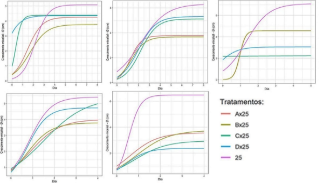
Figure 1. In vitro dual-culture assays between biological control agents and soybean-associated phytopathogens. The pathogens evaluated were Sclerotinia sclerotiorum (isolate 2131), Rhizoctonia solani (isolate 1861), Macrophomina phaseolina (isolate 1574), Diaporthe longicolla, and Fusarium tucumaniae (isolate 25). Treatments: P = pathogen alone; A = Trichoderma harzianum; B = Trichoderma asperellum; C = Bacillus amyloliquefaciens; D = formulated biological product (consortium of the three microorganisms). Interactions: A × pathogen = T. harzianum versus pathogen; B × pathogen = T. asperellum vs pathogen; C × pathogen = B. amyloliquefaciens versus pathogen; D × pathogen = formulated biological product versus pathogen.
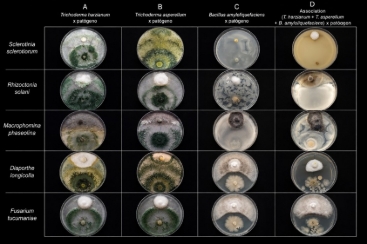
Figure 2. Antagonistic interactions observed in in vitro dual-culture assays between biological control agents and phytopathogenic fungi. Treatments consisted of Trichoderma harzianum (A), Trichoderma asperellum (B), Bacillus amyloliquefaciens (C), and a microbial consortium containing T. harzianum, T. asperellum, and B. amyloliquefaciens (D), evaluated against Sclerotinia sclerotiorum, Rhizoctonia solani, Macrophomina phaseolina, Diaporthe longicolla, and Fusarium tucumaniae.
In the case of S. sclerotiorum, all treatments reduced mycelial growth, consistent with previous reports demonstrating the effectiveness of Trichoderma spp. in controlling this pathogen in different crops (Sharma & Sain, 2004; Sumida et al., 2018). The high inhibitory capacity observed may also be associated with the direct action of these antagonists on sclerotia through parasitism and structural degradation (Silva et al., 2022).
For R. solani, the Trichoderma isolates exhibited the highest antagonistic activity, corroborating studies reporting significant inhibition of mycelial growth under in vitro conditions (Mayo et al., 2015). This effect is attributed to the strong competitive ability of Trichoderma spp., their production of a wide range of secondary metabolites, and competition for carbon and other essential nutrients (Sarrocco et al., 2009; Abbas et al., 2022).
Regarding M. phaseolina, B. amyloliquefaciens showed the highest antagonistic activity, followed by the formulated biological product, indicating a strong potential for antibiosis and the production of antifungal metabolites. This finding agrees with previous studies reporting the production of volatile compounds and antifungal lipopeptides, such as iturin, fengycin, and surfactin, which can inhibit mycelial growth and microsclerotia formation (Torres et al., 2016).
For Diaporthe longicolla, the Trichoderma isolates were more effective in reducing mycelial growth, possibly due to their high colonization capacity, rapid sporulation, and efficient competition for space and nutrients, characteristics commonly associated with highly antagonistic isolates (Harman et al., 2004).
Finally, for F. tucumaniae, both the formulated biological product and B. amyloliquefaciens exhibited greater antagonistic activity, suggesting the involvement of antibiosis and the production of antifungal secondary metabolites. This response is consistent with the ability of these microor-ganisms to synthesize bioactive compounds that directly interfere with fungal development, as reported for microbial antagonists in agricultural systems (Tyśkiewicz et al., 2022).
Scanning electron microscopy enabled a detailed visualization of the interactions between the biological control agents and the phytopathogens, revealing direct antagonistic mechanisms such as mycoparasitism, hyphal coiling, and hyphal constriction. In the present study, Trichoderma harzianum exhibited mycoparasitic activity against Fusarium tucumaniae, characterized by the coiling of antagonist hyphae around pathogen hyphae. This interaction suggests competition for space and nutrients, as well as the possible initiation of cell wall degradation mediated by adhesive proteins such as lectins and hydrophobins (Ribeiro, 2017), as shown in Figure 3.
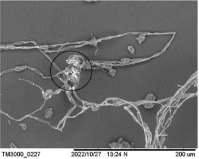
Figure 3. Scanning electron micrographs showing the mycoparasitic interaction of Trichoderma harzianum with Fusarium tucumaniae, characterized by hyphal coiling and adhesion of the antagonist hyphae to the pathogen.
3.2 Physiological quality of soybean seeds
The evaluation of seed physiological quality revealed a significant reduction in the dry biomass of seedlings treated with the biological control agent compared with the untreated control (Table 1), suggesting a possible initial interference with biomass accumulation during germination. However, no significant differences in seed vigor were detected among treatments according to the Kruskal–Wallis test (Table 2), indicating a similar distribution of seedlings across vigor categories. These results suggest that the effects of the biological treatment were more evident in quantitative growth-related parameters than in the overall vigor classification of soybean seeds.
Table 1
Dry mass (DM, g) of soybean seeds from the control and those treated with a biological control agent
Treatment | Dry mass (DM, g) |
Control | 2,10 a |
Biological control agent | 1,74 b |
| | |
Means followed by different letters in the column differ from each other according to Tukey’s test (p ≤ 0.05).
Table 2
Kruskal–Wallis test for soybean seed vigor levels
Vigor level | Chi-square | p-value |
High | 2,7344 | 0,0981 |
Medium | 0,7975 | 0,3719 |
Low | 2,1875 | 0,1391 |
To further assess seed vigor levels (high, medium, and low), box plots were generated (Figures 1 and 2). These graphical representations provide a comprehensive overview of data distribution, including the median, quartiles, interquartile range, and potential outliers, thereby facilitating the identification of patterns and variability among treatments. Visual inspection of Figures 4 and 5 suggests no substantial differences in seed vigor, either in terms of seedling number or percentage, between the untreated control and the biological control treatment. This observation was confirmed by the Kruskal–Wallis test (Table 2), which detected no significant differences among treatments.
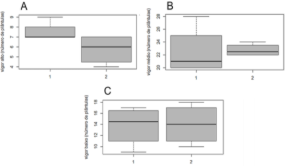
Figure 4. Box plots of seed vigor levels classified as (A) high, (B) medium, and (C) low in soybean seeds treated with a biological control agent, based on absolute frequency (number of seedlings). Treatments consisted of (1) untreated control and (2) biological control agent.
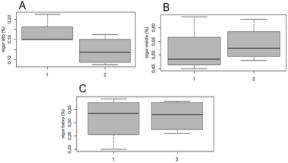
Figure 5. Box plots of seed vigor levels classified as (A) high, (B) medium, and (C) low in soybean seeds treated with a biological control agent, based on relative frequency (% of seedlings). Treatments consisted of (1) untreated control and (2) biological control agent.
3.3 Physiological performance of soybean plants
The results of the Kruskal–Wallis test indicated no significant differences between soybean plants treated with the biological control agent and the untreated control for any of the growth variables evaluated, including shoot length, root length, shoot and root fresh biomass, shoot and root dry biomass, and root volume (Table 3).
These results suggest that, under the experimental conditions evaluated, application of the biological product did not promote statistically detectable changes in the morphophysiological development of soybean plants. This response may be related to the fact that the expression of plant growth-promoting effects by beneficial microorganisms depends on factors such as plant–microorganism interactions, environmental conditions, and colonization time, and may therefore not be consistently expressed during the early stages of plant development. Thus, the data indicate that the treatment had a neutral effect on the growth parameters evaluated, without impairing plant development.
3.4 Biochemical analyses and induction of resistance
The results presented in Table 4 indicate that treatments alone had no significant effect on total phenolic compounds, total proteins, phenylalanine ammonia-lyase (PAL), or β-1,3-glucanase activity. Chitinase activity was the only variable significantly affected by treatment (p ≤ 0.05). In addition, significant treatment × time interactions were observed for PAL, β-1,3-glucanase, and chitinase activities. The time factor significantly influenced most biochemical variables, indicating that plant metabolic responses were more strongly associated with the sampling period than with the treatments applied.
Additionally, Table 5 shows that chitinase activity was highest in plants treated with acibenzolar-S-methyl (ASM), followed by those treated with the biological control agent, although no significant differences were observed between the latter treatment and the untreated control. These results indicate that both treatments may contribute to the
modulation of plant defense responses, particularly those associated with hydrolytic enzymes. The induction of chitinase is considered an important indicator of defense activation, as this enzyme is directly involved in the degradation of fungal cell walls (Xu et al., 2021), suggesting the activation of systemic resistance responses.
Table 5
Mean chitinase activity (CHI, UA·mg⁻¹) in untreated soybean plants and plants treated with a biological control agent and resistance inducer
Treatment | Chitinase (CHI, UA·mg⁻¹) |
Control | 0.16b |
Biological control agent | 0.19ab |
Acibenzolar-S-methyl | 0.21a |
Means followed by different lowercase letters in the column differ from each other according to Tukey’s test at 5% probability.
Table 3
Kruskal-Wallis test for growth variables of soybean plants treated with a biological control agent. CPA = shoot length; CR = root length; MFPA = shoot fresh mass; MFR = root fresh mass; VR = root volume; MSPA = shoot dry mass; MSR = root dry mass
Statistic | CPA (m) | CR (m) | MFPA (g) | MFR (g) | VR (mL) | MSPA (g) | MSR (g) |
Chi-square | 0.37064 | 0.26444 | 0.18735 | 0.026344 | 1.3463 | 0.63689 | 0.14348 |
p-value | 0.5427 | 0.6071 | 0.6651 | 0.8711 | 0.2459 | 0.4248 | 0.7048 |
Table 4
Degrees of freedom (DF), mean squares (MS), and coefficient of variation (CV%) from the analysis of variance of the experiment in split plots over time in soybean plants untreated and treated with a biological control agent and resistance inducer, for phenolic compounds (PHEN, mg·100 g⁻¹), total proteins (TPRO, mg·g⁻¹), phenylalanine ammonia-lyase (PAL, UA·mg⁻¹), β-1,3-glucanase (GLU, UA·mg⁻¹), and chitinase (CHI, UA·mg⁻¹)
Source of variation | DF | PHEN | TPRO | PAL | GLU | CHI |
Treatment | 2 | 12.56ns | 4.08ns | 0.00096ns | 0E+00ns | 0.009* |
Time | 2 | 21.88** | 70.33** | 0.00129** | 0E+00ns | 0.102** |
Treatment × Time | 4 | 0.67ns | 3.931ns | 0.00080** | 4e-06** | 0.051** |
CV1 (%) | | 33.05 | 12.89 | 35.26 | 53.26 | 20.04 |
CV2 (%) | | 27.63 | 15.05 | 32.56 | 0 | 28.02 |
ns = not significant at the 5% probability level according to the F-test; * significant at the 5% probability level; * significant at the 1% probability level. Experimental design: completely randomized design.
Regarding the effect of time (Table 6), an initial reduction in phenolic compound and protein contents was observed at 48 h, followed by a recovery in protein levels at 96 h, whereas phenolic compounds remained below their initial levels. Phenylalanine ammonia-lyase (PAL) activity reached its highest level at 48 h and subsequently declined to 96 h. Similarly, chitinase activity exhibited a peak at 48 h after treatment application.
These findings indicate that plant biochemical responses are dynamic and vary over time, with different metabolites exhibiting distinct activation patterns. This behavior reinforces that resistance induction is not a linear process but rather depends on the duration of the plant–treatment interaction.
The treatment × time interaction (Table 7) revealed distinct response patterns among the evaluated treatments. For PAL activity, the untreated control exhibited the highest values at 48 h, whereas both the biological control agent and the resistance inducer showed more stable responses over time, without pronounced activity peaks. In contrast, β-1,3-glucanase activity progressively decreased in the untreated control, while plants treated with the biological control agent exhibited a marked increase at 96 h, indicating a delayed activation of this enzyme. The resistance inducer also promoted a moderate increase in β-1,3-glucanase activity over time. β-1,3-Glucanase is widely recognized for its role in degrading fungal cell walls and releasing elicitor molecules capable of amplifying plant defense responses (Wróbel-Kwiatkowska et al., 2004), further supporting the role of biological treatments in activating defense mechanisms.
Overall, the results indicate that the application of biological control agents and the resistance inducer promoted a partial activation of biochemical defense mechanisms in soybean, particularly through increased chitinase and β-1,3-glucanase activities during specific evaluation periods. These enzymes are known to play key roles in plant defense by directly degrading fungal cell walls and enhancing defense signaling pathways. Guzmán-Valle et al. (2014) reported significant increases in glucanase and chitinase activities in plant tissues treated with Trichoderma asperellum, reinforcing the role of these microorganisms in the activation of resistance responses. Similarly, Muthukumar and Venkatesh (2014) observed increased activities of defense-related enzymes in plants treated with Trichoderma harzianum, highlighting the ability of these biological agents to modulate biochemical responses. Furthermore, Singh et al. (2014) reported increases in PAL activity, peroxidase activity, and phenolic compound accumulation in sunflower plants treated with T. harzianum, indicating that beneficial microorganisms can activate multiple pathways involved in plant resistance.
Table 6
Mean activity of phenolic compounds (PHEN, mg·100 g⁻¹), total proteins (TPRO, mg·g⁻¹), phenylalanine ammonia-lyase (PAL, UA·mg⁻¹), and chitinase (CHI, UA·mg⁻¹) as a function of collection time (0 h, 48 h, and 96 h) of soybean plants treated with a biological control agent and resistance inducer
Time | PHEN | TPRO | PAL | CHI |
0 h | 6.94a | 11.95a | 0.042b | 0.10c |
48 h | 4.55b | 7.78b | 0.055a | 0.26a |
96 h | 5.45b | 10.85a | 0.037b | 0.21b |
CV (%) | 25.51 | 13.79 | 39.43 | 26.38 |
Means followed by different lowercase letters in the column differ from each other according to Tukey’s test at 5% probability.
Table 7
Mean enzymatic activity of phenylalanine ammonia-lyase (PAL, UA·mg⁻¹) and β-1,3-glucanase (GLU, UA·mg⁻¹) as a function of treatment (biological control agent, resistance inducer, and control) and collection time (0 h, 48 h, and 96 h) of plant material
Treatment | PAL 0 h | PAL 48 h | PAL 96 h | GLU 0 h | GLU 48 h | GLU 96 h |
Control | 0.050Ab | 0.080Aa | 0.033Ab | 0.0023Aa | 0.0021Aa | 0.0006Bb |
Biocontrol agent | 0.039Aa | 0.040Ba | 0.036Aa | 0.0015Ab | 0.0015Ab | 0.0029Aa |
ASM | 0.039Aa | 0.046Ba | 0.043Aa | 0.0013Aa | 0.0021Aa | 0.0022Aa |
CV (%) | 32.61 | 36.69 |
Means followed by different letters, uppercase in the column and lowercase in the row, differ from each other according to Tukey’s test at 5% probability.
Therefore, the findings of the present study reinforce that the main positive effects of the evaluated treatments are associated with the activation of defense-related hydrolytic enzymes, particularly chitinase and β-1,3-glucanase, although other metabolic pathways appear to exhibit more variable responses or responses that are strongly dependent on the duration of plant–treatment interactions.
2.5 Evaluation of powdery mildew in soybean
The results presented in Table 8 demonstrated a progressive increase in powdery mildew severity throughout the evaluation period, as evidenced by increases in the total number of leaves per plant, the number of infected leaves, the percentage of leaves affected by powdery mildew, and the number of lesions over time. This pattern indicates that, despite the application of the biological control agent, the disease progressed naturally within the system. These findings suggest that the treatment primarily contributed to modulating epidemic intensity rather than completely suppressing disease development. Such a response is consistent with the epidemiological dynamics of foliar diseases under both greenhouse and field conditions, where environmental factors and inoculum pressure directly influence disease progression. Overall, disease development was consistently quantified through epidemiological variables such as the number of diseased leaves and lesion counts, allowing the temporal progression of the disease to be characterized. Previous studies have shown that biological control agents may reduce disease severity and delay the progression of fungal diseases through mechanisms including antibiosis, competition, and induced resistance (Tyśkiewicz et al., 2022), although these effects do not necessarily result in complete suppression of infection. Therefore, the results suggest that the biological control agent contributed to the modulation of powdery mildew progression without preventing disease advancement throughout the evaluation period, indicating a partial effect on the management of the soybean–powdery mildew pathosystem under the conditions evaluated.
4. Conclusions
The biological agents evaluated demonstrated consistent performance in the control of phytopathogens and in the modulation of plant physiological responses, highlighting their multifunctional potential for application in agricultural systems.
In the in vitro interaction assays, the biological agents exhibited strong antagonistic activity against the major phytopathogens evaluated, indicating the involvement of multiple mechanisms of action, including inhibition of mycelial growth, competition for space and nutrients, and the production of bioactive metabolites. Regarding seed physiological quality and plant development, the treatments did not significantly affect germination, vigor, or plant growth parameters, indicating the absence of consistent effects on early plant performance and vegetative growth under the conditions evaluated.
With respect to biochemical responses, the treatments modulated defense-related enzymes, particularly through increased chitinase and β-1,3-glucanase activities at specific evaluation periods, demonstrating the activation of physiological mechanisms associated with plant resistance. In the powdery mildew assays, the biological treatments contributed to reducing the disease progress rate, although complete suppression of infection was not achieved, indicating a partial effect on the management of the soybean–powdery mildew pathosystem under greenhouse conditions.
Overall, the results indicate that the biological agents act through an integrated mode of action, combining direct antagonism against phytopathogens with the induction of biochemical defense responses. These findings reinforce their potential as strategic components of integrated disease management programs in soybean production systems.
Table 8
Mean values of total number of leaves per plant (TNLP), number of leaves with powdery mildew (NLPM), percentage of leaves with powdery mildew (PLPM%), and number of powdery mildew lesions (NPL) in soybean plants treated with a biological control agent over three evaluation times
Evaluation time | TNLP (leaves plant⁻¹) | NLPM (leaves plant⁻¹) | PLPM (%) | NPL (lesions plant⁻¹) |
1st evaluation | 26.50 c | 5.85 c | 22.59 c | 1.01 c |
2nd evaluation | 32.55 b | 12.62 b | 38.69 b | 3.21 b |
3rd evaluation | 34.45 a | 19.07 a | 55.68 a | 6.42 a |
CV (%) | 13.23 | 30.42 | 27.69 | 76.86 |
Means followed by different lowercase letters in the column differ statistically according to Tukey’s test at 5% probability.
Author contributions
C. R. Barbieri: Conceptualization, Methodology, Investigation, Formal analysis, Data curation, Writing – original draft, Visualization. M. C. Schuster-Russiano: Conceptualization, Methodology, Investigation, Formal analysis, Data curation, Writing – original draft, Writing – review & editing, Visualization. S. M. Mazaro: Conceptualization, Supervision, Project administration, Resources, Funding acquisition, Writing – review & editing. L. S. Vismara: Formal analysis, Validation, Writing – review & editing. S. B. Morgan: Writing – review & editing.
References
Abbas, A., Mubeen, M., Zheng, H., Sohail, M. A., Shakeel, Q., Solanki, M. K., Iftikhar, Y., Sharma, S., Kashyap, B. K., Hussain, S., del C., Zuñiga Romano, M., Moya-Elizondo, E. A., & Zhou, L. (2022). Trichoderma spp. genes involved in the biocontrol activity against Rhizoctonia solani. Front. Microbiol., 13, 884469. https://doi.org/10.3389/fmicb.2022.884469
Benítez, L. B. (2010). Characterization of antimicrobial peptides from Bacillus amyloliquefaciens with antibacterial, antifungal and amebicidal activity. Doctoral thesis, Universidade Federal do Rio Grande do Sul [in Portuguese].
Bieleski, R. L., & Turner, N. A. (1966). Separation and estimation of amino acids in crude plant extracts by thin-layer electrophoresis and chromatography. Analytical Biochemistry, 17, 278–293. https://doi.org/10.1016/0003-2697(66)90206-5
Bohner, T. O. L., Araújo, L. E. B., & Nishijima, T. O. (2013). O impacto ambiental do uso de agrotóxicos no meio ambiente e na saúde dos trabalhadores rurais. Revista Eletrônica do Curso de Direito, 8, 329–341. https://doi.org/10.5902/198136948280
Bradford, M. M. (1976). A rapid and sensitive method for the quantitation of microgram quantities of protein utilizing the principle of protein-dye binding. Analytical Biochemistry, 72, 248–254. https://doi.org/10.1016/0003-2697(76)90527-3
Brasil. Ministério da Agricultura, Pecuária e Abastecimento. (2009). Rules for seed analysis. Brasília: MAPA/ACS [in Portuguese].
CONAB – Companhia Nacional de Abastecimento. (2023). Data table – grain production and supply/demand balance [in Portuguese].
Conover, W. J. (1999). Practical nonparametric statistics. Third Edition. Wiley.
Guzmán-Valle, P., Bravo-Luna, L., Montes-Belmont, R. et al. (2014). Induction of resistance to Sclerotium rolfsii in different varieties of onion by inoculation with Trichoderma asperellum. Eur J Plant Pathol, 138, 223–229. https://doi.org/10.1007/s10658-013-0336-y
Guzzo, S. D., & Martins, E. M. F. (1996). Local and systemic induction of β-1,3-glucanase and chitinase in coffee leaves protected against Hemileia vastatrix by Bacillus thuringiensis. Journal of Phytopathology, 144, 449–454. https://doi.org/10.1111/j.1439-0434.1996.tb00322.x
Harman, G., Howell, C., Viterbo, A. et al. (2004). Trichoderma species — opportunistic, avirulent plant symbionts. Nat Rev Microbiol, 2, 43–56. https://doi.org/10.1038/nrmicro797
Mattiazzi, P. (2003). Efeito do oídio (Microsphaera diffusa Cooke & Peck) na produção e duração da área foliar sadia da soja. Master's dissertation – Escola Superior de Agricultura “Luiz de Queiroz”, Universidade de São Paulo, Piracicaba.
Mayo, S., Gutiérrez, S., Malmierca, M. G., Lorenzana, A., Campelo, M. P., Hermosa, R., & Casquero, P. A. (2015). Influence of Rhizoctonia solani and Trichoderma spp. in growth of bean (Phaseolus vulgaris L.) and in the induction of plant defense-related genes. Front. Plant Sci., 6, 685. https://doi.org/10.3389/fpls.2015.00685
Muthukumar, A., & Venkatesh, A. (2014). Biological induction of systemic resistance to collar rot of peppermint caused by Sclerotium rolfsii. Acta Physiologiae Plantarum, 36, 1421–1431. https://doi.org/10.1007/s11738-014-1520-1
Nakagawa, J. et al. (1999). Seed vigor analysis methods. In: Krzyzanowski, F. C., Vieira, R. D., França Neto, J. B. (ed.). Vigor de Sementes: Conceitos e Testes. Londrina: Abrastes. p. 1–24.
Ribeiro, M. S. (2017). Estudo funcional do gene gluc31 que codifica uma β-1,3-glucanase da família GH16 de Trichoderma harzianum. Doctoral thesis – Universidade Federal de Goiás.
Sarocco, S., Guidi, L., Simona, F., & Degl'Innocenti, E. (2009). Competition for cellulose exploitation between Rhizoctonia solani and two Trichoderma isolates in the decomposition of wheat straw. Journal of Plant Pathology, 91(2), 331-338.
Sharma, P., & Sain, S. K. (2004). Induction of systemic resistance in tomato and cauliflower by Trichoderma spp. against stalk rot pathogen, Sclerotinia sclerotiorum (Lib) de Bary. Journal of Biological Control, 18(1), 21-28.
Silva, L. G., Camargo, R. C., Mascarin, G. M., Nunes, P. S. O., Dunlap, C., & Bettiol, W. (2022). Dual functionality of Trichoderma: biocontrol of Sclerotinia sclerotiorum and biostimulant of cotton plants. Frontiers in Plant Science, 13, 983127. https://doi.org/10.3389/fpls.2022.983127
Singh, B. N., Singh, A., Singh, B. R., & Singh, H. B. (2014). Trichoderma harzianum elicits induced resistance in sunflower challenged by Rhizoctonia solani. Journal of Applied Microbiology, 116(3), 654-666. https://doi.org/10.1111/jam.12387
Sumida, C. H., Daniel, J. F. S., Araujod, A. P. C. S., Peitl, D. C., Abreu, L. M., Dekker, R. F. H., & Canteri, M. G. (2018). Trichoderma asperelloides antagonism to nine Sclerotinia sclerotiorum strains and biological control of white mold disease in soybean plants. Biocontrol Science and Technology, 28(2), 142–156. https://doi.org/10.1080/09583157.2018.1430743
Torres, M. J., Pérez Brandan, C., Petroselli, G., Erra-Balsells, R., & Audisio, M. C. (2016). Antagonistic effects of Bacillus spp. against Macrophomina phaseolina. Microbiological Research, 182, 31–39. https://doi.org/10.1016/j.micres.2015.09.005
Tyśkiewicz, R., Nowak, A., Ozimek, E., & Jaroszuk-Ściseł, J. (2022). Trichoderma: current status in agriculture for biocontrol and plant growth stimulation. International Journal of Molecular Sciences, 23(4), 2329. https://doi.org/10.3390/ijms23042329
Vismara, E. S. (2019). Óleos essenciais na indução de resistência em morangos ao mofo cinzento, à Botrytis cinerea in vitro e ação toxicológica. Doctoral thesis – UTFPR.
Wirth, S., & Wolf, G. (1992). Micro-plate colourimetric assay for cellulase, xylanase, chitinase and β-1,3-glucanase. Soil Biology and Biochemistry, 24, 511–519. https://doi.org/10.1016/0038-0717(92)90074-8
Wróbel-Kwiatkowska, M., Lorenc-Kukula, K., Starzycki, M., Oszmiański, J., Kepczyńska, E., & Szopa, J. (2004). Expression of β-1,3-glucanase in flax increases fungal resistance. Physiological and Molecular Plant Pathology, 65, 245–256. https://doi.org/10.1016/j.pmpp.2005.02.008
Xu, J., Zhang, N., Wang, K., Xian, Q., Dong, J., Qi, X., & Chen, X. (2022). Chitinase Chi 2 positively regulates cucumber resistance against Fusarium oxysporum f. sp. cucumerinum. Genes, 13(1), 62. https://doi.org/10.3390/genes13010062.