Valorization of whey in mozzarella cheese production: effect of acidification method and milk fat content
Valorización del suero de leche en la producción de queso mozzarella: efecto del método de acidificación y del contenido de grasa láctea
Claudia Galarreta-Morales1; Ariana F. Angulo-Nuñez del Arco1; Paola Huarca-Saénz1;
Rosa Deza-Cueva1; Diego Mendoza-Huertas1; Fanny Ludeña-Urquizo1; Pedro P. Ugarte-Espinoza1*
1 Facultad de Industrias Alimentarias, Universidad Nacional Agraria La Molina, Av. La Molina s/n, Ap. 12056, Lima, Perú.
ORCID de los autores:
C. Galarreta-Morales: https://orcid.org/0009-0003-0627-7756 A. F. Angulo-Nuñez del Arco: https://orcid.org/0009-0008-4014-7468
P. Huarca-Saénz: https://orcid.org/0000-0001-7465-0952 R. Deza-Cueva: https://orcid.org/0009-0006-4839-9913
D. Mendoza-Huertas: https://orcid.org/0009-0002-4565-596X F. Ludeña-Urquizo: https://orcid.org/0000-0003-3338-2503
P. P. Ugarte-Espinoza: https://orcid.org/0000-0002-5458-3673
ABSTRACT
This study evaluates the physicochemical, functional, and sensory characteristics of mozzarella cheese obtained from milk standardized with whey at different fat contents (2.0%, 2.5%, and 3.0%), using two acidification methods: direct acidification with organic acids (acetic acid (AA) and citric acid (CA)) and acidification with two starter cultures (Streptococcus thermophilus/Lactobacillus helveticus (St/Lh) and Streptococcus thermophilus/Lactobacillus delbrueckii subsp. bulgaricus (St/Lb)). The effects of fat content and acidification method were evaluated for pH, meltability, and browning index during storage (days 1, 14, and 28), while yield and texture were evaluated on day 0 (immediately after production). Fat content, acidification method, or their interaction significantly influenced mozzarella cheese properties during storage, with the magnitude depending on the parameter. Yield increased with increasing fat content, regardless of the acidification method used. Two treatments were selected for sensory and physicochemical characterization: CA-2.5 and St/Lh-2.5. St/Lh-2.5 exhibited the highest overall acceptability, as well as higher fat and protein contents and lower moisture. These results show that the use of whey in milk standardization enables the production of mozzarella cheese of acceptable quality while contributing to whey valorization.
Keywords: Pasta filata cheese; dairy by-product; milk preacidification; milk standardization; functional properties cheese.
RESUMEN
Este estudio evaluó las propiedades fisicoquímicas, funcionales y sensoriales del queso mozzarella elaborado a partir de leche estandarizada con suero en tres niveles de grasa (2,0%; 2,5% y 3,0%), mediante acidificación directa con ácidos orgánicos (ácido acético (AA) y ácido cítrico (CA)), y acidificación con dos cultivos iniciadores (Streptococcus thermophilus/Lactobacillus helveticus (St/Lh) y Streptococcus thermophilus/Lactobacillus delbrueckii subsp. bulgaricus (St/Lb)). Se evaluaron pH, fusibilidad e índice de pardeamiento durante el almacenamiento (1, 14 y 28 días), mientras que el rendimiento y la textura se determinaron inmediatamente después de la producción. El contenido de grasa o el método de acidificación influyeron significativamente en las propiedades del queso durante el almacenamiento, aunque en distinta magnitud. Asimismo, el rendimiento aumentó con el incremento del contenido de grasa, independientemente del método de acidificación. Se seleccionaron dos tratamientos para análisis fisicoquímico y sensorial: CA-2,5 y St/Lh-2,5. Entre ellos, St/Lh-2,5 presentó la mayor aceptabilidad general, además de mayores contenidos de grasa y proteína y menor humedad. Estos resultados demuestran que el uso de suero en la estandarización de la leche permite obtener queso mozzarella de calidad aceptable, contribuyendo a la valorización del suero y a la optimización de su aprovechamiento en la industria láctea.
Palabras claves: Queso de pasta hilada; subproducto lácteo; preacidificación de la leche; estandarización de la leche; propiedades funcionales del queso.
1. Introduction
The cheese industry produces large amounts of whey as a byproduct, which makes up about 85–90% of the total processed milk volume and retains roughly 55% of its original nutrients, including lactose, soluble proteins, B vitamins, and minerals (Esen & Güzeler, 2023; Irazoqui et al., 2024; Tsermoula et al., 2021). In 2022, global cheese production from cow's milk was estimated at 25.3 million tons, with 10.76% coming from skimmed milk and 89.24% from whole milk (FAO, 2025). Given that 9 liters of whey are generated per kilogram of cheese produced (Casallas-Ojeda, 2024), it is estimated that around 220 million tons of whey will be produced that year. This creates an environmental concern, as this byproduct is often discharged untreated into water bodies, causing harm due to its high organic load (Asas et al., 2021).
Due to its nutritional properties, whey has been used for various purposes, including incorporation into food products, use as a nutrient source in composting or irrigation, and use in animal feed, among others (Hetherington et al., 2024). In the dairy industry, this byproduct has been incorporated into the production of different cheese varieties, such as Ricotta (Ashok et al., 2022; Foschi et al., 2025), Brunost (Hetherington et al., 2024), and Petit Suisse (Prudencio et al., 2008), as well as in soft and creamy cheeses, such as Myost (Norway), Mesost (Sweden), Mysuostur (Iceland), Myseost (Denmark), and Braunkäse (Germany) (Fox et al., 2017). Whey concentrate has also been used to increase yield in Cheddar-type cheeses (Brown & Ernstrom, 1982) and as a natural culture in the production of traditional cheeses, such as Argentinian Reggianito (Hynes et al., 2003) and Mozzarella (Mauriello et al., 2003). Whey proteins have also been used, either added directly, as in Havarti-type cheeses (Lo & Bastian, 1998), or in microparticulate form to improve curd formation (Meng et al., 2025).
Mozzarella cheese, the main representative of stretched-curd cheeses, is characterized by its functional properties such as viscoelasticity, fluidity, springiness, and oil release during heating. These properties depend on processing conditions that affect microstructure and composition (Fox et al., 2017). Among these factors, the acidification method plays a fundamental role, as it directly influences the final product's physicochemical, textural, and sensory characteristics.
Direct acidification using organic acids can increase cheese yield, improve melting properties, and enhance the sensory profile (Emam & Nasser, 2019). In contrast, acidification using lactic cultures can result in higher solids and protein content (Narayana & Palliyaguru, 2022). Furthermore, lactic acid bacteria, such as S. thermophilus, L. helveticus, and L. delbrueckii subsp. bulgaricus are widely used in mozzarella production due to their reproducibility, phage resistance, and ability to standardize product quality (Fusco et al., 2022).
It is estimated that a suitable selection of the acidification method and the percentage of fat in the standardization of milk with whey could optimize both the quality of the product and the economic benefits associated with the use of this by-product in the production of mozzarella cheese.
This study evaluates the physicochemical, functional, and sensory characteristics of mozzarella cheese obtained from milk standardized with whey, at different fat percentages (2.0, 2.5, and 3.0%), using two acidification methods: direct acidification with organic acids (acetic and citric) and acidification with starter cultures (S. thermophilus/L. helveticus and S. thermophilus/L. delbrueckii subsp. bulgaricus).
2. Methodology
2.1 Samples
Raw milk (3.75% fat, 3.41% protein, 6.8 pH, 0.15% acidity) was obtained from the Unidad Experimental de Zootecnia, and whey (0.33% fat, 0.41% protein, 6.48 pH, 0.13% acidity), generated during fresh cheese production, was obtained from the Planta Piloto de Leche. Both production centers belong to the Universidad Nacional Agraria La Molina (Lima, Peru). Microbial rennet (CHY-MAX®) and mixed starter cultures of Streptococcus thermophilus / Lactobacillus helveticus (TCC-20) and Streptococcus thermophilus/Lactobacillus delbrueckii bulgaricus (YF-L812) were supplied by Chr. Hansen® (Denmark). Citric acid (RZBC, China), calcium chloride (ISIA S.A.C., Peru), and 5% acetic acid (DEL FIRME, Peru) were also used.
2.2 Mozzarella cheese production
Mozzarella cheese was produced following the process described by Fox et al. (2017), with slight modifications. Raw milk was standardized with whey to reach fat contents of 2.0%, 2.5%, and 3.0%, pasteurized at 72 °C for 15 s, and immediately cooled to 37 °C for cheese production using starter cultures (SC), or to ≤10 °C for cheese production by direct acidification (DA). Calcium chloride (0.2 g L⁻¹), diluted 1:10 in distilled water, was then added. For SC production, S. thermophilus/L. helveticus (St/Lh) or S. thermophilus/L. delbrueckii subsp. bulgaricus (St/Lb) cultures (7.7 g/50 kg of milk) were inoculated with gentle stirring and allowed to rest for 20 min. For DA production, the required amount of 40% citric acid (CA) or 4% acetic acid (AA) was added until reaching pH 5.6, followed by heating to 30 °C. In both cases, microbial rennet (0.02 g L⁻¹), diluted 1:10 in distilled water, was added, and coagulation was allowed for 20 – 30 min for DA and 45 – 60 min for SC. The curd was cut into small cubes and left to rest for 5 min. For DA treatments, the curd was heated to 42 °C for 45 min, and whey was drained. For SC treatments, the curd was stirred for 20 min, incubated at 42 °C until pH 5.3 was reached, and then whey was drained. Subsequently, the curd was manually kneaded and stretched in water at 75 – 80 °C. Once the desired texture was achieved, cheeses were shaped into rectangular blocks and cooled in water at 4 – 8 °C for 20 min. Finally, the cheeses were packaged in plastic film, excess water was removed, and samples were stored at 4 °C for 28 days, with evaluations conducted at 1, 14, and 28 days.
2.3 Physicochemical analyses of mozzarella cheese
2.3.1 Proximate composition
Fat, protein, and moisture contents were determined using standard analytical methods. Fat content was determined using the Van Gulik butyrometric method according to ISO 3433:2008 (International Organization for Standardization, 2008). Protein content was determined using the Kjeldahl method according to AOAC Official Method 991.20 with a conversion factor of 6.38 (AOAC International, 2016). Moisture content was determined according to AOAC Official Method 926.08 (AOAC International, 2016), using 5 g of mozzarella cheese dried in a vacuum oven at 0.1 bar and 50 °C until constant weight.
2.3.2 pH
pH was measured directly on the cheese using a portable pH meter (Sension PH1, Crison, Spain), following the procedure described by Ferroukhi et al. (2023).
2.4 Yield
Cheese yield was calculated according to Sulieman et al. (2012) using the following equation (1):

![]()
2.5. Functional properties of mozzarella cheese
2.5.1 Meltability
Meltability was evaluated following the method described by Abdalla et al. (2022), with slight modifications. Approximately 10 g of finely chopped mozzarella cheese was placed into a test tube and compressed. The initial height of the compressed cheese was measured using a ruler. Samples were refrigerated for 30 min and then placed in a preheated electric oven (Memmert, Germany) at 110 °C for 60 min. The final length of the melted cheese was measured, and meltability was calculated as the difference between final and initial lengths.
2.5.2 Browning Index (BI)
The browning index was determined following the methodology described by Da Silva et al. (2018), with slight modifications. Fifteen grams of chopped sample were placed on a metal plate and heated in a preheated oven at 110 °C for 1 h. Color was measured using CIELab coordinates (L*, a*, b*) with a CR-400/410 colorimeter (Konica Minolta, Japan). The browning index (BI) was calculated using the following equation (2):

Where: α=1.75, β=5.645 and θ=3.012
2.5.3 Texture Profile Analysis (TPA)
Texture profile analysis was performed following the method described by Tunick and Van Hekken (2010), with slight modifications. Cylindrical samples (15 mm height × 15 mm diameter) were analyzed using an Instron 3365 texture analyzer (Instron, USA), equipped with a cylindrical probe, a preload of 10 gf, a test speed of 100 mm min⁻¹, and compression to 50% of the initial height. The parameters measured were hardness (gf), adhesiveness (gf·mm), cohesiveness, and springiness.
2.6. Sensory evaluation
Sensory evaluation was conducted on the best treatment from each acidification method using 50 untrained panelists. Samples were presented in two forms: melted cheese and pizza topping. For melted cheese, the methodology described by Ahsan et al. (2023) was followed with slight modifications. Cheese cubes (2 × 2 × 2 cm) were baked on aluminum foil in a conventional oven (Oster, USA) at 180 °C for 5 min. For pizza samples, the method described by Moynihan et al. (2014) was followed with slight modifications. Pizza portions (3 × 4 cm), baked at 200 °C for 5 min, were served with pizza sauce, oregano, and grated cheese.
Samples were labeled with random three-digit codes and evaluated for visual attributes, including oil release, surface cheese color, and browning formation, using a 9-point hedonic scale, where 1 indicated “dislike extremely,” and 9 indicated “like extremely” (Ramírez-Navas, 2012). All participants provided informed consent prior to participation.
2.7. Statistical analysis
A two-way analysis of variance (ANOVA) was used to evaluate the effects of milk fat content and acidification method on cheese yield and texture. The effects of milk fat content and acidification method on the pH, meltability, and browning index of mozzarella cheese were evaluated using a two-way repeated-measures analysis of variance (ANOVA). Storage time was treated as a within-subject factor. Tukey’s honestly significant difference (HSD) test was performed for multiple comparisons at a 95% confidence level. All statistical analyses were conducted using RStudio version 2025.05 (Posit Software, Boston, MA, USA).
3. Results and discussion
3.1 Yield
However, the magnitude of this effect varied slightly among acidification methods. In the treatments with AA and St/Lb, yield increased progressively with each increment in fat content (2.0%, 2.5%, and 3.0%). In contrast, treatments with CA and St/Lh showed a stabilization trend between 2.5 and 3.0% fat; these levels did not differ significantly from each other but were significantly higher than those observed at 2.0% fat (Figure 1). This behavior suggests a maximum efficiency threshold between 2.5 and 3.0%, at which the integrity of the protein network reaches its retention limit. Beyond this point, additional increases in milk fat do not improve total yield but instead result in greater lipid losses to whey or stretching water (Banks, 2004; Sales et al., 2021).
When the effect of the acidification method was evaluated at the same fat content, mozzarella yield was relatively independent of the acidification method at 2.0 and 2.5% fat. However, at 3.0% fat, significant differences emerged, with AA and St/Lb showing higher yields than CA and St/Lh (Figure 1). This superiority may be attributed to the rapid direct acidification induced by AA, which promotes immediate coagulation and reduces solids losses. In the case of St/Lb, the low initial proteolysis rate of L. bulgaricus helps preserve the integrity of the casein matrix, thereby improving the physical retention of fat globules (Kabaha et al., 2025). In contrast, the lower yield observed with CA and St/Lh can be explained by excessive demineralization of casein micelles caused by the strong chelating capacity of citric acid (Swaminathan et al., 2025), as well as by the high proteolytic activity of L. helveticus (Tondhoush et al., 2023), both of which weaken the protein network and facilitate lipid losses into the whey.
The mozzarella cheese yields obtained in this study, ranging from 3.77% (AA-2) to 7.83% (AA-3), were significantly lower than those reported by Franceschi et al. (2020) for conventional mozzarella produced from whole milk (12.95–13.37%). They were also below the values reported by Jooyandeh et al. (2016) (10.85% with starter culture and 8.81% with citric acid using milk with 3.20% fat), Najafi et al. (2006) (9.67% using milk with 2.5% fat and citric acid), and Elgaml et al. (2024) (10.5% – 11.0% using milk with 3.0% fat). However, these yields were comparable to or slightly higher than those reported by Metzger et al. (2000) (6.91% – 7.24%) for cheeses produced from very low-fat milk (0.5%).
Although the absolute yields obtained in this study were numerically lower in some treatments than those reported in the literature for mozzarella, these values must be interpreted in terms of raw milk utilization efficiency. Unlike the aforementioned studies, where the substrate consisted entirely of standardized milk, the present system employed a mixture of milk and whey. When yield is expressed relative to the volume of fresh milk actually used (yield per unit of milk), a substantial improvement in conversion efficiency is observed. In practice, the same amount of cheese can be produced while using a smaller quantity of milk.
Therefore, although the apparent yield may be lower due to casein dilution by whey, the yield relative to the dairy input demonstrates that the use of cheese whey is not only a cost-reduction strategy but also an effective approach to maximize the recovery of solids that would otherwise be lost in the effluent.
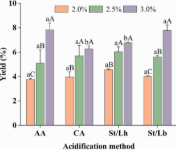
Figure 1. Mozzarella cheese yield. Different lowercase letters indicate significant differences (p < 0.05) among acidification methods within the same fat content. Different uppercase letters indicate significant differences (p < 0.05) among fat content within the same acidification method.
3.2 pH
The pH remained stable throughout the evaluation period in treatments with starter cultures (St/Lh and St/Lb), indicating a consistent and well-controlled acidification process. In contrast, direct acidification methods (AA and CA) exhibited pH variations depending on storage time and fat content. The treatment with AA showed a progressive decrease in pH when milk with 3.0% fat was used, whereas the treatment with CA exhibited a gradual reduction in pH during storage across all fat contents (Figure 2).
These findings are consistent with previous studies. For example, Patel et al. (2025) reported an increase in acidity, associated with a decrease in pH, in pre-acidified mozzarella during storage. Similarly, Sıçramaz et al. (2022) observed no significant changes in pH in cheeses produced with starter cultures (S. thermophilus combined with L. delbrueckii subsp. bulgaricus and/or L. helveticus).
The observed pH decrease in treatments with AA and CA can be attributed to three main mechanisms. First, proton migration and re-equilibration within the protein matrix, where solubilization of colloidal calcium phosphate and protein rearrangement release protons (Feeney et al., 2002); this effect is more pronounced with CA due to its higher chelating capacity (Swaminathan et al., 2025). Second, the activity of secondary microbiota (NSLAB). In the absence of starter cultures that rapidly metabolize lactose, these microorganisms utilize residual lactose during storage, contributing to further acidification (El-Garhi et al., 2025), with this effect increasing over time. Finally, the buffering capacity of whey proteins also plays a role. Higher fat content in milk requires less whey addition during standardization, thereby reducing the contribution of these proteins, which possess buffering capacity due to ionizable groups capable of accepting or donating protons (Kim et al., 2018). Consequently, the system's overall buffering effect is diminished, increasing susceptibility to pH variations during storage.
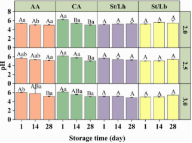
Figure 2. pH values for mozzarella cheeses during 28 days of storage at 4 ºC. Different uppercase letters indicate significant differences (p < 0.05) among storage times for each acidification method. Different lowercase letters indicate significant differences (p < 0.05) among fat content for each acidification method. The absence of lowercase letters indicates no significant differences.
3.3 Meltability
Meltability during storage was significantly affected by both the initial fat content and the acidification method, resulting in distinct patterns over the 28-day storage period. Treatments acidified with organic acids (AA and CA) showed no significant changes in meltability at 2.5 and 3.0% fat. However, at 2.0% fat, contrasting responses were observed: AA induced a progressive decrease in meltability, whereas CA led to a significant increase by day 28 (Figure 3). This behavior could be associated with the role of calcium in the casein matrix: higher calcium levels enhance cross-linking and network rigidity, thereby reducing meltability (MacMahon et al., 2005). Consequently, the greater meltability observed with CA could be attributed to its higher chelating capacity, which reduces casein-associated calcium, whereas AA, with lower chelating capacity, maintains a more rigid matrix.
Differences were also observed when starter cultures were used. In treatments with St/Lh, meltability decreased during storage, likely due to the high proteolytic activity of L. helveticus, which produces weaker curds with a reduced capacity to retain molten fat, promoting fat exudation during heating (Sıçramaz et al., 2022). In contrast, treatments with St/Lb showed an increase in meltability between days 1 and 14, followed by stabilization until day 28, a pattern associated with moderate proteolysis that weakens the casein network without compromising its structural integrity. Similar trends have been reported in cheeses produced with S. thermophilus and L. delbrueckii subsp. bulgaricus (Abdalla et al., 2022; Gonçalves & Cardarelli, 2020).
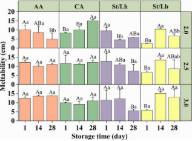
Figure 3. Meltability for mozzarella cheeses during 28 days of storage at 4 ºC. Different uppercase letters indicate significant differences (p < 0.05) among storage times for each treatment. Different lowercase letters indicate significant differences (p < 0.05) among fat content for each acidification method.
3.4 Browning Index (BI)
The browning index (BI) varied only in the St/Lh treatment. At 2.0% fat, BI increased significantly between days 14 and 28, whereas at 3.0% fat it increased between days 1 and 14, followed by a decrease by day 28. No significant changes were observed at 2.5% fat. In contrast, BI remained stable throughout the 28-day storage period in the treatments with AA, CA, and St/Lb (Figure 4).
This differential behavior is attributed to the high proteolytic activity of L. helveticus, whose proteolytic enzymes release free amino acids that react with galactose and residual lactose derived from the whey used for standardization. These compounds act as key precursors for the Maillard reaction, the primary browning mechanism in Mozzarella during baking (Parhi et al., 2025). This reaction is strongly dependent on the cheese moisture content and on the time–temperature conditions applied during heating (Tarapata et al., 2025)
To achieve a milk fat content of 2.0%, a larger amount of whey was added, providing higher levels of lactose and whey proteins (lactoglobulins and lactalbumins) with high water-holding capacity (Zisu & Shah, 2005), which likely increased the retained moisture compared with the 3.0% fat treatment. Sutariya et al. (2022) observed that when mozzarella cheese had a higher moisture content, browning occurred more slowly. This was attributed to the fact that the rate of surface moisture loss during baking was lower than the rate of internal moisture migration, maintaining the surface temperature close to 100 °C and preventing the Maillard reaction. This mechanism may explain the lower BI values observed at 2.0% fat during the first 14 days, despite the higher initial lactose content. The stable behavior at 2.5% suggests a balance between available lactose, proteolytic activity, and moisture loss.
3.5 Texture Profile Analysis (TPA)
The textural properties (hardness, adhesiveness, cohesiveness, and springiness) were influenced by the interaction between fat content and the acidification method. Overall, increasing fat content from 2.0% to 3.0% did not produce significant differences in these parameters (Table 1). Although fat has been shown to influence cheese texture by acting as a plasticizing agent within the protein matrix, thereby modulating the rigidity of the casein network (Rathod et al., 2025), this effect largely depends on the interaction at the fat-water interface and their coupling with the protein network, as fat can behave either as an active or an inactive filler (Lorenzen et al., 2024). Within the range studied, this effect appeared limited and did not substantially modify the matrix structure.
An exception was observed in treatments with St/Lh, where increasing fat content (2.0–3.0%) reduced hardness and cohesiveness while increasing adhesiveness. This behavior is attributed to the high proteolytic activity of L. helveticus, which hydrolyzes αS1-, β-, and κ-caseins, generating peptides that enhance hydration and flexibility of the protein network (Tondhoush et al., 2023).
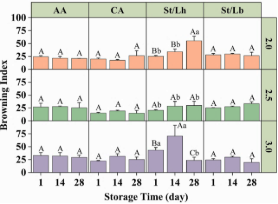
Table 1
Texture profile of mozzarella cheese
Acidifi-cation method | Hardness (gf) | Adhesiveness | Cohesiveness | Springiness | |||||||||
(gf-mm) | |||||||||||||
2.0 | AA | 680.36 | ± | 150.14Ab | 117.51 | ± | 1.36Aa | 0.77 | ± | 0.01Aa | 0.83 | ± | 0.00Aa |
CA | 646.39 | ± | 63.00Ab | 176.96 | ± | 60.98Aa | 0.92 | ± | 0.17Aab | 0.94 | ± | 0.17Aab | |
St/Lh | 4564.95 | ± | 102.11Aa | 70.15 | ± | 47.09Ba | 0.72 | ± | 0.00Ab | 0.85 | ± | 0.00Aab | |
St/Lb | 2367.11 | ± | 808.23Aab | 134.52 | ± | 53.86Aa | 0.63 | ± | 0.05Ab | 0.77 | ± | 0.02Ab | |
2.5 | AA | 1355.77 | ± | 382.99Aa | 95.15 | ± | 1.89Aa | 0.76 | ± | 0.02Aa | 0.82 | ± | 0.02Aa |
CA | 1432.98 | ± | 697.39Aa | 69.76 | ± | 8.09Aa | 0.8 | ± | 0.04Aa | 0.86 | ± | 0.01Aa | |
St/Lh | 2839.16 | ± | 2054.79ABa | 174.35 | ± | 40.04ABa | 0.65 | ± | 0.00ABa | 0.78 | ± | 0.01Aa | |
St/Lb | 1952.57 | ± | 1004.91Aa | 171.07 | ± | 31.99Aa | 0.66 | ± | 0.02Aa | 0.79 | ± | 0.01Aa | |
3.0 | AA | 2164.92 | ± | 976.23Aa | 65.51 | ± | 12.03Aa | 0.72 | ± | 0.04Aa | 0.83 | ± | 0.02Aa |
CA | 2703.29 | ± | 979.32Aa | 98.1 | ± | 35.01Aa | 0.82 | ± | 0.01Aab | 0.86 | ± | 0.00Aa | |
St/Lh | 2303.08 | ± | 252.13Ba | 303.01 | ± | 261.72Aa | 0.57 | ± | 0.01Bb | 0.76 | ± | 0.03Aa | |
St/Lb | 1072.81 | ± | 13.26Aa | 284.68 | ± | 74.35Aa | 0.62 | ± | 0.03Ab | 0.77 | ± | 0.03Aa | |
Different superscript uppercase letters indicate significant differences (p < 0.05) among acidification methods for each fat content. Different superscript lowercase letters indicate significant differences (p < 0.05) among fat content for each acidification method.
Increased proteolysis reduces protein–calcium crosslinks and enhances casein mobility (Moynihan et al., 2014). Under these conditions, fat acts as a lubricating phase within a partially hydrolyzed matrix, lowering internal resistance and increasing adhesiveness, which is associated with greater surface mobility and moisture retention (Dai et al., 2018). Consequently, in treatments with St/Lh, fat amplifies the effects of proteolysis, resulting in a softer and less cohesive matrix.
Adhesiveness did not show significant differences among acidification methods at any fat level. This finding partially contrasts with previous studies reporting differences in adhesiveness between direct acidification and starter culture fermentation (Emam et al., 2019; Jooyandeh et al., 2016). This behavior suggests that adhesiveness is more closely associated with the serum phase and surface lubrication of the cheese rather than with the internal structural strength of the protein matrix (Dimitreli & Thomareis, 2007).
Hardness, cohesiveness, and springiness showed responses dependent on both fat content and acidification method. At 2.5% fat, no differences were observed among acidification methods, indicating a relatively stable matrix structure. In contrast, at 2.0% fat, CA acidification increased cohesiveness and springiness while reducing hardness, likely due to lower proteolysis and higher moisture retention (Yan et al., 2026). Reduced proteolysis and the preservation of a more intact protein network are known to favor elastic recovery in cheese (Imm et al., 2003).

Figure 4. Browning index for mozzarella cheeses during 28 days of storage at 4 ºC. Different uppercase letters indicate significant differences (p < 0.05) among storage times for each treatment. Different lowercase letters indicate significant differences (p < 0.05) among fat content for each acidification method.
At 3.0% fat, hardness and springiness did not differ among acidification methods, suggesting that the higher fat content enhanced the plasticizing effect (Rathod et al., 2025) and attenuated structural differences induced by acidification. However, cohesiveness was slightly higher in cheeses acidified with CA compared to those produced with starter cultures. This result is partially consistent with findings by Emam et al. (2019) and Jooyandeh et al. (2016), who reported higher cohesiveness, and in some cases hardness and springiness, in cheeses acidified with organic acids. The observed discrepancies may be attributed to milk standardization using cheese whey, which alters system composition, protein–protein interactions, and the mechanisms governing matrix formation depending on the acidification method (Natrella et al., 2020).
3.6 Overall acceptability of mozzarella cheese
The overall acceptability of the CA-2.5 and St/Lh-2.5 treatments was evaluated in two presen-tations: melted cheese and as a pizza ingredient (Table 2). The results showed significant differen-ces between presentations within the same treatment. In the melted cheese presentation, the St/Lh-2.5 treatment obtained significantly higher scores (5.52) compared to CA-2.5 (4.64). This behavior is consistent with the findings of Nateghi (2017), who reported that the use of starter cultures promotes improved sensory development during cheese processing.
Moreover, the relevance of starter cultures, particularly S. thermophilus and L. helveticus lies in their ability to produce exopolysaccharides, which effectively enhance the sensory and rheological properties of cheeses (Costantino et al., 2020; Ibrahim & El-Hendy, 2018).
De Angelis et al. (2008) reported that mozzarella cheese produced by direct acidification exhibits a faster decline in sensory acceptability during sto-rage and generally receives lower scores compa-red to cheese manufactured using commercial starter cultures or defined complex cultures.
3.7 Proximate composition
The fat content was significantly higher (p < 0.05) in the St/Lh-2.5 treatment (16.5%) compared to CA-2.5 (6.5%) (Table 3). This difference may be attributed to the direct acidification process, which promotes rapid coagulation due to a fast pH decrease associated with an increase in free calcium concentration (Thybo et al., 2020).
In cheese, fat is generally retained within the protein matrix as part of the filler material (Chacón-Villalobos & Pineda-Castro, 2009). However, when curd losses occur as a result of the fragility of the acidified gel, components of the milk or dairy mixture, such as fat and protein, may be lost into the whey (Turkan et al., 2006). The present results are consistent with those reported by Kumari and Gihan (2022), who found significantly higher protein content in cheeses produced with starter culture–acidified milk than in citric acid–acidified samples. Finally, moisture content was significantly higher in CA-2.5 (58.58%) than in St/Lh-2.5 (46.9%). This result can be explained by the more open and less cohesive protein network formed under direct acidification, which contains more folds and whey-filled spaces that promote protein hydration, resulting in a softer and more adhesive texture (McMahon et al., 2005). In contrast, acidification with starter cultures tends to form more compact and cohesive protein networks with lower free water retention capacity, due to greater protein aggregation and reduced porosity (Cheng et al., 2024; Xia et al., 2024).
4. Conclusions
Mozzarella cheese yield increased with fat content, reaching its maximum value at 3.0% with AA and St/Lb. In contrast, in cheeses produced with CA and St/Lh, the yield plateaued at 2.5%. The pH remained stable in cheeses prepared with starter cultures, whereas direct acidification methods exhibited time- and fat-dependent variations. Meltability was stable at 2.5% – 3.0% fat but diverged at 2.0%, increasing in cheeses prepared with CA and decreasing in cheeses prepared with AA. Browning index remained constant in most treatments, except in cheeses prepared with St/Lh, which exhibited transient increases. Textural parameters were largely unaffected by fat content, except in cheeses prepared with St/Lh, where hardness and cohesiveness decreased, and adhesiveness increased with fat. The influence of acidification method was more pronounced at 2.0% fat than at 3.0%, while at 2.5%, its influence was attenuated.
Table 2
Overall acceptability of CA-2.5 and St/Lh-2.5 mozzarella cheese treatments evaluated as melted cheese and on pizza
Treatments | CA-2.5 |
| St/Lh-2.5 | ||
Presentation | Melted | On pizza |
| Melted | On pizza |
Overall acceptability | 4.64 ± 1.34c | 6.44 ± 1.36a |
| 5.52 ± 1.50b | 6.68 ± 1.08a |
Means within a row sharing the same superscript letter are not significantly different (p > 0.05).
Table 3
Fat, protein, and moisture contents of CA-2.5 and St/Lh-2.5 treatments
Treatments | Fat (%) | Protein (%) | Moisture (%) |
CA-2.5 | 6.5 ± 0.58a | 23.74 ± 0.19a | 58.58 ± 0.24b |
St/Lh-2.5 | 1.65 ± 0.00b | 26.96 ± 0.19b | 46.9 ± 0.66a |
Means within a column sharing the same superscript letter are not significantly different (p > 0.05).
At 2.0% fat, acidification with CA increased cohesiveness and springiness and reduced hardness compared with acidification with starter cultures; at 3.0%, hardness and springiness remained constant, with slightly higher cohesive-ness in CA-acidified cheeses. Adhesiveness did not show significant variation at any fat level. Sensory evaluation indicated that cheeses prepared with starter cultures were more highly accepted overall, particularly in the melted cheese format.
Overall, the results show that mozzarella proper-ties are strongly influenced by the interaction between fat content and acidification method, affecting yield, pH stability, meltability, texture, and browning during storage. Importantly, the use of whey for milk standardization demonstrates a viable strategy to enhance milk utilization efficiency while maintaining cheese quality, supporting further work to valorize whey and optimize its functional contribution in mozzarella production. These results highlight the potential for integrating whey into cheese manufacture, offering potential benefits for sustainable dairy processing.
Acknowledgements
The authors acknowledge financial support from the Vicerrectorado de Investigación of the Universidad Nacional Agraria La Molina (UNALM). The authors also thank the UNALM, particularly the Planta Piloto de Leche (PPL) and Círculo de Investigación de Lácteos y Derivados (CILD), for providing the facilities, equipment, and technical support necessary for the development of this study.
Conflict of Interest
The authors declare that there is no conflict of interest regarding the publication of this manuscript.
References
Abdalla, A., Abu-Jdayil, B., Alsereidi, H., Hamed, F., Kamal-Eldin, A., Huppertz, T., & Ayyash, M. (2022). Low-moisture part-skim mozzarella cheese made from blends of camel and bovine milk: Gross composition, proteolysis, functionality, microstructure, and rheological properties. Journal of Dairy Science, 105(11), 8734-8749. https://doi.org/10.3168/jds.2022-22144
Ahsan, M., Ali, T. M., & Hasnain, A. (2023). Use of oxidized potato starch as simultaneous fat and casein replacer in analogue mozzarella cheese-Ⅱ: Impact on functional and sensory properties of cheese. Food Hydrocolloids, 142, 108810. https://doi.org/10.1016/j.foodhyd.2023.108810
AOAC International. (2016). Official Methods of Analysis of AOAC International. (20th ed.). AOAC International.
Asas, C., Llanos, C., Matavaca, J., & Verdezoto, D. (2021). Suero de leche: impacto ambiental, usos y aplicaciones mediante mecanismos biotecnológicos. Ciencias Agroindustriales, 11(1), 105–116. https://doi.org/10.17268/agroind.sci.2021.01.13
Ashok, P., Sabikhi, L., Khetra, Y., Ganguly, S., & Baig, D. (2022). Effect of skim milk addition and heat treatment on characteristics of cow milk Ricotta cheese manufactured from Cheddar cheese whey. LWT, 162. https://doi.org/10.1016/j.lwt.2022.113405
Banks, J. M. (2004). The technology of low‐fat cheese manufacture. International Journal Of Dairy Technology, 57(4), 199-207. https://doi.org/10.1111/j.1471-0307.2004.00136.x
Brown, R., & Ernstrom, C. (1982). Incorporation of Ultrafiltration Concentrated Whey Solids into Cheddar Cheese for Increased Yield. Journal of Dairy Science, 65(12), 2391-2395. https://doi.org/10.3168/jds.S0022-0302(82)82514-9
Casallas-Ojeda, M., Cabeza, I., Sanchez, N., Caicedo-Concha, D., & Astals, S. (2024). Cheese whey and dairy manure anaerobic co-digestion at psychrophilic conditions: Technical and environmental evaluation. Environmental Research, 251(1). https://doi.org/10.1016/j.envres.2024.118525
Chacón-Villalobos, A., & Pineda-Castro, M. (2009). Características químicas, físicas y sensoriales de un queso de cabra adaptado del tipo “Crottin de Chavignol”. Agronomía Mesoamericana, 20(2), 297-309. ISSN: 1021-7444.
Cheng, Z., Xia, W., Van Leusden, P., Czaja, T., Eisner, M., & Ahrné, L. (2024). Combined effect of acidification temperature and different acids on microstructure and textural properties of heat and acid-induced milk gels. International Dairy Journal, 161, 106117. https://doi.org/10.1016/j.idairyj.2024.106117.
Codex Alimentarius Commission. (1999). General standard for milk (CODEX STAN 206-1999). Rome: Food and Agriculture Organization of the United Nations (FAO) & World Health Organization (WHO).
Costantino, G., Calasso, M., Minervini, F., & De Angelis, M. (2020). Use of exopolysaccharide-synthesizing lactic and bacteria and fat replacers for manufacturing reduced-fat Burrata cheese: Microbiological aspects and sensory evaluation. Microorganisms, 8(10), 1618. https://doi.org/10.3390/microorganisms8101618
Da Silva, D. F., Hirschberg, C., Ahrné, L., Hougaard, A. B., & Ipsen, R. (2018). Cheese feed to powder: Effects of cheese age, added dairy ingredients and spray drying temperature on properties of cheese powders. Journal of food engineering, 237, 215-225. https://doi.org/10.1016/j.jfoodeng.2018.05.015
Dai, S., Jiang, F., Corke, H., & Shah, N. (2018). Physicochemical and textural properties of mozzarella cheese made with konjac glucomannan as a fat replacer. Food Research International, 107, 691-699. https://doi.org/10.1016/j.foodres.2018.02.069
De Angelis, M. S. de Candia, M. P. Calasso, M. Faccia, T. P. Guinee, M. C. Simonetti, & M. Gobbetti. (2008). Selection and use of autochthonous multiple strain cultures for the manufacture of high moisture traditional Mozzarella cheese. Int. J. Food Microbiol, 125, 123–132. https://doi.org/10.1016/j.ijfoodmicro.2008.03.043.
Dimitreli, G., & Thomareis, A. S. (2007). Texture evaluation of block-type processed cheese as a function of chemical composition and in relation to its apparent viscosity. Journal Of Food Engineering, 79(4), 1364-1373. https://doi.org/10.1016/j.jfoodeng.2006.04.043
Elgaml, N., Bakr, A., El- Hawary, M., & Gamihe, M. A. (2024). Quality Characteristics of Mozzarella Cheese from Cow’s Milk Using Different Acidulates. Journal of Sustainable Agricultural and Environmental Sciences, 3 (3), 92-100.
Emam, O. A., & Nasser, A. S. (2019). Effect of salting technique on shreddability, texture profile and microstructure of the pre-acidified Cow’s Mozzarella Cheese. Adv Dairy Res., 7(3), 230-248. https://doi.org/10.35248/2329-888X.19.7.230
Esen, M., & Güzeler, N. (2023). The effects of the use of whey protein as a fat replacer on the composition, proteolysis, textural, meltability, microstructural, and sensory properties of reduced-fat Boru-type Künefe cheese during storage. International Dairy Journal, 137. https://doi.org/10.1016/j.idairyj.2022.105519
FAO (2025). FAOSTAT: Production: Crops and livestock products. https://www.fao.org/faostat/es/#data/QCL
Feeney, E., Guinee, T., & Fox, P. (2002). Effect of pH and Calcium Concentration on Proteolysis in Mozzarella Cheese. Journal Of Dairy Science, 85(7), 1646-1654. https://doi.org/10.3168/jds.s0022-0302(02)74237-9
Ferroukhi, I., Bord, C., Lavigne, R., Chassard, C., & Mardon, J. (2023). Exploring alternative salting methods to reduce sodium content in blue-veined cheeses. International Dairy Journal, 138, 105555. https://doi.org/10.1016/j.idairyj.2022.105555
Foschi, M., Biancolillo, A., Reale, S., Poles, F., & D`Archivio, A. (2025). Classification of “Ricotta” whey cheese from different milk and Designation of Origin-protected samples through infrared spectroscopy and chemometric analysis. Journal of Food Composition and Analysis, 138. https://doi.org/10.1016/j.jfca.2024.107019
Fox, P. F., Guinee, T. P., Cogan, T. M., & McSweeney, P. L. H. (2017). Fundamentals of cheese science (2nd ed.). Springer.
Franceschi, P., Malacarne, M., Faccia, M., Rossoni, A., Santus, E., Formaggioni, P., & Summer, A. (2020). New Insights in Cheese Yield Capacity of the Milk of Italian Brown and Italian Friesian Cattle in the Production of High-Moisture Mozzarela. Food Technology And Biotechnology, 58(1), 91-97. https://doi.org/10.17113/ftb.58.01.20.6386
Fusco, V., Chieffi, D., & De Angelis, M. (2022). Invited review: Fresh pasta filata cheeses: Composition, role, and evolution of the microbiota in their quality and safety. Journal of Dairy Science, 105(12), 9347 - 9366. https://doi.org/10.3168/jds.2022-22254
Gonçalves, M. C., & Cardarelli, H. R. (2020). Effect of the stretching temperature on the texture and thermophysical properties of Mozzarella cheese. Journal Of Food Processing And Preservation, 44(9). https://doi.org/10.1111/jfpp.14703
Gonçalves, M. C., & Cardarelli, H. R. (2021). Mozzarella Cheese stretching: a review. Food Technology And Biotechnology, 59(1), 82-91. https://doi.org/10.17113/ftb.59.01.21.6707
Hetherington, J., Loch, A., Juliano, P., & Umberger, W. (2024). Barriers to circular economy adoption are diverse and some are business-model specific: Evidence from the Australian cheese manufacturing sector. Journal of Cleaner Production, 477. https://doi.org/10.1016/j.jclepro.2024.143879
Hynes, E., Bergamini, C., Suárez, V., & Zalazar, C. (2003). Proteolysis on Reggianito Argentino Cheeses Manufactured with Natural Whey Cultures and Selected Strains of Lactobacillus helveticus. Journal of Dairy Science, 86(12), 3831-3840. https://doi.org/10.3168/jds.S0022-0302(03)73990-3
Ibrahim, E., & El-Hendy, W. (2018). Impact of polysaccharides and lecithin as fat replacers on quality of low fat UF soft cheese. Indian Journal of Dairy Science, 71(3), 232-239. https://doi.org/10.21608/bvmj.2018.54244
Imm, J. Y., Oh, E. J., Han, K. S., Oh, S., Park, Y. W., & Kim, S. H. (2003). Functionality and physico-chemical characteristics of bovine and caprine mozzarella cheeses during refrigerated storage. Journal of Dairy science, 86(9), 2790-2798. https://doi.org/10.3168/jds.s0022-0302(03)73876-4
International Organization for Standardization. (2008). Cheese and processed cheese products — Determination of fat content — Gravimetric method (ISO 3433:2008).
Irazoqui, J., Santiago, G., Mainez, M., Amadio, A., & Eberhardt, M. (2024). Enzymes for production of whey protein hydrolysates and other value-added products. Applied Microbiology and Biotechnology, 108(1), 354. https://doi.org/10.1007/s00253-024-13117-2
Jooyandeh, H., Nooshkam, M., & Davari, A. B. (2016). Effects of Different Manufacturing Methods on Yield, Physicochemical and Sensory Properties of Mozzarella Cheese. Iranian Food Science and Technology Research Journal, 12(3), 371–381. https://doi.org/10.22067/IFSTRJ.V12I3.57525
Kabaha, A., Abdel-Mobdy, A. E., & Ali, M. N. (2025). Comparative evaluation of Mozzarella cheese characteristics manufactured from Egyptian cow, goat or ewe milk. Egyptian Journal Of Chemistry, 68(8), 495. https://doi.org/10.21608/ejchem.2024.337703.10829
Kim, M., Oh, S., & Imm, J.Y., (2018). Buffering Capacity of Dairy Powders and Their Effect on Yoghurt Quality. Korean J Food Sci Anim Resour, 38(2),273-281. https://doi.org/10.5851/kosfa.2018.38.2.273
Kumari, N., & Gihan, O. (2022). Combined Effect of Milk Source and Acidification Method of Cheese Milk on Properties of Mozzarella Cheese. Turkish Journal of Agriculture - Food Science and Technology, 10(8), 1603-1610. https://doi.org/10.24925/turjaf.v10i8.1603-1610.4689
Lo, C., & Bastian, E. (1998). Incorporation of Native and Denatured Whey Proteins into Cheese Curd for Manufacture of Reduced Fat, Havarti-type Cheese. Journal of Dairy Science, 81(1), 16-24. https://doi.org/10.3168/jds.S0022-0302(98)75545-6
Lorenzen, M., Van Den Berg, F. W., Lillevang, S. K., & Ahrné, L. (2024). The effect of milk fat content on microstructure and rheological properties of rennet casein gel emulsions. Food Hydrocolloids, 146, 109243. https://doi.org/10.1016/j.foodhyd.2023.109243
Mauriello, G., Moio, L., Genovese, A., & Ercolini, D. (2003). Relationships Between Flavoring Capabilities, Bacterial Composition, and Geographical Origin of Natural Whey Cultures Used for Traditional Water-Buffalo Mozzarella Cheese Manufacture. Journal of Dairy Science, 86(2), 486-497. https://doi.org/10.3168/jds.S0022-0302(03)73627-3
McMahon, D., Paulson, B., & Oberg, C. (2005). Influence of Calcium, pH, and Moisture on Protein Matrix Structure and Functionality in Direct-Acidified Nonfat Mozzarella Cheese. Journal of Dairy Science, 88(11), 3754-3763. https://doi.org/10.3168/jds.S0022-0302(05)73061-7
Meng, R., Feng, R., Fu, R., Wang, Z., & Zhang, B. (2025). Mechanism of microparticulated whey protein replacing milk fat during the production stages of renneted casein gel. Food Hydrocolloids, 164, 11248. https://doi.org/10.1016/j.foodhyd.2025.111248
Metzger, L., Barbano, D., Rudan, M., & Kindstedt, P. (2000). Effect of Milk Preacidification on Low Fat Mozzarella Cheese. I. Composition and Yield. Journal Of Dairy Science, 83(4), 648-658. https://doi.org/10.3168/jds.s0022-0302(00)74925-3
Moynihan, A. C., Govindasamy-Lucey, S., Jaeggi, J. J., Johnson, M. E., Lucey, J. A., & McSweeney, P. L. H. (2014). Effect of camel chymosin on the texture, functionality, and sensory properties of low-moisture, part-skim Mozzarella cheese. Journal of Dairy Science, 97(1), 85-96. https://doi.org/10.3168/jds.2013-7081
Najafi, M.B.H., Arianfar, A. & Ghoddosi, H.B. (2006). Study on Physico-Chemical, Rheological and Sensory Propierties of Mozzarella Cheese Made by Direct Acidification. American-Eurasian J. Agric. & Environ. Sci, 1(3),268-272.
Narayana, N. K., & Palliyaguru, O. G. (2022). Combined effect of milk source and acidification method of cheese milk on properties of mozzarella cheese. Turkish Journal of Agriculture-Food Science and Technology, 10(8), 1603-1610.
Nateghi, L. (2017). Identification and quantification of key volatile flavor compounds employing different adjunct starter cultures in reduced-fat Cheddar Cheeses by using GC and GC-MS. Applied Food Biotechnology, 4(1), 43-52. https://doi.org/10.22037/afb.v4i1.13532
Natrella, G., Faccia, M., Lorenzo, J., De Palo, P., & Gambacorta, G. (2020). Short communication: Sensory characteristics and volatile organic compound profile of high-moisture mozzarella made by traditional and direct acidification technology. Journal of Dairy Science, 103(3), 2089-2097. https://doi.org/10.3168/jds.2019-17059
Parhi, A., Verma, A., Nair, P. K., & Sharma, P. (2025). Invited review: Manufacture and quality control of mozzarella cheese—Scientific and technological advances. Journal of Dairy Science, 108(11), 11802-11823. https://doi.org/10.3168/jds.2024-26225
Patel, H., Jana, A., Bihola, A., & Adil, S. (2025). Changes in the physicochemical, functional and microbiological parameters of Mozzarella cheese prepared using ‘treated milk blends’ during refrigerated storage. Discover Food, 5(1). https://doi.org/10.1007/s44187-025-00527-y
Prudencio, I., Schwinden, E., Fortes, E., Tomazi, T., & Bordignon-Luiz, M. (2008). Petit suisse manufactured with cheese whey retentate and application of betalains and anthocyanins. LWT, 41(5), 905-910. https://doi.org/10.1016/j.lwt.2007.05.019
Ramírez-Navas, J. (2012). Análisis sensorial: pruebas orientadas al consumidor. Revista ReCiTeIA, 12(1), 83-102.
Rathod, G., Sutariya, S., Kumar, R., Upreti, P., Salunke, P., & Amamcharla, J. (2025). From block to shred: Understanding the factors influencing shreddability of mozzarella cheese. Journal of Dairy Science, 8(2), 1315-1325. https://doi.org/10.3168/jds.2024-25586
Sales, D. C., Urbano, S. A., De Lima Júnior, D. M., Júnior, J. G. B. G., Brito, A. F., Cipolat-Gotet, C., Borba, L. H. F., & Rangel, A. H. D. N. (2020). Factors affecting buffalo Mozzarella cheese yield: a study using regression analysis. Food Science and Technology, 41(4), 852-855. https://doi.org/10.1590/fst.25620
Sıçramaz, H., Güven, O. T., Can, A., Ayar, A., & Gül, Y. (2022). Impact of different starter cultures and Lactobacillus helveticus on volatile components, chemical and sensory properties of pasta filata cheese. Current Research In Food Science, 5, 1009-1016. https://doi.org/10.1016/j.crfs.2022.05.017
Sulieman, A. M. E., Ali, R. A. M., & Razig, K. A. A. (2012). Production and effect of storage in the chemical composition of Mozzarella cheese. International Journal of Food Science and Nutrition Engineering, 2(3), 21-26. https://doi.org/10.5923/j.food.20120203.02
Sutariya, S. G., Metzger, L. E., & Meletharayil, G. H. (2022). An approach to improve the baking properties and determine the onset of browning in fat-free mozzarella cheese. Journal of Dairy Science, 105(3), 2153-2165. https://doi.org/10.3168/jds.2021-21188
Swaminathan, A. V., Lillevang, S. K., Govindasamy-Lucey, S., Jaeggi, J. J., Johnson, M. E., & Lucey, J. (2025). Impact of pre-acidification on the functionality and insoluble calcium levels of low-moisture part-skim mozzarella made from high-casein milk. Journal of Dairy Science, 8(1), 173-189. https://doi.org/10.3168/jds.2024-25505
Tarapata, J., Szymańska, E., Van Der Meulen, L., Miltenburg, J., & Huppertz, T. (2025). Moisture Loss from Cheese During Baking: Influence of Cheese Type, Cheese Mass, and Temperature. Foods, 14(2), 165. https://doi.org/10.3390/foods14020165
Thybo, C. D., Lillevang, S. K., Skibsted, L.H., & Ahrné, L. (2020). Calcium balance during direct acidification of milk for Mozzarella cheese production. LWT, 131, 109677. https://doi.org/10.1016/j.lwt.2020.109677
Tondhoush, A., Soltani, M., Azarikia, F., Homayouni‐Rad, A., & Karami, M. (2023). Fabrication of UF‐white cheese: Obtaining a different proteolysis rate, texture, and flavor via using combinations of mesophilic starter culture and Lactobacillus helveticus. Food Science & Nutrition, 12(1), 328-339. https://doi.org/10.1002/fsn3.3769
Tsermoula, P., Khakimov, B., Holm, J., & Balling, S. (2021). WHEY-The waste-stream that became more valuable than the food product. Trends in Food Science & Technology, 118, 230-241. https://doi.org/10.1016/j.tifs.2021.08.025
Tunick, M., & Van Hekken, D. (2010). Rheology and texture of commercial queso fresco cheeses made from raw and pasteurized milk. Journal of Food Quality, 33, 204-215. https://doi.org/10.1111/j.1745-4557.2010.00331.x
Turkan, K., Nuray, S., & Yasar, K. (2006). The effect of pre-acidification with citric acid on reduced-fat kashar cheese. Australian Journal of Dairy Technology, 61(1), 32-36.
Xia, W., Czaja, T. P., Via, M., Zhang, H., Clausen, M. P., & Ahrné, L. (2024). Acid-induced gels from mixtures of micellar casein and pea protein: Effect of protein ratio and preheating route. Food Hydrocolloids, 153, 110045. https://doi.org/10.1016/j.foodhyd.2024.110045
Yan, P., Mi, L., Song, L., Lu, Y., Liang, Q., Zhang, L., Zhang, Y., & Zhu, Y. (2026). Physicochemical Properties and Consumer Acceptance of Yak Mozzarella Cheese Produced by Culture Acidification and Direct Acidification. Foods, 15(2), 252. https://doi.org/10.3390/foods15020252
Zisu, B., & Shah, N. (2005). Low-Fat Mozzarella as Influenced by Microbial Exopolysaccharides, Preacidification, and Whey Protein Concentrate. Journal Of Dairy Science, 88(6), 1973-1985. https://doi.org/10.3168/jds.s0022-0302(05)72873-3