Evaluation of substrates and enzymatic pretreatment to optimize Pleurotus ostreatus production
Evaluación de sustratos y pretratamiento enzimático para optimizar la producción de Pleurotus ostreatus
Claudia Alondra López-López1; Laura Sofía Castillo-Ortega2; Manuel Alejandro Cano-Domínguez3; Edgar Pascual Bustos-Vargas1; Edgar López-López1*
1 Universidad Tecnológica de Mineral de la Reforma, Camino Providencia - La Calera 1000, Ex Hacienda Chavarría, C.P. 42186, Mineral de la Reforma, Hidalgo, México.
2 Centro Nacional de Referencia de Inocuidad y Bioseguridad Agroalimentaria (CNRIBA), km 37.5 carretera México, Pachuca, C.P. 55740, Tecámac, Estado de México, México.
3 Universidad Autónoma Chapingo, Departamento de Fitotecnia, Campus Central, km 38.5 Carretera México, Texcoco, Estado de México, México.
ORCID de los autores
C. A. López-López: https://orcid.org/0000-0002-7109-4812 L. S. Castillo-Ortega: https://orcid.org/0000-0003-0640-9248
M. A. Cano-Domínguez: https://orcid.org/0009-0003-1238-438X E. P. Bustos-Vargas: https://orcid.org/0009-0000-1312-1344
E. López-López: https://orcid.org/0000-0002-5125-8883
ABSTRACT
Several agricultural substrates, including barley straw, corn cobs, corn stalks and leaves, weeds, and recycled paper, were evaluated to determine their potential for Pleurotus ostreatus production by analyzing their physicochemical composition and efficiency in fungal growth. Corn cobs, with 35% cellulose and only 4% lignin, achieved the highest biological efficiency at 85% and enabled harvesting in 19 days, outperforming other substrates in productivity and speed. Barley straw, with a higher lignin content (7%), showed limitations, achieving a biological efficiency of 65% and extending the time to harvest to 26 days. The analyses indicated that protein content in fruiting bodies varied depending on the substrate, reaching 26% in corn cobs compared to 21% in barley straw, suggesting that the initial composition of the substrate influences the mushroom’s nutritional value. The potential of certain agricultural residues as efficient and sustainable substrates for P. ostreatus cultivation is demonstrated by their contribution to a viable alternative for waste valorization and circular economy in agriculture.
Keywords: Bioconversion; mycelium; cellulose; hemicellulose; lignin.
RESUMEN
Se evaluaron diversos sustratos agrícolas, incluyendo paja de cebada, olotes de maíz, tallos y hojas de maíz, malezas y papel reciclado, con el fin de determinar su potencial para la producción de Pleurotus ostreatus mediante el análisis de su composición fisicoquímica y su eficiencia en el crecimiento fúngico. Los olotes de maíz, con 35% de celulosa y solo 4% de lignina, alcanzaron la mayor eficiencia biológica, con 85%, y permitieron la cosecha en 19 días, superando a los demás sustratos en productividad y rapidez. La paja de cebada, con un mayor contenido de lignina (7%), mostró limitaciones, al alcanzar una eficiencia biológica de 65% y prolongar el tiempo de cosecha hasta 26 días. Los análisis indicaron que el contenido de proteínas en los cuerpos fructíferos varió en función del sustrato, alcanzando 26% en los olotes de maíz, en comparación con 21% en la paja de cebada, lo que sugiere que la composición inicial del sustrato influye en el valor nutricional del hongo. El potencial de ciertos residuos agrícolas como sustratos eficientes y sostenibles para el cultivo de P. ostreatus se demuestra por su contribución como una alternativa viable para la valorización de residuos y la economía circular en la agricultura.
Palabras clave: Bioconversión; micelio; celulosa; hemicelulosa; lignina.
1. Introduction
Cultivation of edible mushrooms, particularly Pleurotus ostreatus, has become increasingly prominent in the food industry due to its high nutritional value and potential to enhance sustainability via the upcycling of agricultural residues (Petković et al., 2025). P. ostreatus, commonly known as the 'oyster mushroom' is a rich source of proteins, vitamins, and bioactive compounds possessing antioxidant and antimicrobial properties, which confers an attractive nutritional profile for consumers (Nsude et al., 2025). Moreover, the capacity of this fungus to grow on a wide variety of lignocellulosic substrates renders its production a viable option for residue valorization and the circular economy in agriculture (Dhiman et al., 2024).
Substrate selection and pretreatment play a pivotal role in the production efficiency of P. ostreatus. Agricultural substrates, such as crop straws, maize stover, and other plant residues, contain high levels of cellulose, hemicellulose, and lignin, which can influence substrate digestibility and the accessibility of essential nutrients for the fungus (Sufyan et al., 2021). However, high lignin content in certain substrates can pose a structural barrier that limits nutrient accessibility, thereby reducing the biological efficiency of mushroom cultivation (Chen et al., 2021). Therefore, to overcome these constraints, enzymatic treatments have been proposed to partially degrade lignocellulosic components, thereby enhancing the bioavailability of fermentable carbohydrates and facilitating fungal growth (Ren et al., 2024).
In this regard, enzymatic pretreatments of agricultural residues have demonstrated promising results in recent studies, enhancing biological efficiency while reducing colonization and harvest times (Kuhad et al., 2023). These treatments are particularly effective in substrates with high lignin content, where enzymes act to degrade the rigid structures of this polymer, facilitating faster and more efficient mycelial access to nutrients. Optimizing P. ostreatus production using agricultural residues not only addresses the growing demand for nutritious and sustainable products but also provides a viable alternative for waste management.
2. Methodology
2.1 Biological material
The Pleurotus ostreatus strain used in this study was obtained from the commercial supplier “Productora de Hongos y Micelio E.l.fungi”, located in Tulancingo, Hidalgo, Mexico. The biological material was received in 5 kg bags containing wheat grains colonized by mycelium (grain spawn) and was stored at 4 °C until use.
2.2 Substrates
Substrates used were: barley straw, corn cobs, corn stalks and leaves, weeds, and recycled paper. All materials were collected from crop fields located in the municipality of Epazoyucan, Hidalgo, Mexico (20.0684° N and -98.6450° W), at an altitude of 2,300 masl. Barley straw was collected directly from agricultural plots following the cereal harvest. Corn cobs, stalks, and leaves were obtained from the same fields upon completion of the crop harvest. Weeds were manually collected from the margins of the cultivation plots, among which lambsquarters (Chenopodium album), smooth pigweed (Amaranthus hybridus), and field mustard (Brassica rapa) were identified. Recycled paper was collected from nearby recycling centers, ensuring the paper was free of ink residues or elements that could affect mycelium development.
2.3 Treatments
Four treatments were established using different combinations of the collected substrates. Treatment T1 consisted of a mixture of barley straw (50%), recycled paper (30%), and corn cobs (20%); treatment T2 included barley straw (50%) and corn stalks with leaves (50%); treatment T3 used a mixture of weeds (70%) and corn cobs (30%); and treatment T4 (control) consisted of barley straw. Each treatment was performed with five replicates under the same conditions described.
2.4 Substrate hydration and aeration pretreatment
Each substrate was subjected to an initial hydration process by submerging it in water for 48 h to reach a moisture content between 60% and 70%. Subsequently, they were placed in 1 m high containers with manual turning every 2 days. At the end of the pretreatment period, the substrates were allowed to rest for 24 h to stabilize their temperature before undergoing the next stage of pasteurization and subsequently inoculation with the mycelium.
2.5 Substrate pasteurization
Each substrate was placed in stainless steel containers and submerged in water at 70 °C for 1 h. Subsequently, the substrates were removed from the hot water and allowed to cool in a clean, covered area, placed on a drainage mesh to remove excess water until reaching room temperature (25 °C).
2.6 Inoculation and incubation
Polypropylene bags measuring 40 x 60 cm with a thickness of 100 microns were used; they were sterilized by immersion in a 2% sodium hypochlorite solution for 15 min and dried at room temperature. The mycelium was mixed with each substrate according to the established treatments at a ratio of 5% of the substrate's wet weight and packed into the bags to reach an approximate weight of 2 kg. The bags were perforated with a sterilized blade and incubated at 25°C and 85% relative humidity for 20 to 25 days, depending on the treatment.
2.7 Fruiting and harvesting
Inoculated bags were transferred to a fruiting chamber at a temperature of 18 – 22°C and a relative humidity of 85% – 90%, maintained through daily micro-sprinkling. Illumination was provided by diffused light with a 12-hour light/12-hour dark photoperiod. Harvesting was performed when the fruiting bodies reached maximum size and the pileus margins became flat; the fruiting bodies were harvested by cutting with a sterile tool.
2.8 Evaluated variables
a) Biological efficiency (BE)
To measure the effectiveness of the treatments on P. ostreatus cultivation yield, biological efficiency, production rate, and the protein content of the fruiting bodies were evaluated, as detailed below. Finally, a proximate analysis of the substrate was performed before and after fungal growth.
Defined as the percentage of the fresh weight of the produced fruiting bodies relative to the initial dry weight of the substrate used. It was calculated using the following formula:
BE (%) = [Fresh weight (g) / Initial dry weight (g)] x 100
b) Production rate
Time was measured in days from inoculation to the appearance of the first primordia (primordia formation time) and from inoculation to the harvest of the fruiting bodies (total production time).
c) Protein content of fruiting bodies
Using the Kjeldahl method, dried fruiting body samples were digested in concentrated sulfuric acid, followed by distillation and titration; protein content was calculated by applying a conversion factor of 6.25.
d) Substrate proximate analysis
The initial composition of each substrate was evaluated before and after the hydration and aeration pretreatment. The analyzed parameters included moisture, ash, crude fiber, cellulose, lignin, and total nitrogen (measured as crude protein). Moisture analysis was performed by drying in an oven at 105 °C to constant weight, while ash content was determined by calcination of the samples in a muffle furnace at 550 °C. Crude fiber, cellulose, and lignin were analyzed using acid and base digestion methods, and nitrogen content was measured using the Kjeldahl method.
e) Carbon/Nitrogen (C/N) ratio of the substrate
This was determined prior to mycelium inoculation to evaluate the nutrient balance in the substrates and its influence on fungal development. Carbon content was calculated from the organic matter present in the substrate using the Walkley-Black method, and nitrogen content was obtained via the Kjeldahl method.
2.9 Statistical analysis
A one-way analysis of variance (ANOVA) was performed to compare the means of each treatment regarding the evaluated variables, using a significance level of 5% (p ≤ 0.05) and the R statistical software. When ANOVA indicated significant differences, Tukey’s mean comparison test was applied at a 95% confidence level. Data normality was verified using the Shapiro-Wilk test, and homogeneity of variance was assessed using Levene’s test.
3. Results and discussion
3.1 Initial substrate characteristics
The analysis of the initial substrate characteristics (Table 1) showed that moisture content ranged from 8% in recycled paper to 18% in weeds, reflecting the water retention capacity of each material. Corn cobs and recycled paper presented the highest cellulose content, at 40% and 45% respectively, while straw exhibited intermediate levels (33% – 35%). The C/N ratio of 70 in recycled paper suggests the need to adjust the nitrogen proportion to prevent limited mycelial growth, as noted by Ogundele & Bamidele (2020), who recommend a range of 60 – 80 for the optimal development of P. ostreatus. The pH range of the substrates was found to be adequate.
Table 1
Physicochemical parameters of the substrates before (A) and after (B) the hydration and aeration pretreatment
Substrate | Moisture content (%) | Cellulose (%) | Hemicellulose (%) | Lignin (%) | C/N Ratio | pH |
A | B | A | B | A | B | A | B | A | B | A | B |
Barley straw | 14 ± 1.2ᵃ | 11 ± 1.1ᵃ | 33 ± 2.5ᵇ | 28 ± 2.3ᵇ | 24 ± 1.8ᵃ | 19 ± 1.6ᵃ | 17 ± 1.3ᵇ | 12 ± 1.0ᵇ | 58 ± 3.0ᵇ | 53 ± 2.7ᵇ | 6.7 ± 0.2ᵃ | 6.2 ± 0.2ᵃ |
Corn cobs | 10 ± 0.8ᵇ | 9 ± 0.9ᵇ | 40 ± 3.1ᵃ | 35 ± 3.0ᵃ | 20 ± 1.5ᵇ | 15 ± 1.2ᵇ | 10 ± 0.9ᶜ | 8 ± 0.7ᶜ | 65 ± 3.2ᵃ | 60 ± 3.1ᵃ | 6.3 ± 0.2ᵇ | 5.9 ± 0.2ᵇ |
Corn stalks and leaves | 15 ± 1.0ᵃ | 12 ± 1.0ᵃ | 30 ± 2.6ᶜ | 26 ± 2.4ᶜ | 22 ± 1.7ᵃᵇ | 18 ± 1.5ᵃᵇ | 12 ± 1.0ᵇᶜ | 9 ± 0.8ᵇᶜ | 62 ± 3.1ᵃᵇ | 57 ± 2.9ᵃᵇ | 6.6 ± 0.2ᵃ | 6.1 ± 0.2ᵃ |
Weeds | 18 ± 1.2ᵃ | 15 ± 1.2ᵃ | 25 ± 2.0ᶜ | 22 ± 2.1ᶜ | 18 ± 1.4ᶜ | 14 ± 1.3ᶜ | 8 ± 0.7ᵈ | 6 ± 0.5ᵈ | 55 ± 2.7ᶜ | 50 ± 2.6ᶜ | 6.2 ± 0.2ᵇ | 5.8 ± 0.1ᵇ |
Recycled paper | 8 ± 0.6ᶜ | 7 ± 0.6ᶜ | 45 ± 3.4ᵃ | 40 ± 3.2ᵃ | 20 ± 1.6ᵇ | 18 ± 1.4ᵇ | 5 ± 0.4ᵉ | 3 ± 0.4ᵉ | 70 ± 3.5ᵈ | 65 ± 3.4ᵈ | 7.0 ± 0.3ᶜ | 6.5 ± 0.3ᶜ |
A: Initial; B: After the hydration and aeration process. Different letters indicate significant differences (p < 0.05) for each parameter among the different substrates.
3.2 Hydration and aeration pretreatment process
Following the pretreatment process, a reduction in cellulose, hemicellulose, and lignin content was observed in all substrates (Table 1). Recycled paper and corn cobs retained the highest cellulose levels even after pretreatment (40% and 35%, respectively), suggesting that these substrates could continue to provide a significant source of carbohydrates during the mycelial incubation phase. According to Öztürk & Atila (2021), a reduction in lignin and hemicellulose facilitates substrate digestibility, promoting faster and more efficient fungal growth. The reduction in substrate pH, particularly in weeds (pH 5.8) and corn cobs (pH 5.9), is beneficial for P. ostreatus colonization, as it creates a slightly acidic environment that favors fungal enzymatic activity, as indicated by Díaz & Díaz (2019). The decrease in the C/N ratio is also significant, as it implies greater nitrogen availability for mycelial development. This could translate into faster and more efficient substrate colonization, consistent with the results reported by Bellettini et al. (2019), who observed that a lower C/N ratio favors initial fungal growth.
3.3 Effect of enzymatic treatment on substrates
The application of cellulase and laccase enzymes to the substrates following the hydration and aeration pretreatment resulted in a further reduction of cellulose, hemicellulose, and lignin contents (Table 2). Recycled paper and corn cobs, which retained higher cellulose content (35% and 30%, respectively), could provide a prolonged supply of carbohydrates for the mycelium. This is consistent with the findings of Otsuka et al. (2025), who demonstrated that the application of cellulases and laccases facilitates the decom-position of lignocellulosic residues, improving substrate digestibility for edible mushrooms.
Lignin reduction was marked in recycled paper, decreasing from 5% to 2%. This reduction favors mycelial colonization, as noted by Agustinho et al. (2021), by enhancing the mycelium's ability to invade the substrate following enzymatic treatment. The adjustment of the C/N ratio to lower values in most substrates is beneficial for initial fungal colonization, as suggested by Bellettini et al. (2019), who reported improved mycelial response in substrates with a more balanced C/N ratio. The resulting pH values, ranging between 5.5 and 6.2, favored mycelial enzymatic activity, creating an environment that maximizes development. This is consistent with the findings of Bao et al. (2024), who observed that a pH in this range promotes fungal colonization by inhibiting the growth of competing microorganisms.
Table 2
Physicochemical parameters of the substrates after enzymatic treatment
Substrate | Cellulose (%) | Hemicellulose (%) | Lignin (%) | C/N Ratio | pH |
Barley straw | 23 ± 1.9ᵇ | 14 ± 1.2ᵃ | 7 ± 0.5ᵇ | 48 ± 2.5ᵇ | 6.0 ± 0.2ᵃ |
Corn cobs | 30 ± 2.5ᵃ | 12 ± 1.0ᵇ | 4 ± 0.4ᶜ | 55 ± 3.0ᵃ | 5.7 ± 0.2ᵇ |
Corn stalks and leaves | 22 ± 1.8ᵇ | 15 ± 1.3ᵃ | 5 ± 0.4ᵇᶜ | 52 ± 2.7ᵃᵇ | 5.9 ± 0.2ᵃ |
Weeds | 18 ± 1.5ᶜ | 10 ± 0.9ᶜ | 3 ± 0.3ᵈ | 45 ± 2.2ᶜ | 5.5 ± 0.1ᶜ |
Recycled paper | 35 ± 2.8ᵃ | 14 ± 1.2ᵃ | 2 ± 0.2ᵉ | 60 ± 3.2ᵈ | 6.2 ± 0.3ᵃ |
Different letters indicate significant differences (p < 0.05) for each parameter among the substrates.
3.4 Mycelial development and fruiting body harvest
Mycelial colonization times varied among the different substrate treatments (Table 3) during incubation. Corn cobs (Figure 1) exhibited the shortest colonization time (15 days) and time to primordia appearance (4 days), suggesting that this substrate provided an easily accessible nutrient source for the mycelium. Meanwhile, recycled paper, with a total time to harvest of 21 days, was also notable for its rapid colonization process, possibly due to lignin reduction following the enzymatic treatment, as indicated by Otsuka et al. (2025).
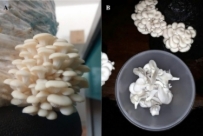
Figure 1. Primordia appearance at 4 days (A) and fruiting bodies harvested at 19 days (B) after inoculation on corn cobs.
These results suggest that the more decomposed structure of these substrates and their relatively low lignin content, combined with the enzymatic treatment, provided a nutrient-rich environment that was easily accessible to the mycelium. This is consistent with Li et al. (2025), who reported that the efficiency of lignin and cellulose decomposition is key to improving production rates in edible mushroom cultivation.
3.5 Biological efficiency (BE) of the treatments
Treatments involving the use of enzymes exhibited a significant increase in BE (Table 4) compared to the control treatment. The corn cob substrate achieved the highest biological efficiency, reaching 85%, which is consistent with studies such as those by Öztürk & Atila (2021), who demonstrated that substrates with high cellulose content and lower lignin tend to result in higher conversion to fungal biomass due to the better availability of fermentable sugars.
In contrast, barley straw and weeds exhibited the lowest BE values, at 65% and 60% respectively. This result could be attributed to lower lignin degradation, which is consistent with the findings of Hawrot & Stańczuk (2022), who noted that these substrates tend to have less efficient conversion into fungal biomass.
3.6 Protein content of fruiting bodies
The analysis of protein content (Table 4) showed significant variations among treatments (20% – 26%, depending on the substrate). This suggests that these substrates provided a nitrogen-rich environment with easily assimilable compounds for the fungus, consistent with Schütte et al. (2024), who observed that substrates with better nutrient availability favor protein accumulation in edible mushrooms. Barley straw and weed substrates exhibited the lowest protein contents (21% and 20%, respectively); this could be the result of lower cellulose and hemicellulose degradation, as well as limited nitrogen availability (Abed et al., 2021).
3.7 Final post-cultivation substrate proximate analysis
The proximate analysis of the substrates after P. ostreatus cultivation showed a significant reduction in structural components such as cellulose, hemicellulose, and lignin (Table 4). Corn cobs and recycled paper were notable for the greatest reduction in cellulose and lignin. This suggests that these substrates, following mycelial action and enzymatic treatment, were more susceptible to decomposition. This is consistent with Machado et al. (2020), who observed that enzymatically treated substrates show a greater reduction in lignocellulose due to fungal activity and enzyme action. Regarding the remaining organic matter, all substrates retained approximately 50% of their original matter, which is important for soil regeneration if used as a subsequent soil amendment.
Table 3
Development phase times of P. ostreatus until harvest
Substrate | Colonization time (days) | Primordia appearance (days) | Total time to harvest (days) |
Barley straw | 20 ± 1.5ᵃ | 6 ± 0.5ᵇ | 26 ± 1.3ᵃ |
Corn cobs | 15 ± 1.2ᵇ | 4 ± 0.3ᶜ | 19 ± 1.0ᵇ |
Corn stalks and leaves | 17 ± 1.3ᵃᵇ | 5 ± 0.4ᵇᶜ | 22 ± 1.1ᵃᵇ |
Weeds | 19 ± 1.4ᵃ | 6 ± 0.5ᵇ | 25 ± 1.2ᵃ |
Recycled paper | 16 ± 1.1ᵇ | 5 ± 0.3ᵇᶜ | 21 ± 1.0ᵇ |
Different letters indicate significant differences (p < 0.05) for each parameter among the substrates.
Table 4
Biological efficiency, protein content, and proximate analysis of the evaluated substrates expressed in percentage (%)
Substrate | Biological Efficiency (BE) | Protein Content (%) | Residual Cellulose (%) | Residual Hemicellulose (%) | Residual Lignin (%) | Organic Matter (%) | Available Nitrogen (%) |
Barley straw | 65 ± 2.1ᶜ | 21 ± 1.1ᵇ | 17 ± 1.2ᵃ | 12 ± 1.0ᵇ | 5 ± 0.4ᵃᵇ | 52 ± 2.5ᵇ | 1.0 ± 0.1ᶜ |
Corn cobs | 85 ± 2.5ᵃ | 26 ± 1.4ᵃ | 12 ± 0.9ᵇ | 8 ± 0.7ᶜ | 2 ± 0.2ᶜ | 48 ± 2.0ᶜ | 1.5 ± 0.2ᵃ |
Corn stalks and leaves | 70 ± 2.2ᵇ | 24 ± 1.3ᵃᵇ | 14 ± 1.1ᵃᵇ | 9 ± 0.8ᵇᶜ | 4 ± 0.3ᵇ | 49 ± 2.1ᵇᶜ | 1.3 ± 0.1ᵇ |
Weeds | 60 ± 1.9ᶜ | 20 ± 1.0ᶜ | 10 ± 0.8ᶜ | 7 ± 0.6ᶜ | 3 ± 0.3ᶜ | 46 ± 1.8ᶜ | 1.1 ± 0.1ᶜ |
Recycled paper | 80 ± 2.4ᵃᵇ | 25 ± 1.3ᵃ | 20 ± 1.3ᵃ | 12 ± 1.0ᵇ | 1 ± 0.1ᵈ | 51 ± 2.3ᵇ | 1.4 ± 0.1ᵃᵇ |
Different letters indicate significant differences (p < 0.05) for each parameter among the substrates.
4. Conclusions
The evaluated agricultural substrates exhibited significant variations in their efficiency for P. ostreatus cultivation in terms of colonization, fruiting body production, and biological efficiency. Substrates with lower lignin content and a higher proportion of cellulose, such as corn cobs, favored higher biological efficiency and a reduction in time to harvest. In contrast, substrates with high lignin levels, such as barley straw, presented greater limitations to fungal growth. The results also suggest that the protein content of the fruiting bodies was influenced by the initial composition of the substrates, with implications for their nutritional value.
Acknowledgments
This project was supported by the Government of the State of Hidalgo through the Council for Science, Technology and Innovation of Hidalgo (CITNOVA).
References
Abed, I., Hamad, H., Owaid, M., Hamdan, N., Lafi, A., & Mutlaq, H. (2021). Effect of using desert weeds (Chenopodiaceae) as supplements in substrates of Pleurotus ostreatus (oyster mushroom) production. Current Research in Environmental & Applied Mycology 11(1), 185–196. https://doi.org/10.5943/cream/11/1/14
Agustinho, B., Daniel, J., Zeoula, L., Alcalde, C., Machado, E., Bragatto, J., Schneider, C., Santos, N., Matumoto‐Pintro, P., Saraiva, B., Osório, J. & Faciola, A. (2021). Enzymatic effects of Pleurotus ostreatus spent substrate on whole-plant corn silage and performance of lactating goats. Journal of Dairy Science, 104(11), 11660-11672. https://doi.org/10.3168/jds.2021-20775
Bao, W., Shen, L., Xia, S., & Yang, X. (2024). Effect of pH on the growth and competition of Trichoderma spp. and Fusarium spp. The journal of applied ecology, 35, 2535-2542. https://doi.org/10.13287/j.1001-9332.202409.032
Bellettini, M. B., Fiorda, F. A., Maieves, H. A., Teixeira, G. L., Ávila, S., Hornung, P. S., Júnior, A. M. & Ribani, R. H. (2019). Factors affecting mushroom Pleurotus spp. Saudi Journal of Biological Sciences, 26(4), 633-646. https://doi.org/10.1016/j.sjbs.2016.12.005
Chen, F., Martín, C., Lestander, T., Grimm, A., & Xiong, S. (2021). Shiitake cultivation as biological preprocessing of lignocellulosic feedstocks - substrate changes in crystallinity, syringyl/guaiacyl lignin and degradation-derived by-products. Bioresource technology, 2021, 126256. https://doi.org/10.1016/j.biortech.2021.126256
Dhiman, S., Kaur, P., Narang, J., Mukherjee, G., Thakur, B., Kaur, S., & Tripathi, M. (2024). Fungal bioprocessing for circular bioeconomy: Exploring lignocellulosic waste valorization. Mycology, 15, 538-563. https://doi.org/10.1080/21501203.2024.2316824
Díaz, R., & Díaz-Godínez, G. (2019). Intracellular isoforms of laccases produce by Pleurotus ostreatus grown in liquid fermentation at different initial pH of the culture medium. Mexican Journal of Biotechnology, 4(1), 38-50. https://doi.org/10.29267/mxjb.2019.4.1.38
Hawrot-Paw, M., & Stańczuk, A. (2022). From Waste Biomass to Cellulosic Ethanol by Separate Hydrolysis and Fermentation (SHF) with Trichoderma viride. Sustainability, 15(1), 168. https://doi.org/10.3390/su15010168
Kuhad, R., Rapoport, A., Kumar, V., Singh, D., Kumar, V., Tiwari, S., Ahlawat, S., Singh, B., Kumar, V., & Q., L. (2023). Biological pretreatment of lignocellulosic biomass: An environment-benign and sustainable approach for conversion of solid waste into value-added products. Critical Reviews in Environmental Science and Technology, 54, 771-796. https://doi.org/10.1080/10643389.2023.2277670
Li, W., Li, M., Xu, S., Dai, Y., Shao, Y., Li, Z., Zhang, G., Li, C., & Li, Y. (2025). The effects of hypoxic stress on the growth and lignocellulose-degrading capacity of Pleurotus ostreatus. Horticulturae, 11(11), 1298. https://doi.org/10.3390/horticulturae11111298
Machado, E., Pintro, P., Ítavo, L., Agustinho, B., Daniel, J., Santos, N., Bragatto, J., Ribeiro, M., & Zeoula, L. (2020). Reduction in lignin content and increase in the antioxidant capacity of corn and sugarcane silages treated with an enzymatic complex produced by white rot fungus. PLoS ONE, 15(2), e0229141. https://doi.org/10.1371/journal.pone.0229141
Nsude, C., Ujah, I., & Nsude, H. (2025). Comprehensive analysis of vitamins, phytochemicals, and antioxidant properties of Pleurotus ostreatus (Oyster Mushroom) using GC-FID. Asian Journal of Applied Chemistry Research, 16(4), 192-206. https://doi.org/10.9734/ajacr/2025/v16i4367
Ogundele, G., & Bamidele, O. (2020). Physicochemical properties and storage stability of mushrooms (Pleurotus ostreatus) cultivated on single (sawdust) and mixed substrates (sawdust and oil palm fibre). Croatian journal of food science and technology, 12(2), 146-155. https://doi.org/10.17508/CJFST.2020.12.2.01
Otsuka, Y., Kawauchi, M., Elisashvili, V., Endo, S., Tsuji, K., Yoshimi, A., Tanaka, C., Nakazawa, T., Irie, T., & Honda, Y. (2025). High productivity of cellulase and xylanase enzymes in the mycelial-dispersed Pleurotus ostreatus Δpkac2 strain. Journal of bioscience and bioengineering, 140(5), 277-283. https://doi.org/10.1016/j.jbiosc.2025.08.001
Öztürk, C., & Atila, F. (2021). Changes in lignocellulosic fractions of growing substrates during the cultivation of Hypsizygus ulmarius mushroom and its effects on mushroom productivity. Scientia Horticulturae, 288, 110403. https://doi.org/10.1016/j.scienta.2021.110403
Petković, A., Klaus, A., Vunduk, J., Cvetković, S., Nikolić, B., Rabrenović, B., Tomašević, I., & Djekic, I. (2025). Pleurotus ostreatus cultivation for more sustainable soybean and sunflower seed waste management. Scientia Horticulturae, 339, 113866. https://doi.org/10.1016/j.scienta.2024.113866
Ren, F., Wu, F., Wu, X., Bao, T., Jie, Y., & Gao, L. (2024). Fungal systems for lignocellulose deconstruction: From enzymatic mechanisms to hydrolysis optimization. GCB Bioenergy, 16(5), e13130. https://doi.org/10.1111/gcbb.13130
Schütte, L., Hausmann, K., Schwarz, C., Ersoy, F., & Berger, R. (2024). The Nitrogen Content in the Fruiting Body and Mycelium of Pleurotus Ostreatus and Its Utilization as a Medium Component in Thraustochytrid Fermentation. Bioengineering, 11(3), 284. https://doi.org/10.3390/bioengineering11030284
Sufyan, A., Ahmad, N., Shahzad, F., Embaby, M., AbuGhazaleh, A., & Khan, N. (2021). Improving the nutritional value and digestibility of wheat straw, rice straw and corn cob through solid state fermentation using different Pleurotus species. Journal of the Science of Food and Agriculture, 102(6), 2445-2453. https://doi.org/10.1002/jsfa.11584