1. Introduction
Cherry tomato (Solanum lycopersicum var. Cherry) cultivation has gained significant relevance in modern agriculture due to its high commercial value, organoleptic appeal, nutritional content, and adaptability to various production systems, both in open fields and protected environments (Pérez et al., 2021). This variety is characterized by producing small, sweet fruits that are highly valued by consumers in the fresh and gourmet markets (Naik et al., 2021). However, like other horticultural crops, cherry tomatoes are highly susceptible to abiotic and biotic stress factors during the initial development stages, which can negatively affect germination, seedling establishment, and consequently, the final crop yield (Rezk et al., 2021).
In this context, the implementation of sustainable strategies that enhance plant growth and strengthen stress tolerance has gained great importance (Gupta et al., 2022). One of the most promising alternatives is the use of plant growth-promoting rhizobacteria (PGPR, for its acronym in English), which are part of the rhizospheric microbiota and are capable of establishing beneficial interactions with host plants (Basu et al., 2021). These microorganisms stimulate plant development through various direct and indirect mechanisms, such as the production of phytohormones, nutrient solubilization, biological nitrogen fixation, siderophore synthesis, and inhibition of pathogen growth (Chandran et al., 2021).
Among PGPR, species of the Bacillus genus have been extensively studied due to their metabolic versatility, their ability to form endospores resistant to adverse environmental conditions, and their ease of formulation for agricultural applications (Tsotetsi et al., 2022). In particular, Bacillus licheniformis has shown remarkable potential as a bio-stimulant and biocontrol agent (Caballero et al., 2022). This Gram-positive bacterium is capable of producing bioactive compounds such as indoleacetic acid (IAA), antimicrobial lipopeptides (such as bacilysin and surfactin), and hydrolytic enzymes that promote soil nutrient mobilization (Ramirez et al., 2022). Additionally, B. licheniformis has been reported as an effective species in phosphate solubilization and in improving chlorophyll content and biomass in different crops (Ni et al., 2024).
Despite advances in the functional characterization of B. licheniformis, most available studies have focused on its application in extensive crops such as corn, wheat or rice, while its potential in high-value vegetables, such as cherry tomatoes, remains poorly documented (Medison et al., 2023). Given the critical importance of early seedling development for crop success, it is essential to explore the effect of B. licheniformis in this initial phase, considering variables such as root and stem length, number of leaves, fresh and dry weight, and emergence uniformity (Lyu et al., 2025).
Therefore, the present study aimed to evaluate the effect of B. licheniformis inoculation on the growth and early development of cherry tomato seedlings under controlled conditions. The results are expected to contribute to generating useful scientific knowledge for the design of efficient biofertilizers, which could be incorporated into sustainable horticultural management programs, promoting the reduction of agrochemical use and improving agronomic yield from the initial stages of cultivation.
2. Methodology
Evaluation of indoleacetic acid (IAA) production
The IAA production capacity of Bacillus licheniformis strains BLC1, BLC2, and BLC3 were evaluated using LB (Luria-Bertani) liquid medium supplemented with different L-tryptophan concentrations (2, 4, 6, and 8 mM) as precursor. The bacterial strains were pre-cultured in LB for 24 hours at 30 °C with constant agitation (150 rpm) and subsequently inoculated at 10% (v/v) in test tubes containing 10 mL of experimental medium with the respective tryptophan concentrations.
The samples were incubated for 72 hours under the same conditions, and aliquots were taken at 0, 24, 48, and 72 hours to quantify the produced IAA. For this purpose, the samples were centrifuged at 10,000 rpm for 10 minutes, and the supernatant was collected. IAA detection was performed using the Salkowski reagent, mixing 1 mL of supernatant with 2 mL of the reagent (12% perchloric acid + 0.5 M FeCl₃), incubating the mixture in darkness for 30 minutes. The pink color intensity was measured spectrophotometrically at 530 nm. IAA concentrations were determined using a standard curve prepared with known concentrations of pure IAA (Sigma-Aldrich®). The obtained data were statistically analyzed by one-way ANOVA, followed by Tukey's test (p < 0.05) to compare differences between strains and treatments.
Germination assessment
To evaluate the effect of Bacillus licheniformis strains (BLC1, BLC2, and BLC3) on cherry tomato (Solanum lycopersicum var. Cherry) seed germination, a controlled laboratory assay was conducted. The seeds were first surface-disinfected by immersion in a 1% sodium hypochlorite solution for 3 minutes, followed by three consecutive rinses with sterile distilled water.
The seeds were then bacterially inoculated by immersion in suspensions of each strain adjusted to a concentration of 1×10⁸ CFU/mL for 30 minutes. The control group was treated only with sterile distilled water. The treated seeds were placed in sterile Petri dishes with moistened filter paper and incubated in a germination chamber at 25 °C with a 12-hour light/12-hour dark photoperiod.
Thirty seeds were sown per treatment, with three replicates (n = 90 per strain), and the number of germinated seeds was recorded daily over a 7-day period. A seed was considered germinated when it exhibited radicle protrusion greater than 2 mm. The germination percentage was calculated at the end of the trial, and the data were analyzed using one-way ANOVA followed by Tukey's test (p < 0.05) to determine significant differences between treatments.
Plant height
To determine the effect of Bacillus licheniformis strains BLC1, BLC2, and BLC3 on the height growth of cherry tomato (Solanum lycopersicum var. Cherry) seedlings, a controlled-condition trial was conducted. Surface-sterilized seeds were inoculated with bacterial suspensions adjusted to 1×10⁸ CFU/mL and sown in germination trays with sterile substrate (1:1 peat-vermiculite mix). The control group was planted without bacterial treatment.
The trays were maintained in a greenhouse with an average temperature of 26 ± 2°C, 70% relative humidity, and daily irrigation with sterile water. At 21 days after sowing, 15 seedlings per treatment (5 per replicate) were randomly selected, and their height was measured from the stem base to the apex using a millimeter-graded ruler.
Seedling weight and root volume
To quantify the effect of Bacillus licheniformis strains BLC1, BLC2, and BLC3 on cherry tomato (Solanum lycopersicum var. Cherry) seedling biomass, a controlled-condition experiment was conducted. Surface-sterilized seeds were inoculated with bacterial suspensions at 1×10⁸ CFU/mL and sown in trays with sterile substrate (peat:vermiculite, 1:1). Four treatments were established (three strains + non-inoculated control), each with three replicates.
At 21 days after sowing, five seedlings per replicate (n = 15 per treatment) were selected. The seedlings were carefully uprooted and washed with distilled water to remove substrate residues. The fresh weight of each plant was measured immediately using an analytical balance (±0.01 g precision). Subsequently, samples were placed in a drying oven at 60 °C for 72 hours until constant weight was achieved, after which dry weight was measured.
The roots were then carefully washed with distilled water to remove any remaining substrate. Root volume was subsequently determined using the water displacement method by submerging the root system in a graduated cylinder containing a known water volume and measuring the displaced volume in cubic centimeters (cm³). The collected data were analyzed using one-way ANOVA followed by Tukey's test (p < 0.05) to establish statistical differences between treatments. This methodology demonstrated the positive effect of bacterial strains on seedling root system development.
3. Results and discussion
Indoleacetic acid (IAA) production
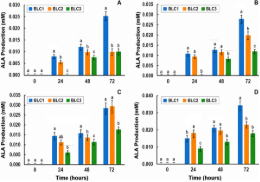
The production of indoleacetic acid (IAA) by Bacillus licheniformis strains BLC1, BLC2, and BLC3 were evaluated in media supplemented with different L-tryptophan concentrations (2, 4, 6, and 8 mM) over a 72-hour incubation period (Figure 1). Under all tested conditions, a progressive increase in IAA production was observed over time, with significant differences among strains and treatments (p < 0.05). At 2 mM tryptophan (Figure 1A), strain BLC1 showed the highest IAA biosynthesis capacity, reaching 0.025 ± 0.001 mM at 72 hours. In contrast, BLC2 and BLC3 exhibited significantly lower levels (0.010 mM). Strain differences became statistically significant after 24 hours of incubation, highlighting BLC1's efficiency under low precursor availability.
At 4 mM tryptophan (Figure 1B), the previously observed trend persisted. BLC1 showed the highest IAA level at 72 hours (0.028 ± 0.001 mM), followed by BLC2 and BLC3 with concentrations of 0.020 ± 0.001 mM and 0.012 ± 0.001 mM, respectively. Differences among treatments and strains were significant at all time points, with BLC1 exhibiting the highest IAA accumulation rate. When 6 mM tryptophan was used (Figure 1C), both BLC1 and BLC2 reached maximum IAA production at 72 hours (0.028 ± 0.002 mM and 0.029 ± 0.001 mM, respectively), with no significant differences between them (p > 0.05), while BLC3 continued to show significantly lower production (0.018 ± 0.001 mM). This suggests BLC2 enhances its efficiency at higher precursor concentrations.
At 8 mM tryptophan (Figure 1D), BLC1 demons-trated the highest IAA production across all experimental conditions, reaching 0.035 ± 0.002 mM at 72 hours, followed by BLC2 (0.023 ± 0.001 mM) and BLC3 (0.018 ± 0.001 mM). At this concentration, BLC1 significantly outperformed all other strains (p < 0.05), indicating this strain's enhanced responsiveness to high tryptophan availability.
Germination induction by Bacillus licheniformis strains
Statistically significant differences were observed among treatments (p < 0.05), demonstrating the positive influence of bacteria on the germination process. Strain BLC1 promoted the highest germination rate, reaching 96 ± 2.1%, significantly superior to all other treatments. It was followed by strain BLC2 with 89 ± 1.8%, while BLC3 recorded 77 ± 2.5%. On the other hand, the control treatment showed the lowest germination rate (76 ± 2.2%), being significantly inferior to the BLC1 and BLC2 treatments. Although BLC3 did not differ significantly from the control (p > 0.05), it did show a slight improvement in germination compared to it.
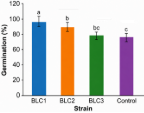
Figure 2. Germination percentage of cherry tomato seeds treated with Bacillus licheniformis strains (BLC1, BLC2, and BLC3), compared to the non-inoculated control. Values represent mean ± standard error of six independent replicates. Different letters above bars indicate significant differences among treatments according to Tukey's test (p < 0.05).
Plant height
The results indicated that strains BLC1 and BLC3 promoted significantly greater growth compared to the control and strain BLC2 (p* < 0.05). Strain BLC1 induced an average height increase of 15.5 ± 0.6 cm, a value statistically similar to that recorded with strain BLC3 (15.3 ± 0.5 cm). In contrast, seedlings treated with BLC2 showed an average height of 12.4 ± 0.4 cm, similar to the control treatment (12.1 ± 0.5 cm), and significantly lower compared to BLC1 and BLC3. Strains BLC1 and BLC3 possess greater plant growth-promoting capacity, likely related to the production of growth regulators such as indoleacetic acid (IAA) or other bioactive compounds associated with early seedling development.
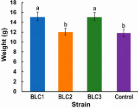
Figure 3. Average height of cherry tomato seedlings treated with Bacillus licheniformis strains (BLC1, BLC2, and BLC3), compared to the non-inoculated control. Values represent mean ± standard error of six independent replicates. Different letters above bars indicate significant differences among treatments according to Tukey's test (p < 0.05).
Fresh and dry weight
Strain BLC1 showed the highest values for fresh weight (3.52 ± 0.10 g) and dry weight (0.46 ± 0.01 g), significantly superior to all other treatments. Strains BLC2 and BLC3 exhibited intermediate performance, with fresh weight values of 2.95 ± 0.08 g and 3.05 ± 0.09 g, and dry weights of 0.37 ± 0.01 g and 0.40 ± 0.01 g, respectively. In contrast, the control registered the lowest values, with a fresh weight of 2.60 ± 0.07 g and dry weight of 0.33 ± 0.01 g. These results indicate that inoculation with BLC1 significantly promotes biomass production in cherry tomato seedlings compared to the control. The observed effect is associated with mechanisms such as indoleacetic acid (IAA) production and soil nutrient solubilization.
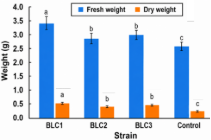
Figure 4. Fresh weight and dry weight of cherry tomato seedlings treated with Bacillus licheniformis strains (BLC1, BLC2, and BLC3), compared to the non-inoculated control, at 15 days after sowing. Values represent mean ± standard error of six independent replicates. Different letters above bars indicate significant differences among treatments according to Tukey's test (p < 0.05).
Root volume
The BLC1 treatment showed a significantly greater root volume compared to other treatments, reaching an average of 2.85 cm³. In second place, BLC3 demonstrated intermediate performance with a root volume of 2.45 cm³, showing no significant difference from BLC1. The BLC2 treatment recorded a root volume of 2.30 cm³, which was significantly lower than BLC1 (statistically confirmed). The control group (no bacterial treatment) exhibited the smallest root volume (1.95 cm³), which was significantly distinct from all B. licheniformis treatments.
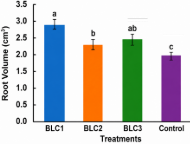
Figure 5. Effect of different bacterial treatments with Bacillus licheniformis strains (BLC1, BLC2, BLC3) on root volume (cm³) of plants. Values represent mean ± standard error. Different letters indicate statistically significant differences (p < 0.05) among treatments according to Tukey's multiple comparison test.
The tryptophan concentration in the culture medium directly influences the amount of IAA that can be produced (Ait et al., 2022). At low trypot-phan concentrations, strains with high precursor affinity can efficiently utilize this limited resource, allowing for greater IAA production (Gowtham et al., 2022). At higher tryptophan concentrations, IAA production increases, but may reach a saturation point where strains with greater metabolic capacity continue to show increased production, while strains with lower metabolic efficiency may show no significant improvement (Yusfi et al., 2023).
Each Bacillus strain has a unique metabolic profile that affects its ability to synthesize IAA (Castillo et al., 2022). In this case, BLC1 shows a high IAA production capacity even under low tryptophan concentration conditions, suggesting that this strain has greater efficiency in converting tryptophan into IAA. This may result from increased expression of the enzymes responsible for IAA biosynthesis, such as tryptophan transaminase, which catalyzes the conversion of tryptophan into indole-3-acetaldehyde, a direct precursor of IAA (Ahmad et al., 2022).
Bacteria can regulate IAA production in response to the tryptophan concentrations available in the medium (Zhang et al., 2021). Under low trypot-phan levels, bacteria may induce the expression of genes encoding enzymes in the IAA biosyn-thetic pathway, increasing production to maximize the use of the available precursor (Tang et al., 2023). At higher tryptophan concentrations, IAA production may stabilize or even decrease if bacteria lack an efficient system to handle large amounts of the precursor or if feedback mecha-nisms limit IAA production (Chen et al., 2024).
Bacteria of the genus Bacillus have the ability to produce auxins, primarily indoleacetic acid (IAA), which is one of the main plant hormones involved in regulating plant growth (Batista et al., 2021). Auxins promote cell elongation and cell division, crucial processes during germination, by stimula-ting the formation of new cells in the seed embryo (Mishra et al., 2022). This promotes early seedling activation, resulting in a higher germination rate.
In addition to auxins, bacteria of the genus Bacillus can produce a variety of bioactive compounds, such as siderophores, which help plants obtain essential nutrients, and antimicrobial compounds that protect seedlings from pathogens (Basit et al., 2021). These compounds can promote a healthy root environment, enhancing seedling growth (Rolón et al., 2022). For example, siderophores can improve the availability of iron and other essential minerals for plant development (Timofeeva et al., 2023). Plant growth-promoting bacteria can also induce physiological responses in plants, such as the activation of signaling pathways that increase nutrient uptake or improve energy metabolism. These responses can lead to enhanced growth (Gupta et al., 2022).
Bacillus strains are also known for their ability to solubilize essential soil nutrients such as phosphorus, iron, and nitrogen (Rawat et al., 2021). The solubilization of these nutrients improves their availability to plants, which in turn promotes seedling growth (Chandra et al., 2021). In the case of BLC1, it is likely that the solubilization of these nutrients enhanced the supply of vital resources for cherry tomato seedlings, resulting in increased biomass of the treated plants (Xu et al., 2024).
Plant growth-promoting bacteria, such as Bacillus, can also improve the physical and chemical structure of the rhizosphere, the soil zone surrounding roots (Mahapatra et al., 2022). This includes modifying soil microbial activity and producing compounds like exopolysaccharides that can influence soil aggregation (Ali et al., 2024). Well-structured soil facilitates root penetra-tion and enhances water and nutrient uptake (Xiong et al., 2022). Some studies have shown that growth-promoting bacteria like Bacillus induce the formation of secondary roots, which are branches of primary roots that increase the absorption area of the root system (Lastochkina et al., 2021). The greater root surface area improves the plant's capacity to take up water and nutrients from the soil, promoting overall plant growth (Lynch et al., 2021).
4. Conclusions
The application of B. licheniformis as an inoculant in cherry tomato seedlings showed significant positive effects on germination, root development, and biomass accumulation, demonstrating its potential as a plant growth promoter during early crop stages.
The use of B. licheniformis represents an effective and sustainable biotechnological alternative to improve early crop establishment in horticultural species, reducing dependence on chemical inputs and promoting more environmentally friendly agricultural practices.
Acknowledgments
The authors express their gratitude to the State Technical University of Quevedo for the institutional support provided during this research. Special recognition is given to the Microbiology Laboratory team for their valuable technical collaboration, logistical support, and commitment throughout the various stages of the study.
References
Ahmad, E., Sharma, P. K., & Khan, M. S. (2022). IAA biosynthesis in bacteria and its role in plant-microbe interaction for drought stress management. In Plant Stress Mitigators (pp. 235–258). Springer Nature Singapore.
Ait Bessai, S., Bensidhoum, L., & Nabti, E.-H. (2022). Optimization of IAA production by telluric bacteria isolated from northern Algeria. Biocatalysis and Agricultural Biotechnology, 41(102319), 102319. https://doi.org/10.1016/j.bcab.2022.102319
Ali, N., Abbas, S. A. A. A., Sharif, L., Shafiq, M., Kamran, Z., Masah, Haseeb, M., & Shahid, M. A. (2024). Microbial extracellular polymeric substance and impacts on soil aggregation. In Bacterial Secondary Metabolites (pp. 221–237). Elsevier.
Basit, A., Shah, S. T., Ullah, I., Ullah, I., & Mohamed, H. I. (2021). Microbial bioactive compounds produced by endophytes (bacteria and fungi) and their uses in plant health. In Plant Growth-Promoting Microbes for Sustainable Biotic and Abiotic Stress Management (pp. 285–318). Springer International Publishing.
Basu, A., Prasad, P., Das, S. N., Kalam, S., Sayyed, R. Z., Reddy, M. S., & El Enshasy, H. (2021). Plant growth promoting rhizobacteria (PGPR) as green bioinoculants: Recent developments, constraints, and prospects. Sustainability, 13(3), 1140. https://doi.org/10.3390/su13031140
Batista, B. D., Dourado, M. N., Figueredo, E. F., Hortencio, R. O., Marques, J. P. R., Piotto, F. A., Bonatelli, M. L., Settles, M. L., Azevedo, J. L., & Quecine, M. C. (2021). The auxin-producing Bacillus thuringiensis RZ2MS9 promotes the growth and modifies the root architecture of tomato (Solanum lycopersicum cv. Micro-Tom). Archives of Microbiology, 203(7), 3869–3882. https://doi.org/10.1007/s00203-021-02361-z
Caballero, P., Macías-Benítez, S., Moya, A., Rodríguez-Morgado, B., Martín, L., Tejada, M., Castaño, A., & Parrado Rubio, J. (2022). Biochemical and microbiological soil effects of a biostimulant based on Bacillus licheniformis-fermented sludge. Agronomy, 12(8), 1743. https://doi.org/10.3390/agronomy12081743
Castillo-Alfonso, F., Quintana-Menéndez, A., Vigueras-Ramírez, G., Sales-Cruz, A. M., Rosales-Colunga, L. M., & Olivares-Hernández, R. (2022). Analysis of the propionate metabolism in Bacillus subtilis during 3-Indolacetic production. Microorganisms, 10(12), 2352. https://doi.org/10.3390/microorganisms10122352
Chandra, P., Khobra, R., Sundha, P., Sharma, R. K., Jasrotia, P., Chandra, A., Singh, D. P., & Singh, G. P. (2021). Plant growth promoting Bacillus-based bio formulations improve wheat rhizosphere biological activity, nutrient uptake and growth of the plant. Acta Physiologiae Plantarum, 43(11). https://doi.org/10.1007/s11738-021-03310-5
Chandran, H., Meena, M., & Swapnil, P. (2021). Plant growth-promoting rhizobacteria as a green alternative for sustainable agriculture. Sustainability, 13(19), 10986. https://doi.org/10.3390/su131910986
Chen, X., Ye, X., Yu, X., Zhao, J., Song, M., Yin, D., & Yu, J. (2024). Analysis of the regulatory mechanism of exogenous IAA-mediated tryptophan accumulation and synthesis of endo-genous IAA in Chlorococcum humicola. Chemosphere, 354, 141633. https://doi.org/10.1016/j.chemosphere.2024.141633
Gowtham, H. G., Singh, S. B., Shilpa, N., Aiyaz, M., Nataraj, K., Udayashankar, A. C., Amruthesh, K. N., Murali, M., Poczai, P., Gafur, A., Almalki, W. H., & Sayyed, R. Z. (2022). Insight into recent progress and perspectives in improvement of antioxidant machinery upon PGPR augmentation in plants under drought stress: A review. Antioxidants, 11(9), 1763. https://doi.org/10.3390/antiox11091763
Gupta, A., Mishra, R., Rai, S., Bano, A., Pathak, N., Fujita, M., Kumar, M., & Hasanuzzaman, M. (2022). Mechanistic insights of plant growth promoting bacteria mediated drought and salt stress tolerance in plants for sustainable agriculture. International Journal of Molecular Sciences, 23(7), 3741. https://doi.org/10.3390/ijms23073741
Lastochkina, O., Aliniaeifard, S., Garshina, D., Garipova, S., Pusenkova, L., Allagulova, C., Fedorova, K., Baymiev, A., Koryakov, I., & Sobhani, M. (2021). Seed priming with endophytic Bacillus subtilis strain-specifically improves growth of Phaseolus vulgaris plants under normal and salinity conditions and exerts anti-stress effect through induced lignin deposition in roots and decreased oxidative and osmotic damages. Journal of Plant Physiology, 263, 153462. https://doi.org/10.1016/j.jplph.2021.153462
Lynch, J. P., Strock, C. F., Schneider, H. M., Sidhu, J. S., Ajmera, I., Galindo-Castañeda, T., Klein, S. P., & Hanlon, M. T. (2021). Root anatomy and soil resource capture. Plant and Soil, 466(1–2), 21–63. https://doi.org/10.1007/s11104-021-05010-y
Lyu, D., Ruan, E. D., Backer, R., Gagné-Bourque, F., & Smith, D. L. (2025). Changes in morpho-physiological traits and phytochemical composition of Cannabis sativa L. treated with microbial biostimulants across different substrates. Industrial Crops and Products, 224, 120377. https://doi.org/10.1016/j.indcrop.2024.120377
Mahapatra, S., Yadav, R., & Ramakrishna, W. (2022). Bacillus subtilis impact on plant growth, soil health and environment: Dr. Jekyll and Mr. Hyde. Journal of Applied Microbiology, 132(5), 3543–3562. https://doi.org/10.1111/jam.15480
Medison, R. G., Jiang, J., Medison, M. B., Tan, L.-T., Kayange, C. D. M., Sun, Z., & Zhou, Y. (2023). Evaluating the potential of Bacillus licheniformis YZCUO202005 isolated from lichens in maize growth promotion and biocontrol. Heliyon, 9(10), e20204. https://doi.org/10.1016/j.heliyon.2023.e20204
Mishra, B. S., Sharma, M., & Laxmi, A. (2022). Role of sugar and auxin crosstalk in plant growth and development. Physiologia Plantarum, 174(1), e13546. https://doi.org/10.1111/ppl.13546
Naik, S. A. T. S., Hongal, S., Harshavardhan, M., Chandan, K., Kumar, A. J. S., Ashok, Kyriacou, M. C., Rouphael, Y., & Kumar, P. (2021). Productive characteristics and fruit quality traits of cherry tomato hybrids as modulated by grafting on different Solanum spp. Rootstocks under Ralstonia solanacearum infested greenhouse soil. Agronomy, 11(7), 1311. https://doi.org/10.3390/agronomy11071311
Ni, S., Wu, Y., Zhu, N., Leng, F., & Wang, Y. (2024). Bacillus licheniformis YB06: A rhizosphere-genome-wide analysis and plant growth-promoting analysis of a plant growth-promoting Rhizobacterium isolated from Codonopsis pilosula. Microorganisms, 12(9), 1861. https://doi.org/10.3390/microorganisms12091861
Pérez-Marín, J., Issa-Issa, H., Clemente-Villalba, J., García-Garví, J. M., Hernández, F., Carbonell-Barrachina, Á. A., Calín-Sánchez, Á., & Noguera-Artiaga, L. (2021). Physicochemical, volatile, and sensory characterization of promising cherry tomato (Solanum lycopersicum L.) cultivars: Fresh market aptitudes of pear and round fruits. Agronomy, 11(4), 618. https://doi.org/10.3390/agronomy11040618
Ramirez-Olea, H., Reyes-Ballesteros, B., & Chavez-Santoscoy, R. A. (2022). Potential application of the probiotic Bacillus licheniformis as an adjuvant in the treatment of diseases in humans and animals: A systematic review. Frontiers in Microbiology, 13, 993451. https://doi.org/10.3389/fmicb.2022.993451
Rawat, P., Das, S., Shankhdhar, D., & Shankhdhar, S. C. (2021). Phosphate-solubilizing microorganisms: Mechanism and their role in phosphate solubilization and uptake. Journal of Soil Science and Plant Nutrition, 21(1), 49–68. https://doi.org/10.1007/s42729-020-00342-7
Rezk, A., Abhary, M., & Akhkha, A. (2021). Tomato (Solanum lycopersicum L.) Breeding Strategies for Biotic and Abiotic Stresses. In Advances in Plant Breeding Strategies: Vegetable Crops (pp. 363–405). Springer International Publishing. https://doi.org/10.1007/978-3-030-66961-4_10
Rolón-Cárdenas, G. A., Arvizu-Gómez, J. L., Soria-Guerra, R. E., Pacheco-Aguilar, J. R., Alatorre-Cobos, F., & Hernández-Morales, A. (2022). The role of auxins and auxin-producing bacteria in the tolerance and accumulation of cadmium by plants. Environmental Geochemistry and Health, 44(11), 3743–3764. https://doi.org/10.1007/s10653-021-01179-4
Tang, J., Li, Y., Zhang, L., Mu, J., Jiang, Y., Fu, H., Zhang, Y., Cui, H., Yu, X., & Ye, Z. (2023). Biosynthetic pathways and functions of indole-3-acetic acid in microorganisms. Microorganisms, 11(8). https://doi.org/10.3390/microorganisms11082077
Timofeeva, A. M., Galyamova, M. R., & Sedykh, S. E. (2023). Plant growth-promoting soil bacteria: Nitrogen fixation, phosphate solubilization, siderophore production, and other biological activities. Plants, 12(24). https://doi.org/10.3390/plants12244074
Tsotetsi, T., Nephali, L., Malebe, M., & Tugizimana, F. (2022). Bacillus for plant growth promotion and stress resilience: What have we learned? Plants, 11(19), 2482. https://doi.org/10.3390/plants11192482
Xiong, P., Zhang, Z., & Peng, X. (2022). Root and root‐derived biopore interactions in soils: A review. Journal of Plant Nutrition and Soil Science, 185(5), 643–655. https://doi.org/10.1002/jpln.202200003
Xu, Y., Dong, M., Xiao, H., Young Quek, S., Ogawa, Y., Ma, G., & Zhang, C. (2024). Advances in spray-dried probiotic microcapsules for targeted delivery: a review. Critical Reviews in Food Science and Nutrition, 64(30), 11222–11238. https://doi.org/10.1080/10408398.2023.2235424
Yusfi, L. A., Tjong, D. H., Chaniago, I., & Jamsari, J. (2023). Screening the effect of YM media component and tryptophan levels on IAA production of Serratia plymuthica UBCF_13. AIP Conference Proceedings, 2730, 080001.
Zhang, J., Zhu, S., Ma, N., Johnston, L. J., Wu, C., & Ma, X. (2021). Metabolites of microbiota response to tryptophan and intestinal mucosal immunity: A therapeutic target to control intestinal inflammation. Medicinal Research Reviews, 41(2), 1061–1088. https://doi.org/10.1002/med.21752